
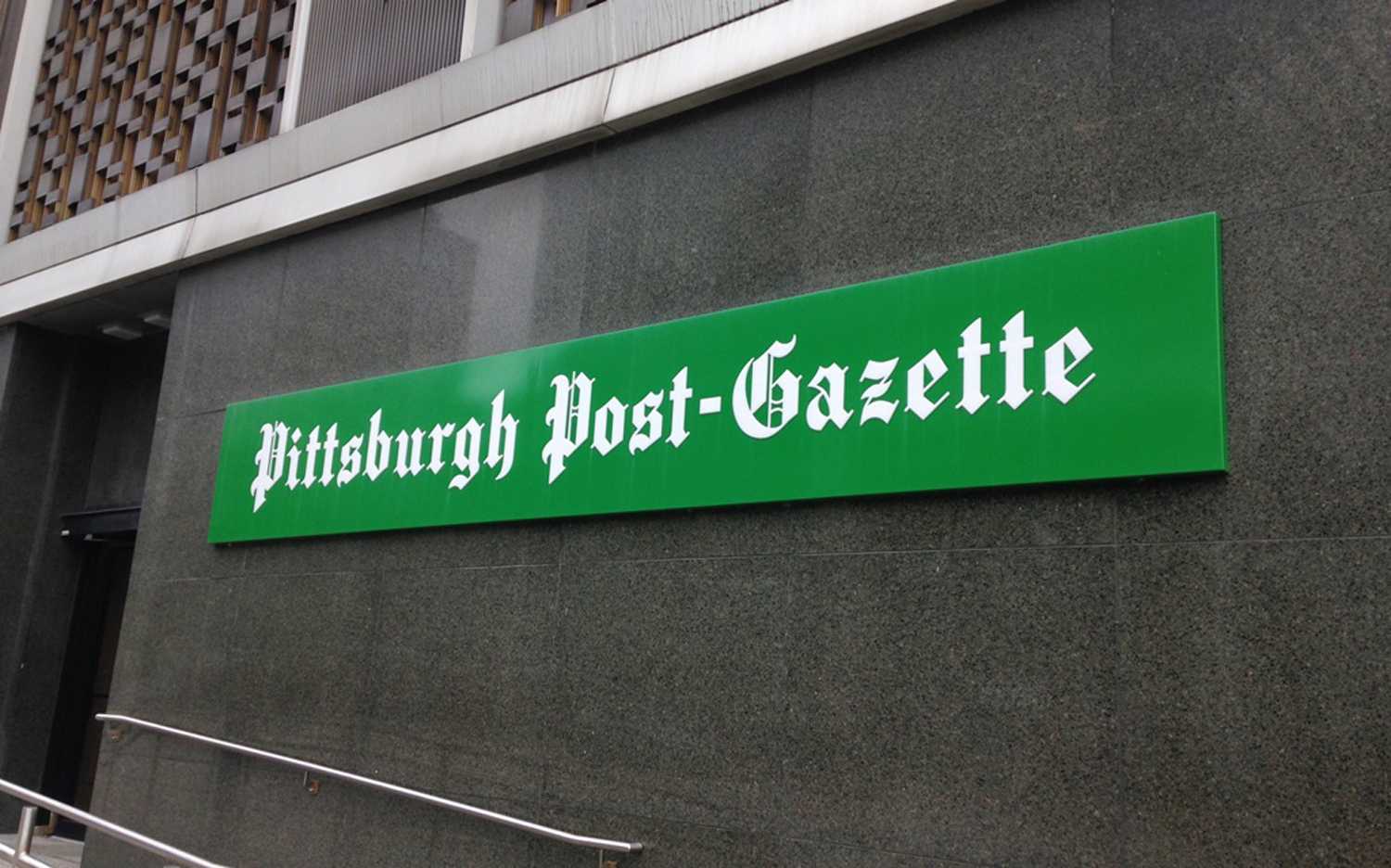
After the Pittsburgh Post-Gazette announced its intended closure for May, journalists are envisioning an alternative that highlights underrepresented local communities.
On Jan. 29, members of the Newspaper Guild of Pittsburgh, along with local community representatives and labor leaders, announced the launch of the Pittsburgh Alliance for People-Empowered Reporting, a coalition to research media alternatives to the Post-Gazette.
The development of PAPER follows Block Communications, the company which owned the Post-Gazette, announcing the newspaper’s impending closure slated for May 3. The Post-Gazette has lost over $350 million in the past two decades. The closure comes shortly after the newspaper union won in court after their three-year-long strike.
When speaking about experiences that shaped PAPER’s mission, Andrew Goldstein, president of the Newspaper Guild of Pittsburgh, recounted an incident while covering a George Floyd protest for the Post-Gazette where protesters told reporters they were unwelcome due to past controversies within the newspaper.
“There’s a fear to talk to the Post-Gazette,” Goldstein said. “You can talk to many people in different vulnerable communities around the city, whether it be people who are impoverished, or certain African American communities that have been ignored [by the Post-Gazette] or LGBT communities that have been ignored or even harmed by some of the reporting that the Post-Gazette has done.”
Another founder of PAPER, photojournalist Steve Mellon, said his inspiration for forming the alliance was to “lessen the void” for news coverage once the Post-Gazette closes in May.
Mellon said specific plans for PAPER are not finalized, and organizers are “seeing where things go” for the project, including possibly working with the Post-Gazette, should the company find a buyer before May.
“It could be that somebody comes in, and an organization or a company or an individual buys the Post-Gazette or starts something new,” Mellon said. “Or we may do a nonprofit model. There’s several different models out there that are possible.”
While Goldstein said he is hopeful for a May 4 opening, he added that starting a business from the ground up can be challenging. PAPER is currently asking for donations from community members.
“[Opening by May 4] would be very difficult, because opening a business is not exactly an easy thing,” Goldstein said. “And certainly, opening a business when you don’t know where the money is going to come from or who’s going to be involved in it is also challenging.”
Mellon also hopes that PAPER will help journalists who will lose their jobs at the Post-Gazette have additional employment opportunities.
“The Post-Gazette closing leaves a job void. We’re going to lose a lot of journalism jobs, and we wanted to save as many journalism jobs as possible,” Mellon said.
Goldstein said he hopes local marginalized communities like the Black community, LGBTQ+ groups and immigrants will feel included by PAPER in conversations about Pittsburgh events.
“Our intention with PAPER — and this comes out of our long strike — is that we realize there are a lot of communities in and around Pittsburgh who feel like they’ve been largely left out of the conversation in recent years because of some of the actions of the Post-Gazette, whether it’s intentional or not,” Goldstein said.
Mellon said he is particularly interested in speaking with members of the working class because he believes their voices have been left out of local media significantly.
“We want whatever news organization emerges from this to pay attention to working-class people,” Mellon said. “We define the working class very broadly, really anybody who either works for a living, or people who can’t work because they’re taking care of kids or they’re taking care of family members.”
One initiative Goldstein wants to introduce for PAPER are town halls for various groups of interest to help determine what stories should get more representation. For example, Goldstein said, one constituency he wants to focus on are college students.
“One of my goals for these town halls is to have one where we include college students in this conversation, and college journalists,” Goldstein said. “College students in general are a really big contingency in this town, and I’m not sure all the time if their issues and their concerns get covered to the extent that they want.”
Goldstein wants to move the development process quickly, while maintaining community interests.
“We’re trying to build this airplane as it’s going down the runway,” Goldstein said. “There’s a lot of work to do, very quickly.”