
As a child growing up in Philadelphia, it was common to take field trips to Independence Mall. I vividly remember being in second grade and touring some of the buildings, meeting an actor playing Ben Franklin and getting an up-close look at the Liberty Bell. What I don’t remember, though, is seeing any trace of African Americans’ contributions to the founding of the United States or how their labor made this nation an economic powerhouse.
Imagine being a Black child, living in a roughly 40% Black city, and being told your hometown is the birthplace of democracy yet not seeing a single reference to Black people or what they’ve contributed to that legacy. It’s like taking a photo at a family reunion, but later, when that photo is shared on Facebook, you see you’ve been cropped out. You know you were there. Heck, you even made a dish for the event. But there is no trace of you in the photo.
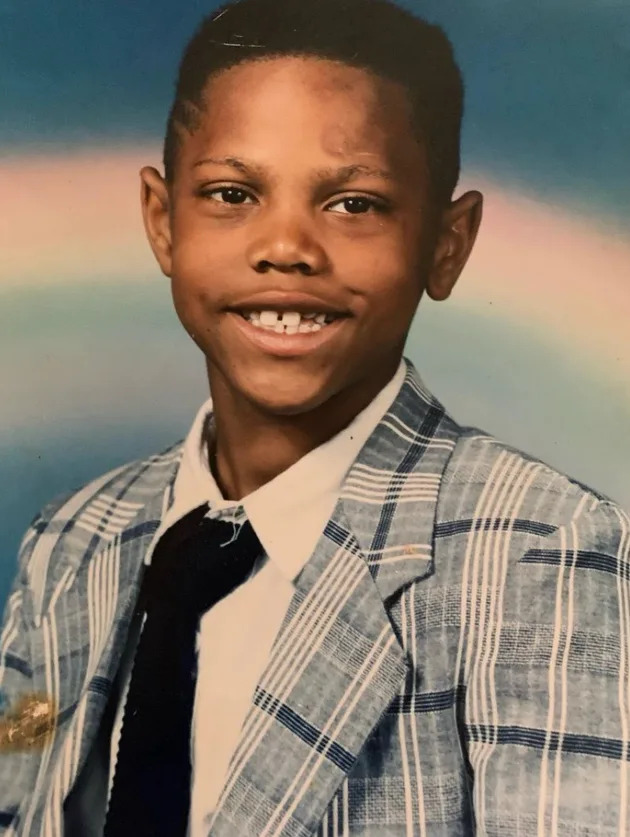
The author in elementary school Courtesy of Nosakhere Griffin-EL, Sr
Even as a second-grader, it was obvious to me that Black people had been left out of the grand narrative of American history. I had that realization because I was lucky enough to have a mother who was both an intellectual and an activist. She worked as a librarian assistant for more than 36 years in the Philadelphia public school system. She purchased books for my brother and me to teach us about Black history, took us to lectures by world-renowned Black studies scholars and showed us documentaries about our history.
These books, lectures and documentaries provided me with the opportunity to learn about my history and my people’s contribution to American and world history. My experiences at home allowed me to see the uncropped version of that history, which not only built my self-esteem but also made me understand that Black people made many valuable contributions to American society, and it made me believe that I, too, had something to offer my country.
Politics: Visitors To Black History Museum Say Trump Is ‘Whitewashing’ Slavery
However, African American children should not need to have a parent like my mom for them to know about the contributions of Black people in American history. This information should exist in public spaces as well — spaces like the slavery exhibit at the President’s House site in Philadelphia.
In 2010, after a concerted organizing effort by historians, artists and advocates, an exhibit titled “The President’s House: Freedom and Slavery in the Making of a New Nation” was created to honor the nine enslaved Africans who worked for President George Washington. It revealed the contradiction between the United States as a new free nation and the Africans who were kept in enslavement, as well as how they resisted that enslavement. That contradiction is deepened by the fact that the President’s House is only steps away from Independence Mall.
For 16 years, millions of visitors from across the country and around the world were able to learn about the complicated history of America’s Founding Fathers, who advocated for democracy while enslaving people of African descent. Thanks to this exhibit, visitors were able to get an uncropped view of American history.
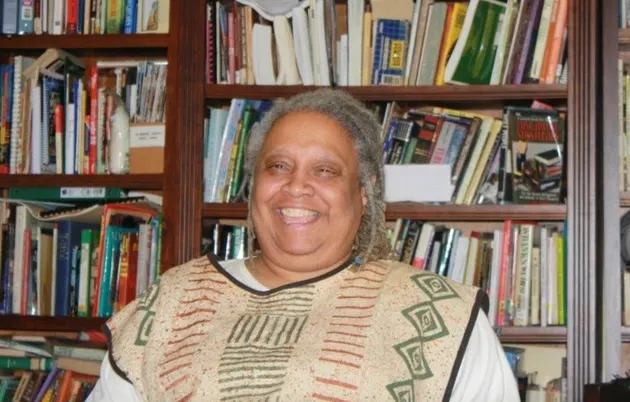
The author’s mother Courtesy of Nosakhere Griffin-EL, Sr.
Like this article? Keep independent journalism alive. Support HuffPost.
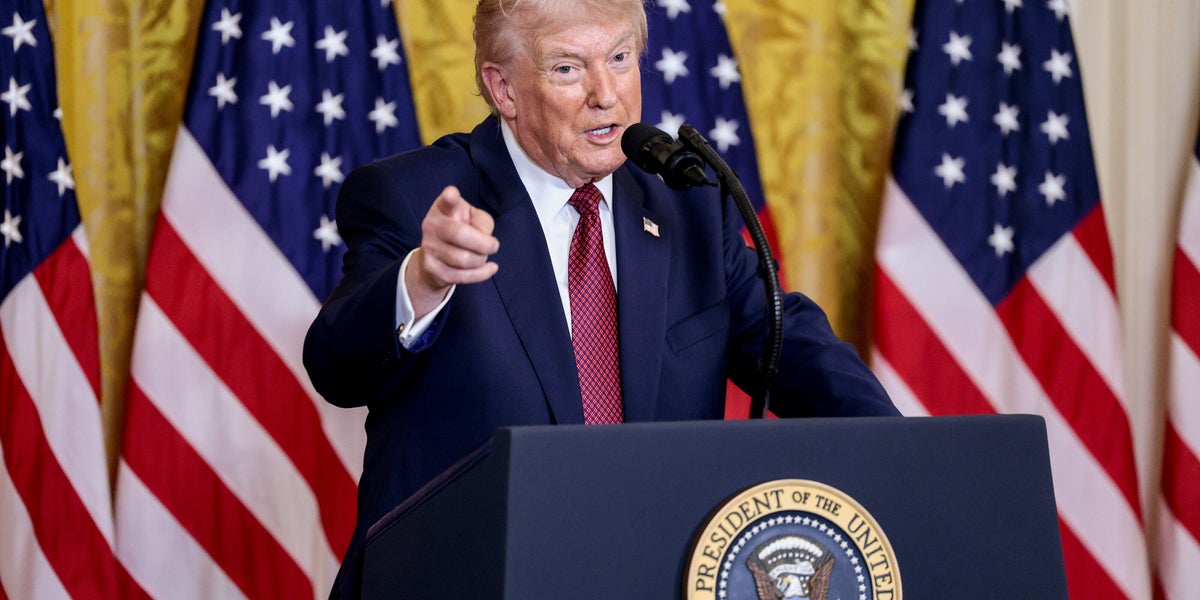
Then, on Jan. 22, the Trump administration ordered the National Park Service to dismantle the exhibit. The removal is based on President Donald Trump’s March 2025 “Restoring Truth and Sanity to American History” executive order, which claims that telling the truth about what happened in this country “deepens societal divides and fosters a sense of national shame,” and bars museums and national parks from discussing slavery or advancing accurate narratives about marginalized communities.
I watched the news with a pit in my stomach as crews used crowbars to remove the plaques discussing the transatlantic slave trade and the nine slaves who lived at the Washington home, and I was immediately brought back to my second-grade trip to Independence Mall.
Politics: Trump Admin Orders Removal Of Notable Photo Of Formerly Enslaved Man From National Park
My people have been cropped out again.
This deliberate erasure of my ancestors’ stories is an act meant to portray the Founding Fathers as infallible saints who simply fought against King George’s tyranny and freed a nation. But this is not a complete picture of history — it is a sanitized one. And without an accurate understanding of history in all of its complexities, there is a dangerous potential to deepen the dehumanization and oppression of Black people and other people of color in this country.
Of course there are those who might say it is important for museum exhibits to produce national pride. However, I would argue the best exhibits inspire viewers to realize that as a country and as a people, we are still unfinished. There is still much more work that we must do to become better, much less equal.
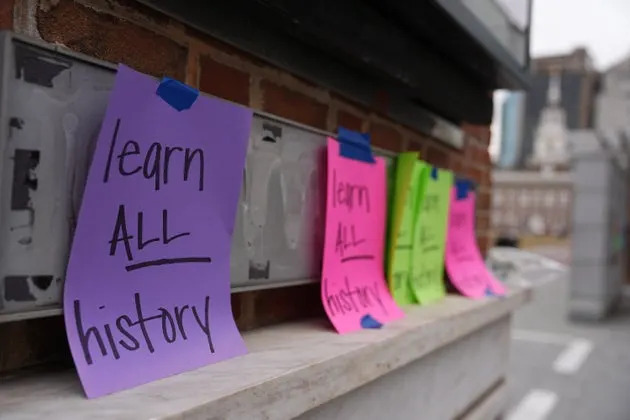
Signs hang last month on the locations of the now-removed explanatory panels that were part of an exhibit on slavery at the President’s House Site in Philadelphia. via Associated Press
Sadly, what happened at the President’s House last month is just the latest move by this administration to erase the struggles and accomplishments of Black people from America’s history. We’ve seen DEI programs slashed at universities, institutions and companies across the country. Books featuring Black characters and storylines have been banned by libraries and schools. And just last week, Trump shared a shockingly racist meme on his own social media feed. My people, our contributions and our experiences are being cropped out of American history, and we are being targeted by the very leaders who are supposed to protect and uplift us.
The city of Philadelphia recently filed a federal lawsuit against the Trump administration in hopes of restoring the President’s House and once again including the stories of the nine enslaved individuals who lived there. The judge in the case recently barred further changes to the exhibit as the case proceeds. If the city of Philadelphia wins its lawsuit, which I hope it does, I will look forward to taking another tour of Independence Mall. Unlike my tour as a second-grader, I imagine myself walking through the exhibit and learning about the Founding Fathers in all of their complexity — the good and the despicable. I imagine learning how my people’s labor — their literal blood, sweat, tears and lives — contributed to the success of this fledgling country. I imagine myself seeing this unfinished nation as it truly is and believing that it still has a chance to live up to its highest ambitions and most humane values, as stated in the Declaration of Independence, which reads, “We hold these truths to be self-evident that all men [and women] are created equal.”
This is the grand possibility I hope for myself, my people, my country, my children and their children. But this can only happen if we present our history as fully and accurately as possible. We all deserve to see the uncropped picture of our nation’s past, so that we can both refrain from repeating its mistakes and aim to create something better for all of us.
Nosakhere Griffin-EL Sr. is an award-winning educator and the cofounder of a bookstore. He is a Public Voices Fellow at The OpEd Project, in partnership with the National Black Child Development Institute.
Do you have a compelling personal story you’d like to see published on HuffPost? Find out what we’re looking for here and send us a pitch at pitch@huffpost.com.
Related…