
The Action News Investigative Team got an exclusive first look at a report by the Philadelphia City Controller that revealed several of the cushions installed by the Streets Department were not done to standards, which could end up costing taxpayers to fix.
Christy Brady said her office inspected 140 speed cushions at 44 schools last summer and fall.
Inspectors found just two had height and length measurements that were within the range specified in the traffic engineer blueprints.
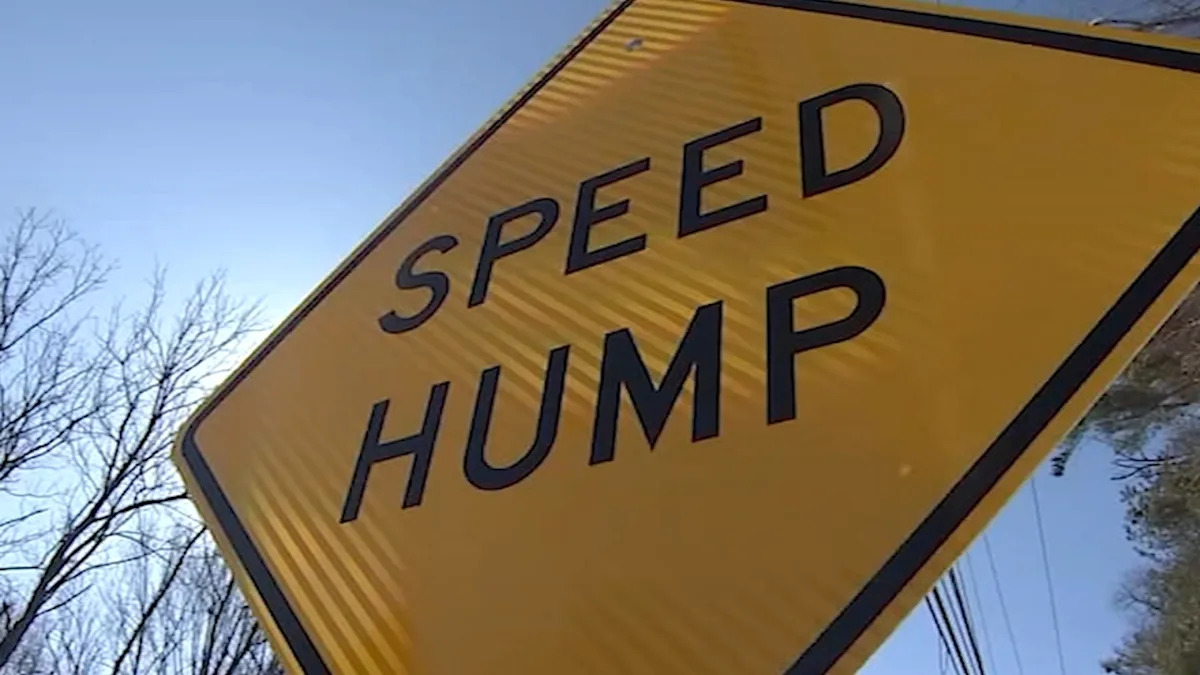
Speed cushions, also known as speed humps or bumps, are meant to be speed calming devices usually installed around schools and other locations to calm traffic for safety.
“95% of the speed cushions were too steep, meaning above a 10% grade, that’s the standard,” said Brady.
Brady said she launched her review after a flood of calls to the city’s 311 call system. Homeowners complained about noise and cars swerving around them.
Vehicle owners, like Bruce Williams, also complained of damage.
“Underneath here is all skidded out and, on this side, it is actually broken under,” he said.
Williams told the Investigative Team his Toyota Prius took a costly hit from this speed cushion in front of Henry Lawton Elementary in the city’s Wissinoming neighborhood.
“I’m probably doing about 12 miles an hour, and I still bump my skirt on the car,” he said.
State and federal guidelines call for speed cushions to be at a maximum height of three to four inches, with PennDOT stating trends toward a three-and-a-half-inch maximum.
Investigative Reporter Chad Pradelli checked the speed cushions at Henry Lawton Elementary, using a level and a tape measure. He found the one on Lardner Street was seven inches in height, which is nearly twice the recommended height.
“Engineering standards are there for a reason. It’s to prevent damage to cars for public safety,” said Brady.
According to the report, inspectors found that 27 of 133 cushions measured during inspections showed grades two or three times the required standard.
Cushions outside Mayfair Elementary and Meredith School in Queen Village are just two examples.
“So, you’re really encountering a large, large hump in the road,” Brady said.
Brady said 93% of cushions also had runs that were shorter than the blueprint standard of 36 to 42 inches. That included one which measured 12 inches in front of Childs Elementary on 16th Street in Point Breeze.
“The blueprints are there. This is a fixable job,” said Brady.
The question remains how many speed cushions across the city are out of compliance and not just in school zones.
Action News measured several across the street from our studios on Presidential Boulevard that appeared too high at six inches.
Brady said since 2023, 135 schools have had speed cushions installed at a cost of roughly $51,000 per school.
She couldn’t say if the city would be on the hook for the sub-standard installation or give an exact figure on how much repairs could cost taxpayers.
“If they’re not going to go back and repair it, then we should seek restitution,” she said.
In the meantime, Bruce Williams is waiting before he repairs his Prius.
“If I get it fixed, it’s just going to break again,” he said. “You just can’t afford to do that every time you go over a speed bump.”
The Philadelphia Streets Department, the agency responsible for overseeing the project, told the Investigative Team it could not comment until officials reviewed the entire report.