
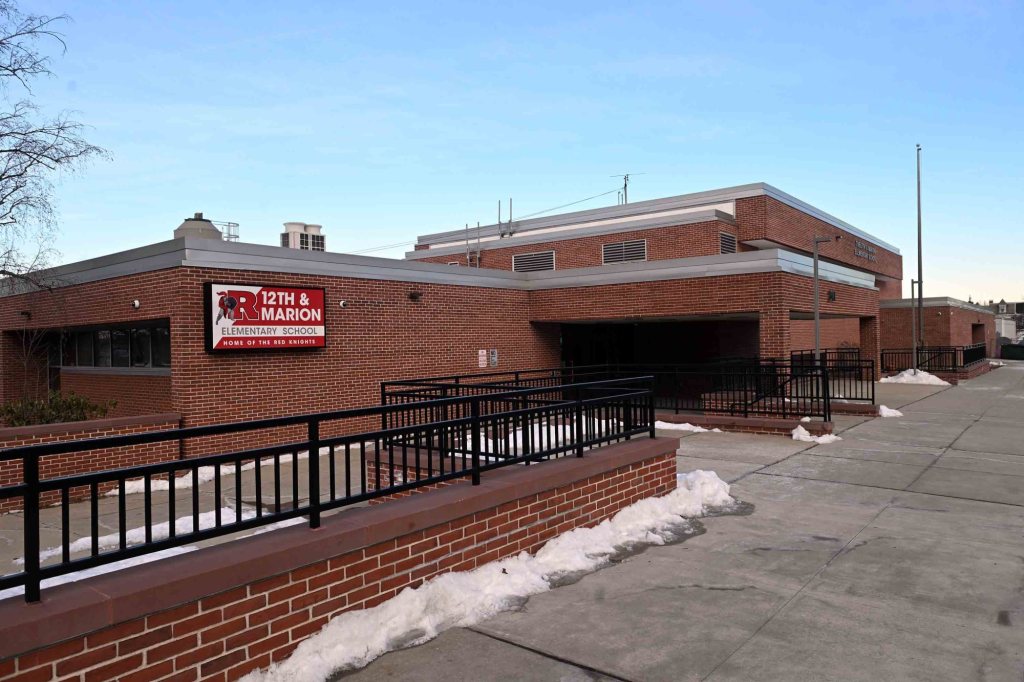
Reading residents still have time to weigh in on a $41.8 million renovation project proposed for 12th and Marion Elementary School.
The project was introduced by the Reading School Board at a recent hearing required under Pennsylvania’s Act 34 of 1973, board solicitor John Miravich explained. The act is part of a process designed to ensure transparency, public input and cost accountability for significant school building investments.
“This is a building that has great need,” Dr. Khalid N. Mumin, superintendent, said, describing the 12th and Marion school project as a response to aging infrastructure and enrollment growth. “It’s time to get to work on this building and get it up to speed for our learners, for 21st century learning opportunities.”
Wayne Gehris, district chief financial officer, said the school is one of several in the district that has struggled with overcrowding and outdated space. The northeast section of Reading, he noted, has seen the most concentrated growth in recent years, adding pressure to existing facilities in the area.
Assistant Superintendent JuliAnne Kline said the project would add 12 classrooms and create separate cafeteria and gymnasium/auditorium spaces, replacing the current combined setup that limits scheduling flexibility. A full cooking kitchen also would be added, she said, eliminating the need to transport meals cooked at Reading High School and improving food quality for students.
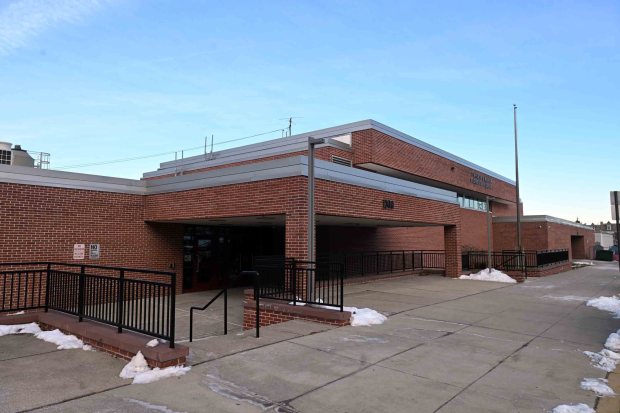 Reading School District officials say the 12th and Marion Elementary School is one of several that has struggled with overcrowding and outdated space. (BILL UHRICH/READING EAGLE)
Kline said the plan also addresses long-standing reliance on four modular classrooms currently used for art, music and special education. Those units require students to go outdoors to reach them and have outlasted their intended lifespan, she said. New modulars would require foundations and restrooms, making a permanent building addition a more practical solution, Gehris noted.
The proposed renovation would include an update of HVAC systems, new lighting and ventilation throughout the building, refurbishing classrooms and a refresh of the library media center. The project would also integrate instructional spaces with a focus on science, technology, engineering, environmental literacy and sustainability, or STEELS, education, including dedicated small- and large-group learning areas and a band room for fourth graders, Gehris said.
Jennifer Grafton of Schrader Group, the architectural firm heading the project, outlined the physical scope of the work.
The Pennsylvania-based firm specializes in school projects and has offices throughout the state and beyond.
Grafton said plans call for renovations to 51,539 square feet of existing space and an additional 37,242 square feet of new construction. The site would gain new hard- and soft-surface play areas, a soft-surface play area next to the pre-K classroom, and two internal courtyards finished in synthetic turf for outdoor instruction.
The project also would provide secure, partially covered on-site parking for 43 vehicles, with additional parking across the street at Northeast Middle School. The entire site would include a subsurface stormwater management system, Grafton said.
From a financial standpoint, architect David Schrader and Gehris said the district adopted a maximum total project cost of $41,805,415 and an Act 34 maximum building construction cost of $15,791,270.
The higher total reflects both new construction and extensive renovations, along with professional fees and financing costs.
If the project were financed through a typical 30-year bond, Gehris said the total cost including interest would reach about $75 million.
The district, which currently budgets about $25 million annually for debt service, plans to structure its debt so annual payments remain roughly level as older debt expires, Gehris said.
Gehris estimated the added operating cost of the expanded facility at roughly $2.08 million per year, reflecting additional teachers, custodial staff, utilities, insurance and supplies.
The district expects to absorb both the debt service and operating increases into its existing budget, largely through rising state funding, he said, and does not anticipate a tax increase tied to the project at this time.
Construction is expected to take about two years, Gehris noted.
The plan calls for building the new wing first, then moving students into that space while the existing building is renovated.
Identifying, containing and safely removing or controlling any hazardous materials — such as asbestos, lead or mold — would be scheduled during the summer to minimize disruption, district officials said, and all contractors would be required to follow strict security and clearance protocols while working on-site.
No residents offered in-person comments during the hearing, but district officials said written comments submitted by Feb. 20 will become part of the official record.
Written comments should be submitted to Wayne Gehris, chief financial officer, Reading School District, 800 Washington St., Reading PA 19601.