
By Jack Tomczuk
Gov. Josh Shapiro believes “housing prices and rent are too damn high for too many” in Pennsylvania.
That’s why his administration on Thursday released a 10-year housing plan, billed as the first comprehensive statewide strategy to address the issue.
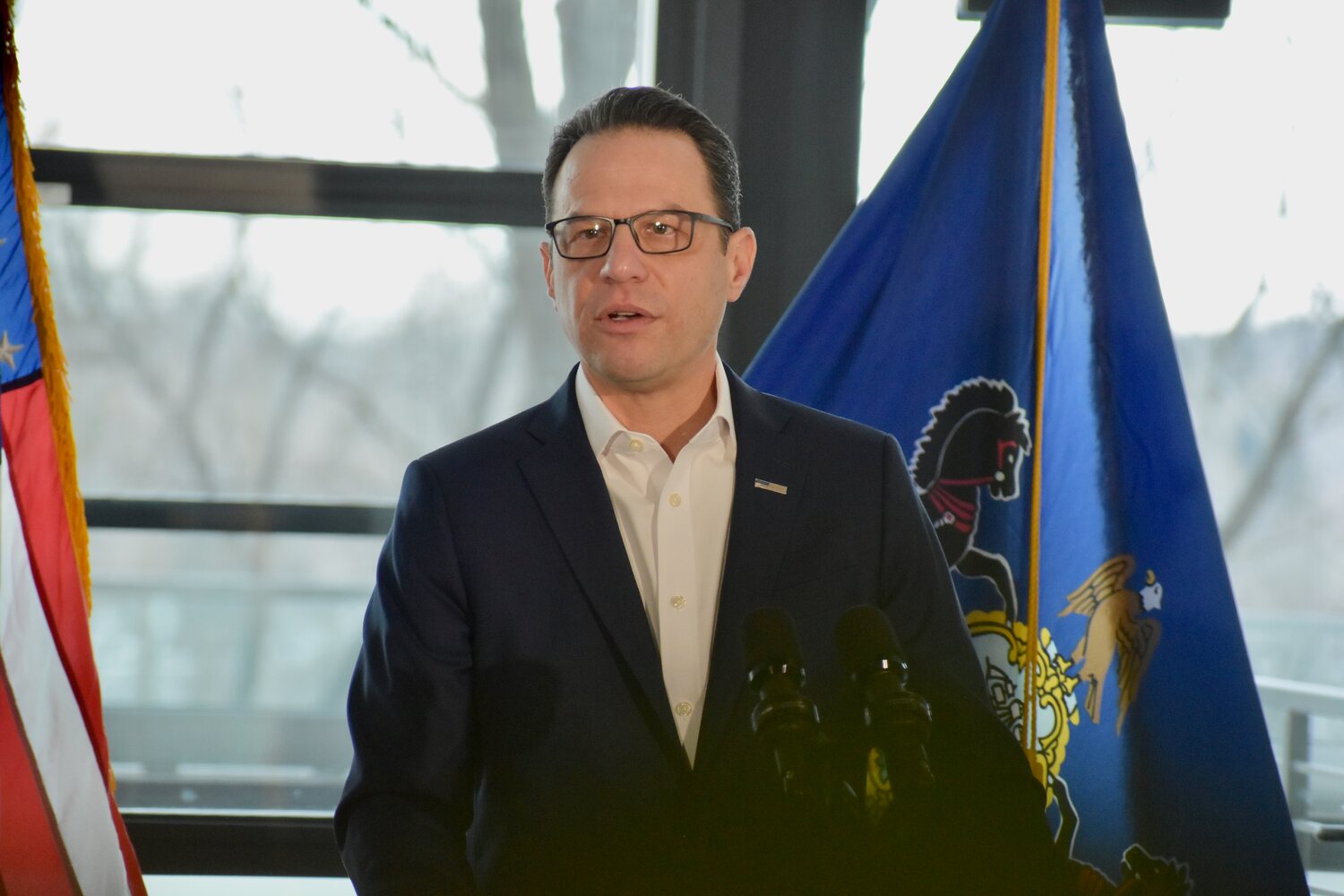
“This plan today has real teeth to it, real dollars behind it, real constructive reforms behind it,” Shapiro told a crowd gathered for the announcement in East Falls. “It’s going to help us build more housing.”
Major components of the plan are embedded in the Democratic governor’s proposed budget, which was unveiled Feb. 3, including $1 billion in bond financing for a “critical infrastructure investment fund.”
While those dollars could pay for new energy upgrades and school renovations, Shapiro said he hopes the “lion’s share” goes to housing. Exactly how much, he told reporters, will depend on negotiations in Harrisburg.
Republicans, who hold a majority in the state Senate, have characterized Shapiro’s $53.3 billion spending proposal as fiscally irresponsible.
“I would say to any lawmaker that doesn’t like my idea: What’s yours?” the governor said. “Because we can no longer wait. We have got to get this done. We’ve got to build more housing. We’ve got to reform our housing laws.”
Inside Shapiro’s housing plan
Shapiro’s housing plan calls for the infrastructure fund to cover site preparation costs to help builders construct roadways and install water, sewage and other utility systems. It should also be devoted to support projects converting office buildings into residential complexes, and used to build and refurbish mixed-use properties, according to the planning document.
The Housing Action Plan advocates for expanding access to home repair initiatives, including low-cost loans for small landlords.
For tenants, the Shapiro administration wants to cap application fees based on the actual cost of screening and ban landlords from charging anything before a prospective renter is able to view the property.
If a building or unit is condemned due to code violations, the owner should have to provide the tenant with six months’ rent to help them relocate, the plan says. Eviction filings should be sealed; only orders should be viewable to the public, according to the document.
Additional dollars should be distributed to county homeless services organizations, and the commonwealth could move to bar utility shutoffs during the hottest and coldest months of the year.
Tangled titles have been a major concern in Philadelphia, and the governor’s strategy would authorize transfer-on-death deeds to ease the process, particularly for longtime family residences. The initiative also calls for dedicated legal assistance funding to resolve title issues.
Pennsylvania, the plan argues, should launch a program to assist first-time homebuyer with down payments and closing costs. Lawmakers could also give cities and counties the ability to waive realty transfer taxes for those purchasing their first home.
Another suggestion is a new transfer tax on investors who buy single-family homes, duplexes, individual condominiums or similar residential properties, in an attempt to reduce the impact of private equity on prices.
The Shapiro administration intends to review all housing regulations in an effort to drop outdated and overly burdensome requirements that do not impact health and safety. Among the suggested reforms is easing restrictions around accessory dwelling units on residential plots.
Coordination with local leaders
There is significant overlap with Mayor Cherelle Parker’s Housing Opportunities Made Easy, or H.O.M.E. initiative, which aims to preserve or create 30,000 units of affordable housing over four years. City Council last month passed a bill allowing her administration to borrow $800 million to fund the effort.
Shapiro said he and Parker are “on the same page” and working “not in competition, but in collaboration” to address housing.
“When you combine this with what Mayor Parker and City Council are doing here in the city of Philadelphia, lives will be changed,” state Sen. Vincent Hughes said at Thursday’s news conference.
Leaders in the Governor’s Office completed the 44-page Housing Action Plan in response to an executive order Shapiro signed in September 2024. Officials said 18 regional roundtables were conducted, along with a survey, to incorporate public input.
In addition to a multitude of recommendations, the document outlines rising costs and a projected housing shortage.
Median monthly rent rose 24% between 2019 and 2023 in Pennsylvania, and home values increased 34% over the same four-year period, according to the report. More than 25% of people are cost burdened, meaning they spend more than 30% of their income on housing and utilities.
Closing the housing gap
To meet future demand, the state needs to produce 450,000 units over the next decade, the plan states. Doing so would require a 70% increase in current development. Pennsylvania ranks 44th in the number of homes constructed between 2019 and 2023, according to data in the report.
Shapiro debuted his housing plan at the Tower at Henry Avenue, a 173-unit building near Abbottsford Homes that opened last year in the former Eastern Pennsylvania Psychiatric Institute property. The facility includes 20 affordable apartments for seniors and another 20 dedicated to those with disabilities.
“This is an example of what we need more of across Pennsylvania,” Shapiro said.