
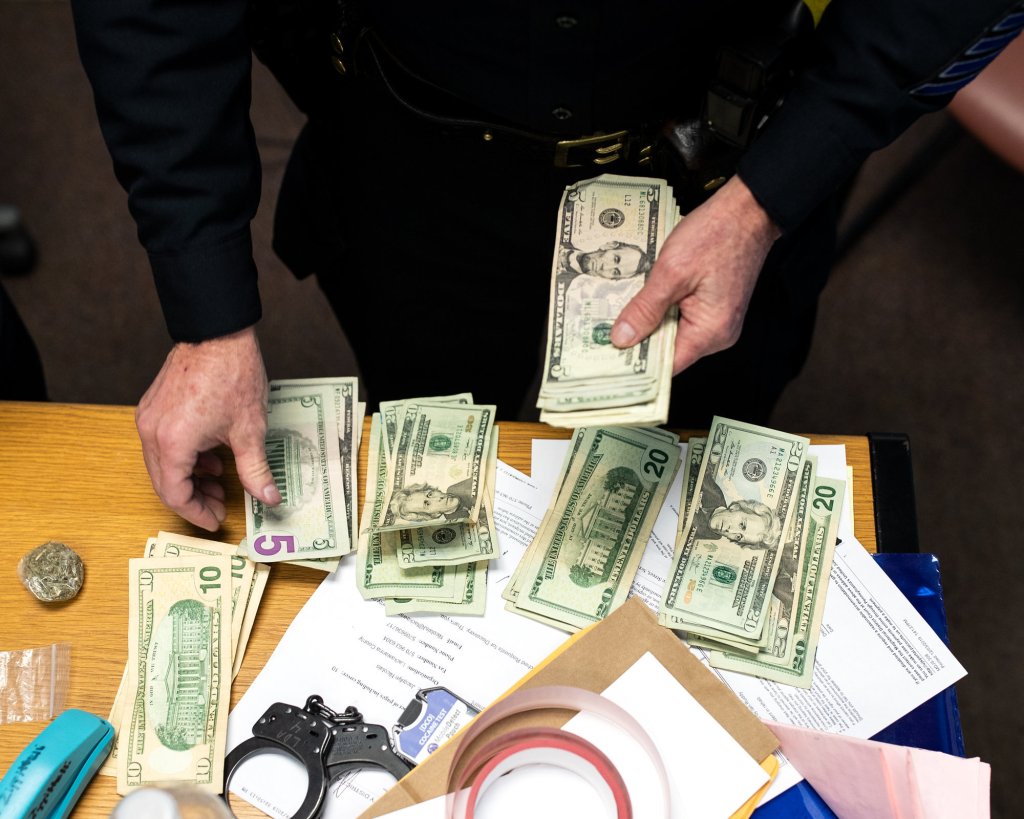
Nearly $220,500 seized by police in Lackawanna County during drug arrests between 1998 and 2020 could go toward the Lackawanna County district attorney’s office’s continued crime-fighting efforts.
The state is pursuing forfeiture of $220,489 in U.S. currency seized in the county during narcotics investigations over those 22 years, according to a public notice published in The Times-Tribune on Jan. 20.
If no one claims any of the cash, it would be forfeited to the district attorney’s office.
“The communities most impacted by narcotics trafficking, including the City of Scranton, are the same communities that benefit when forfeited funds are reinvested into enforcement operations, prevention efforts, and investigative resources,” Lackawanna County District Attorney Brian Gallagher said.
Under Pennsylvania forfeiture law, proceeds from forfeited narcotics-related property are deposited into a restricted forfeiture account, Gallagher said. These funds are not general revenue and cannot be used for unrelated county budget expenses. They are earmarked specifically for law enforcement purposes tied to narcotics enforcement and related investigative functions.
“We use the forfeited profits of convicted drug dealers to investigate, arrest and prosecute other drug dealers and combat violent crime,” Gallagher said. “These funds allow law enforcement to aggressively target drug distribution networks and gang-related activity while reducing the financial burden of these operations on taxpayers.”
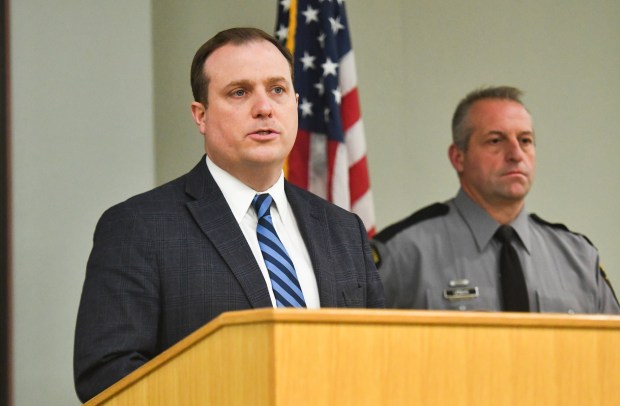 Lackawanna County District Attorney Brian Gallagher speaks during a press conference held at the Geisinger Community Medical Center Office Building in Scranton Monday, November 24, 2025. (SEAN MCKEAG / STAFF PHOTOGRAPHER)
The date range of 1998-2020 reflects currency seized during narcotics investigations that remained unclaimed or pending final legal disposition. That does not necessarily mean other forfeiture actions were not also previously pursued during those years, as prior ones occurred in 2013 and 2017. In some instances, funds are held until criminal proceedings conclude, appeals are exhausted, or ownership issues are resolved before a consolidated forfeiture action is filed, Gallagher said.
Forfeiture funds are typically used to support:
• Controlled purchases of narcotics during investigations.
• Overtime for drug task force operations.
• Equipment and technology upgrades.
• Investigative tools, surveillance equipment and training.
• Community drug prevention and education initiatives.
“These funds allow our office and law enforcement partners to reinvest criminal proceeds back into efforts aimed at disrupting drug trafficking and improving public safety,” Gallagher said.
Civil forfeiture in Pennsylvania is a court process separate from a criminal case and requires the state to petition a court for forfeiture, with the standard of proof as being by a preponderance of evidence, Gallagher explained. Public notice is required, giving potential claimants the opportunity to file a legal claim within a specified period. If no claim is filed, the property may be summarily forfeited by court order. If a claim is filed, the matter proceeds before a judge, where the state must establish the legal basis for forfeiture.
“As part of ensuring due process, our office also provides notice to known interested parties, including defense counsel when appropriate,” Gallagher said.
The public notice of the forfeiture action, which is published under the Controlled Substance Forfeiture Act, is meant to alert any potential claimant to file a claim on seized money. The notice directs a claimant “to file a claim with the Lackawanna County Court of Common Pleas, under docket MD 35 2026 and send a copy of said claim to the Lackawanna County District Attorney’s Office, 135 Jefferson Avenue, Scranton, PA 18503, Attention: Jennifer Davis. If no claim is filed on or before thirty (30) days from the date of the second publication of this notice, the above mentioned item shall be summarily forfeited to the Commonwealth of Pennsylvania, Lackawanna County, Office of the District Attorney.”
Gallagher said that any individual or entity who believes they have a lawful ownership interest in the seized currency may file a claim. The process is not limited to criminal defendants, and a third party who asserts legitimate ownership may come forward and contest the forfeiture. The court would then conduct a hearing to determine lawful entitlement. The state attorney general’s office also conducts annual audits on forfeiture accounts of each county drug forfeiture fund to ensure compliance, he said.
“It is important to note that forfeiture is not automatic. It requires judicial approval and compliance with statutory procedures,” Gallagher said.
The amount in this action, nearly $220,500, “is certainly a meaningful amount,” Gallagher said, but he also noted it represents accumulated seizures over more than two decades.
“In the context of long-term narcotics enforcement efforts, the figure reflects sustained investigative activity rather than a single case windfall,” Gallagher said. “All expenditures remain subject to statutory restrictions and oversight.”