
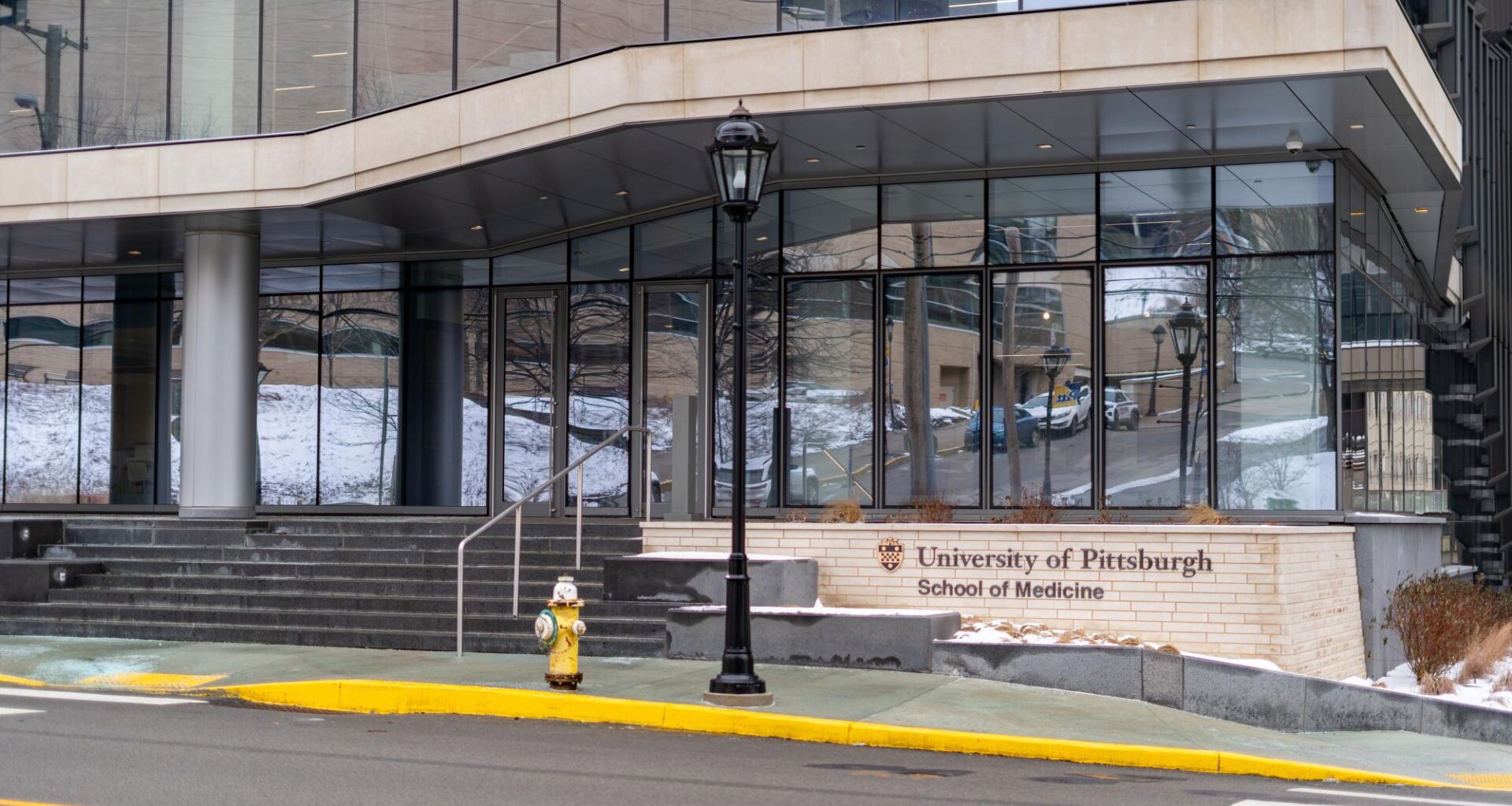
On Jan. 29, Pitt announced the launch of the new Trivedi Institute for Space and Global Biomedicine, a center dedicated to studying spaceflight impact on human health and its translation to health research on Earth.
The Trivedi Institute for Space and Global Biomedicine aims to apply biomedicine, engineering and space research to develop treatments for chronic illnesses and to innovate technologies. The $25 million institute is supported by donations from the Trivedi Family Foundation and will be one of the first institutes of its kind, featuring a Center for Space Biomedicine and a Center for Space Biomanufacturing, Synthetic Biology and Digital Health.
According to Ashok Trivedi, the new institute’s major donor, the institute will provide opportunities for economic and biomedical research growth. Trivedi is hopeful the discoveries made through the Trivedi Institute will drive the “biotechnical ecosystem” of Pittsburgh.
“To my knowledge, this is the first of its kind institute in Pennsylvania, in the U.S. and perhaps in the world,” Trivedi said. “Pioneering new frontiers involves a lot of risks and many challenges, but it is also very rewarding.”
Kate Rubins, the founding director of the Trivedi Institute and former NASA astronaut, emphasized the aspect of “global biomedicine” in the Center. This focus will prioritize the application of biological and natural science principles for clinical use around the world. The Institute, then, will focus on translating observations made in space to people on Earth on every biological level.
“We’re not focused on using [this research] for astronaut health, because NASA already does that,” Rubins said. “We want to apply that for the health of people back on Earth.”
Rubins spent a total of 300 days in space over two long-duration missions to study genomics and human health under extreme conditions. She said that during her travels through space, she felt many physiological changes in her body. These effects became most pronounced when Rubins arrived back on Earth, she said.
“I really felt like an 85-year-old woman when I was dragged out of the capsule,” Rubins said. “In space, there is the same amount of bone loss in one month that an 80-year-old osteopathic woman would have in a year.”
Rubins highlighted some acute effects of space travel, including muscle loss, neurovestibular effects, vision and eye issues and bone loss, mirrored symptoms of aging and chronic diseases.
“So, we’ve got this rapid onset of all of these chronic diseases and aging [in space],” Rubins said. “After going through [this process] physically myself, we decided to form a research institute at Pittsburgh that would be looking at all of these effects on the human body.”
According to Rubins, the Institute will also focus on studying resilient systems in space, including water-recycling systems, to ensure they can operate and recover under extreme conditions. Limited resource locations on Earth, such as rural areas, will benefit from adopting such technology to survive.
“Space is limited in its hardware, equipment and medical supplies. In terms of what’s available, [space] actually resembles a setting outside the hospital and in a low-resource area, much more than a state-of-the-art hospital or lab,” Rubins said. “As we develop hardware for space, we want to think about the applications of this technology on Earth.”
Afshin Beheshti, director for the Center of Space Biomedicine in the Trivedi Institute, said the institute will be very “collaboration-heavy” in both the educational and research aspects.
“Everyone is excited about these topics, so why not have everyone work together and in harmony?” Beheshti said. “This is for the future good of humanity and for the next generation of students who want to create in these fields.”
Beheshti is working to develop a global biomedicine certificate that will be available to graduate students and, hopefully, eventually undergraduates.
“The goal is to create a core structure where students can get expertise from the experts in their fields, and everyone in the world can participate,” Beheshti said.
Nidhi Cheeyandira, a sophomore pre-med psychology major interested in the Institute, said the Center’s approach to studying biomedicine through space is an important step in healthcare research.
“I think using space as a way to accelerate this research is very interesting, considering there’s so much about the human body that we don’t know,” Cheeyandira said. “I’m glad they are using space as a model for chronic illnesses because they are vastly underrepresented in the fields of healthcare and research.”
Cheeyandira hopes the new Institute may eventually incorporate mental illness research and whether space acceleration affects this aspect of human health.
“This research would depend on how the institute progresses, but I think just having these first steps to studying medicine in this manner helps,” Cheeyandira said.
While in its initial stages, the Institute is still expanding, Rubins said. They’re hoping to continue building new labs at their center in South Oakland and then bring in new collaborations, partnerships and researchers to the team, according to Rubins.
“The Institute is an opportunity for people who are interested in learning about the cutting-edge, new and interesting fields in human health and technology,” Rubins said.