
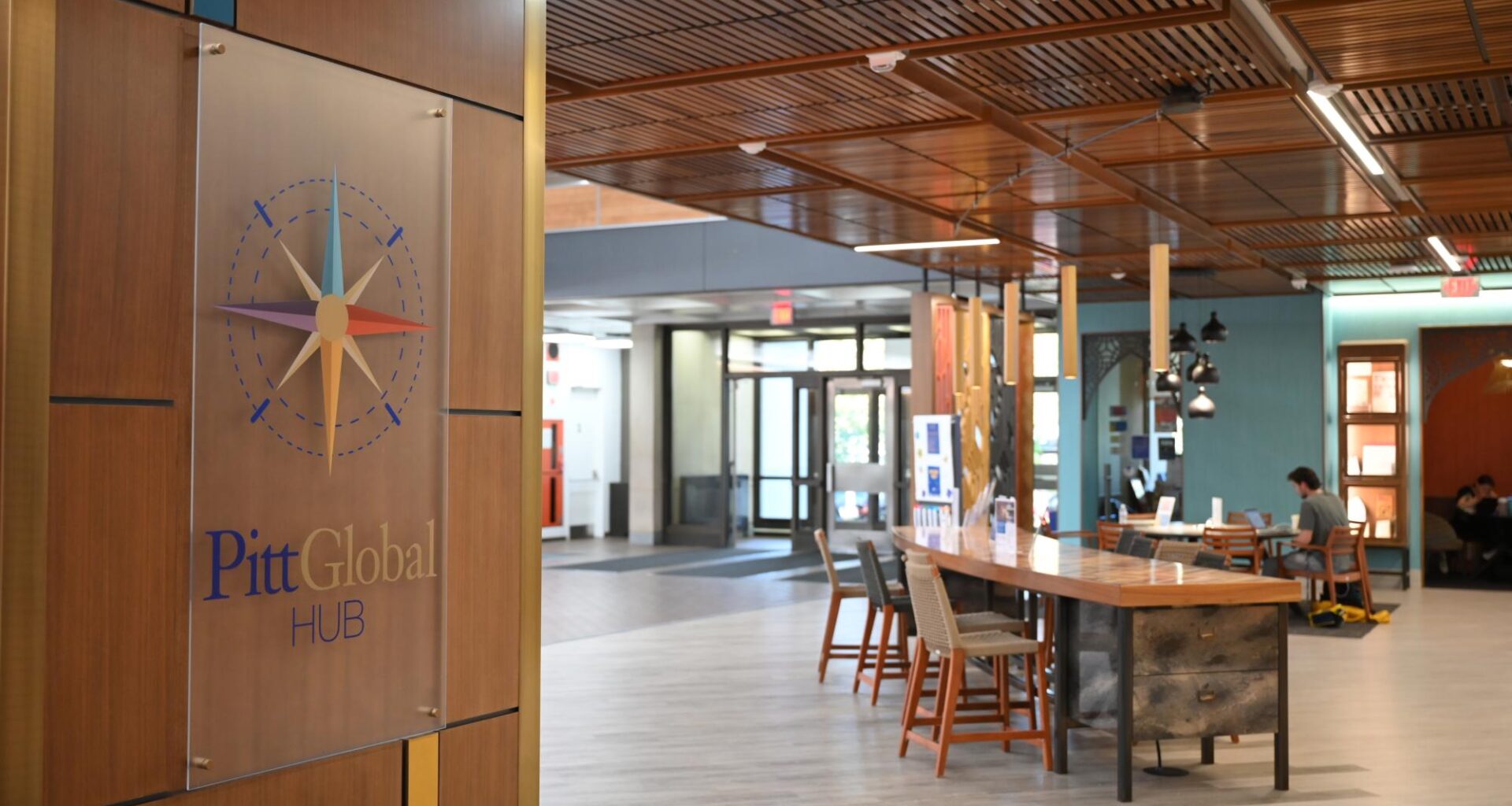
Through Pitt’s Center of Latin American Studies, students can gain an understanding and context of U.S.-Latin American relations, including issues affecting Latinx communities and current conflicts in Latin America.
Amid ICE raids and enforcement across the nation, more people are seeking to learn about Latino and Hispanic language, history and culture. Pitt’s Center for Latin American Studies and Certificate in Latin American Studies gives students the chance to dive into its neighbors’ experiences.
Luis Van Fossen Bravo, the associate director of CLAS, said the certificate was created in the 1960s to give students a place to learn more about Latin America and conduct research related to the region.
“The center was looking at ways to kind of give students training about Latin America,” Bravo said. “One of the things that actually kind of created the movement towards the creation of the certificate was the seminar and field trip in which students take a class during the spring semester, and then they go to the field for six weeks to carry out the research project that they created.”
Enrollment for the certificate peaked in the mid 2000s, with over 200 undergraduate and graduate students enrolled in the certificate, according to Ana Paula Carvalho, assistant director for academic affairs. In recent years, the certificate has seen a decline in enrollment rates.
“Right now, we have about 49 students. The numbers have been declining for a variety of reasons,” Carvalho said. “Some of it was because of decline in the language programs across the board, not just in our certificate. Then later, of course, the pandemic was another big hit that kind of brought it down a little bit as well.”
The certificate itself takes 15 credits and can be fulfilled through a variety of courses. It has a requirement of three years studying Spanish, Portuguese, Quechua or Haitian Creole and a study abroad component that may be fulfilled by participation in the CLAS Undergraduate Seminar/Field Trip.
Audrey Maize, CLAS student ambassador and a junior triple major in political science, Arabic and Latin American Studies, said she appreciates the flexibility of course work that the certificate and CLAS programs offer.
“Whereas another major or certificate would have you take core classes and elective classes that are all about whatever your major is, the Center for Latin American Studies allows you to take classes that are both in your major and outside of it,” Maize said.
Karen Goldman, who teaches one of the courses that counts towards the certificate, SPAN 0082, “Latin America Today,” said her goal is for students to have a more informed perspective on real world issues relating to Latin American studies.
“My goal is for students to come away from the class with a really enhanced understanding of the countries in Latin America and also the relationship between U.S. history and Latin American history and how those impact each other today,” Goldman said.
As Latin America becomes more central in U.S. political discourse, Goldman aims to give her students historical context and a more nuanced education that will allow them to engage in civic discussions.
“It’s no secret that Latin America is much, much more on the radar of US-based people in light of the Trump administration policies towards Latin America,” Goldman said. “For example, the situation in Venezuela is something that people might not know a lot about. Argentina is a country that was pretty much off the U.S. radar for many years, and now it is very much front and center. Bad Bunny, as a Puerto Rican singing at the Super Bowl or winning all these Grammys and making political statements, is crucial, and students need context for these kinds of events.”
In addition to the variety of academic offerings, Bravo said the CLAS offers community support for its students and the larger Pittsburgh area as well.
“We have the Latin American and Caribbean festival coming up in March. We organize it every year, and it has become a pillar of the community,” Bravo said. “We also have grants that we can provide to students. For instance, the 20th annual Brazilian festival on Saturday [Feb. 14] is organized by Brazil Nuts Club at Pitt, so we have specific grants for club activities.”
Students who participate in the programs in CLAS come from a variety of disciplines and backgrounds, Carvalho said. Part of what ties them together, then, is the community they find at CLAS.
“Independently, the students are all from different majors. They have different ethnic and socio-economic backgrounds, but they do find this community in common,” Carvalho said. “A lot of times we have students that say that the Center is like their second home.”
Carvalho hopes the Center can serve as a space for students who need support of any kind.
“We always tell our students, if you’re sad or if you just need to talk, come to us. We are good listeners. If we can help, we can help in many ways. And that’s across the center — all the staff will do that, and our students will help other students as well,” Carvalho said.
John Trabulsi, a CLAS student ambassador and senior Spanish major at Pitt with a certificate in Latin American studies, said he feels a responsibility to support immigrant communities in Pittsburgh.
“We feel obligated to help people in our community, to make sure our students are aware of what’s happening, to make sure immigrants in the community around us are safe,” Trabulsi said.
Despite the new attention to Latin American communities nationwide, Trabulsi said the study of Latin America and its experiences has always been important. He hopes to use his leadership and belonging in CLAS as a platform for advocacy and community support.
“It’s crucial to use our platform as the Center for Latin American Studies at the University of Pittsburgh to advocate not just for the exposure of Latin American Studies, but also to study what is going on in news currently, and fight against that in our own way,” Trabulsi said.