
In the quiet of a Fallbrook Street home last July, a night of rest turned tragic. Thalia Matos of Carbondale fell asleep beside two-month-old Royce Coxson while her system was clouded by marijuana laced with embalming fluid, authorities said.
By morning, her infant was unresponsive, the victim of what Lackawanna County Coroner Tim Rowland ruled as asphyxia from co-sleeping.
Just three months earlier, on Eynon Street in Scranton, six-week old Promise Small died beside her mother as the two slept on the couch — an evening where alcohol consumption turned a shared sleep into a fatal tragedy, authorities said.
That death was also ruled as asphyxia from co-sleeping.
These aren’t isolated accidents or a rehash of police reports. They are a somber reminder of where the boundaries of safe sleep are dangerously blurred by exhaustion and impairment.
District Attorney Brian Gallagher, a parent of four himself, emphasizes the difference between a parent sleeping beside a child simply because they’re exhausted and a parent using drugs or alcohol before laying beside their infant for the night.
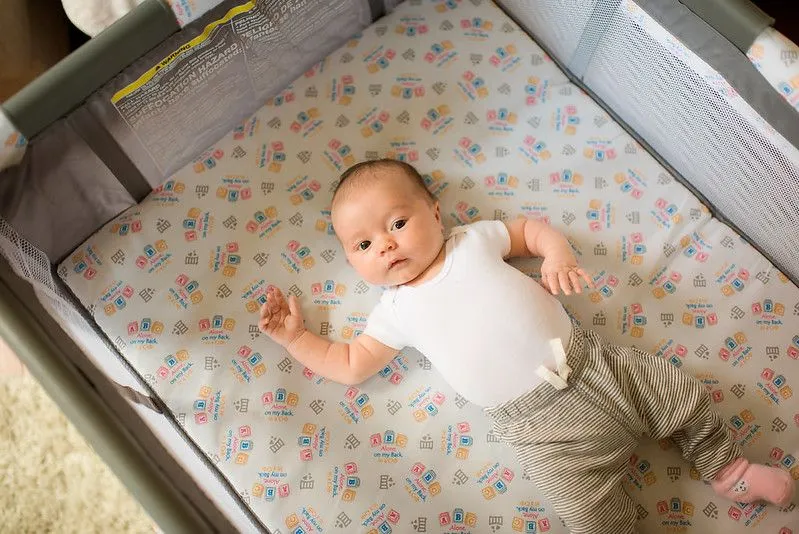
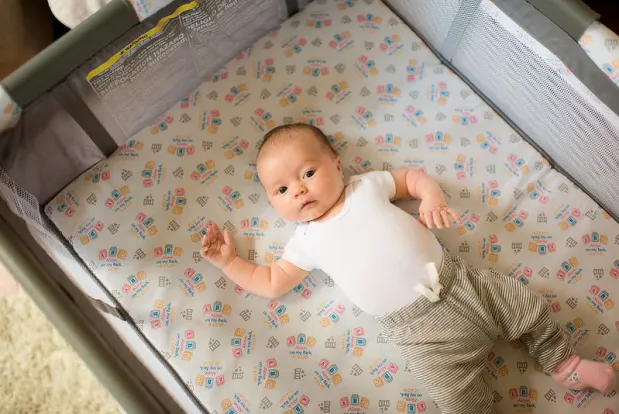 American Academy of Pediatrics (AAP) advises parents to place babies on their back, with no blankets or bumpers, for safe sleeping. (PHOTO COURTESY OF CRIBSFORKIDS)
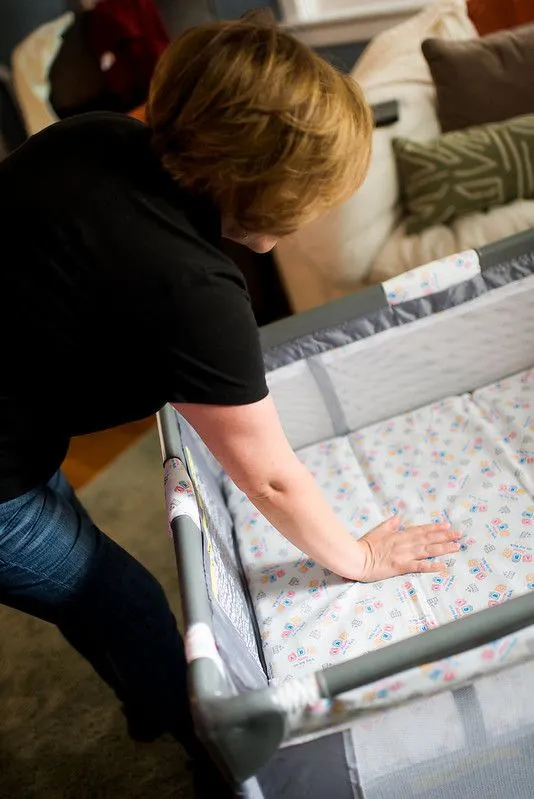 American Academy of Pediatrics (AAP) advises parents to place babies on their back, with no blankets or bumpers, for safe sleeping. (PHOTO COURTESY OF CRIBSFORKIDS)
“When a caregiver is under the influence, their ability to respond and recognize danger is significantly diminished, and that impairment can rise to the level of criminal negligence,” Gallagher said.
Gallagher made the difficult decision to charge a parent after the death of two-month-old Royce Coxson on July 14.
Thaila Matos went to sleep with her two-month-old son, unaware that it would be the last time she would see him. When she woke up the next morning, the baby was lifeless beside her.
She ran to a neighbor’s apartment for help. The neighbor later told police she recognized the scent immediately: the pungent, chemical odor of marijuana laced with embalming fluid clinging to both the mother and the infant. She immediately called 911 in hopes the boy could be saved.
Those hopes were dashed when he was pronounced dead a short time later at Geisinger Community Medical Center.
While Matos initially told investigators she had only been vaping, the physical evidence in her apartment told a different story. Detectives found a discolored marijuana cigarette—a telltale sign of formaldehyde use—and medical records confirmed that just weeks earlier, Matos had watched a mandatory “Safe Sleep” video before being discharged from the hospital.
Evidence of the child’s final position was written on his skin; investigators found pooling blood on his face and pressure marks on his back, police said.
Matos, 28, faces felony charges of involuntary manslaughter and endangering the welfare of her son.
She is scheduled to come before a magisterial judge on Tuesday for her preliminary hearing.
Just weeks before, on March 28, another mother also woke to discover her baby lifeless beside her on the couch.
The night before, Shalyn Small, 32, placed her daughter Promise beside her for a night’s sleep. It was the last time she would see the six-week-old alive.
When she realized the baby was unresponsive, Small began yelling, “I think I might have suffocated her. I think I might have laid on her,” according to the police affidavit.
Later she would tell police, “I think I squished her.”
Investigators found a bottle of White Claw next to where the two were sleeping, a hard seltzer containing 5% alcohol.
A blood test shoed Small had a blood alcohol level of .18%, according to the affidavit.
She faces felony charges of involuntary manslaughter and endangering the life of her daughter.
At a preliminary hearing on Oct. 9, the case was transferred to Lackawanna County Court and she is awaiting trial.
“Co-sleeping, particularly when a caregiver is impaired by marijuana or other drugs, can have fatal consequences. Infants depend entirely on adults for their protection, and when that responsibility is compromised, we will step in and hold caretakers accountable,” Gallagher said following the charges.
Rowland said he sees several incidents of death during co-sleeping come through his office every year and it’s always very sad.
He points out that all area hospitals educate parents on the dangers of co-sleeping before they are discharged to take their babies home.
Those deaths are ruled homicide, fitting the legal definition of the word meaning when one person causes the death of another.
Rowland rules the cause of death in those cases as mechanical asphyxiation, compression placed on thorax of infant does not allow for air to enter lungs.
“These are not unexplained deaths,” he said. “They’re preventable.”