
By SUSAN JONES
While nationwide, state support of higher education has continued to rebound from the pandemic years — up 4% between fiscal year 2023-24 and 2024-25, according to the National Education Association — Pennsylvania has continued to fund Pitt, Penn State and Temple at the same level since 2019.
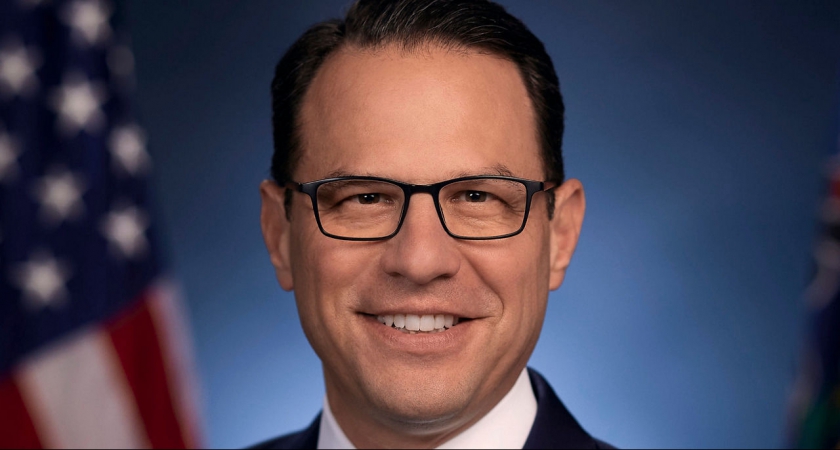
The 2026-27 state budget proposed by Gov. Josh Shapiro on Feb. 3 keeps the line-item amount for each of the schools the same, but also asks for a $30 million investment in performance-based funding for the three larger state-related universities and $1.1 million for Lincoln University.
Last February, Shapiro proposed $60 million for performance-based funding to be split between Pitt, Penn State and Temple. The Performance-based Funding Council — which was established in the 2024-25 budget and includes Kevin Washo, Pitt’s senior vice chancellor for external relations — released the final recommendations for the performance metrics in May 2025.
The General Assembly adopted the recommendations during the 2025 legislative session, but ultimately no money was included for the program in the final state budget that passed in November.
That left Pitt’s general funding appropriation from the state for 2025-26 once again at $151.5 million.
For 2026-27, the General Assembly again will have to determine how much money, if any, to distribute using the performance-based formula.
“We’ve got this important tool in place,” Shapiro said in his budget address. “We established the metrics. Now it’s time to fund it.”
In addition to the number of in-state students at each school, the metrics include four- and six-year graduation rates, six-year Pell-eligible graduation rates, high-priority occupation degree production, improved college affordability, transfers from community colleges, and enrollment from underrepresented high schools.
The proposed budget also includes $3.98 million to Pitt — the same as last year — for rural education outreach, which supports work at the Pitt-Bradford campus.
Pitt had to submit its budget request for 2026-27 in October, before it knew what this year’s funding would be. The University asked for a 3.7% increase for the coming year, based on the Higher Education Price Index projections for 2025.
The state funding amounts to about 7% of Pitt’s operating budget. All of the general funds from the state go toward giving tuition discounts to in-state students. State funding provides approximately 60% of that discount while Pitt covers the remainder.
Officials from the state-related universities are scheduled to testify before the House Appropriations Committee at 10 a.m. March 11.
Other proposals that could impact Pitt
Innovation fund: Shapiro proposed once again backing an innovation fund, like the one created in 2013 under Republican Gov. Tom Corbett and seeded with $100 million in tax credits approved by a bipartisan group of lawmakers.
“Let’s fund that again — and be even more targeted, using those dollars to provide capital for promising start-ups, fund clinical trials for the life sciences, and develop a workforce and education pipeline to help these companies succeed,” Shapiro said.
Student-teacher stipends: Shapiro cited Pitt graduate Hallie Sill as an example of students who benefited from the bipartisan effort three years ago to create student-teacher stipends. He said that so far 2,000 students have received these funds.
“We need more Hallies in our classrooms, so let’s increase our commitment to this initiative that we know works. As she and the other 2,000 student teachers show — if we put more money in people’s pockets, we can get them into the jobs they love.”
Susan Jones is editor of the University Times. Reach her at suejones@pitt.edu or 724-244-4042.
Have a story idea or news to share? Share it with the University Times.
Follow the University Times on Facebook.