
For the first time in almost two weeks the rhododendron leaves have unfurled. When the temperature gets really cold, they curl up to preserve moisture so they don’t desiccate, or dry out. Curled up leaves are normal in the winter. But if rhododendron leaves curl up in the summer, there’s something wrong with the plant.
Regardless of what the weather is, though, at this time in February mostly everyone, except for skiers and snowboarders, is looking forward to spring. So the open rhododendron leaves were a welcome sign, even though they may still curl up again.
Also, ice fishermen or anyone who just likes to fish in cold water is probably hoping the wintry weather will stay around for a while. I recently read that walleyes, perch and bluegills are some of the fish currently being caught on lakes and rivers.
Our snow cover will be around for a while even if the weather warms up a lot, and big snow piles will take even longer to disappear. The temperature inside them will stay at or below freezing as they compact, and eventually they’ll get dirty and unattractive.
Snow cover is actually good for the plants below it, even as we humans want it to go away. It insulates them and keeps moisture available to them. Also, when the snow finally melts, it provides fertilizer to the plants because as snowflakes fell they gathered nitrogen from the atmosphere.
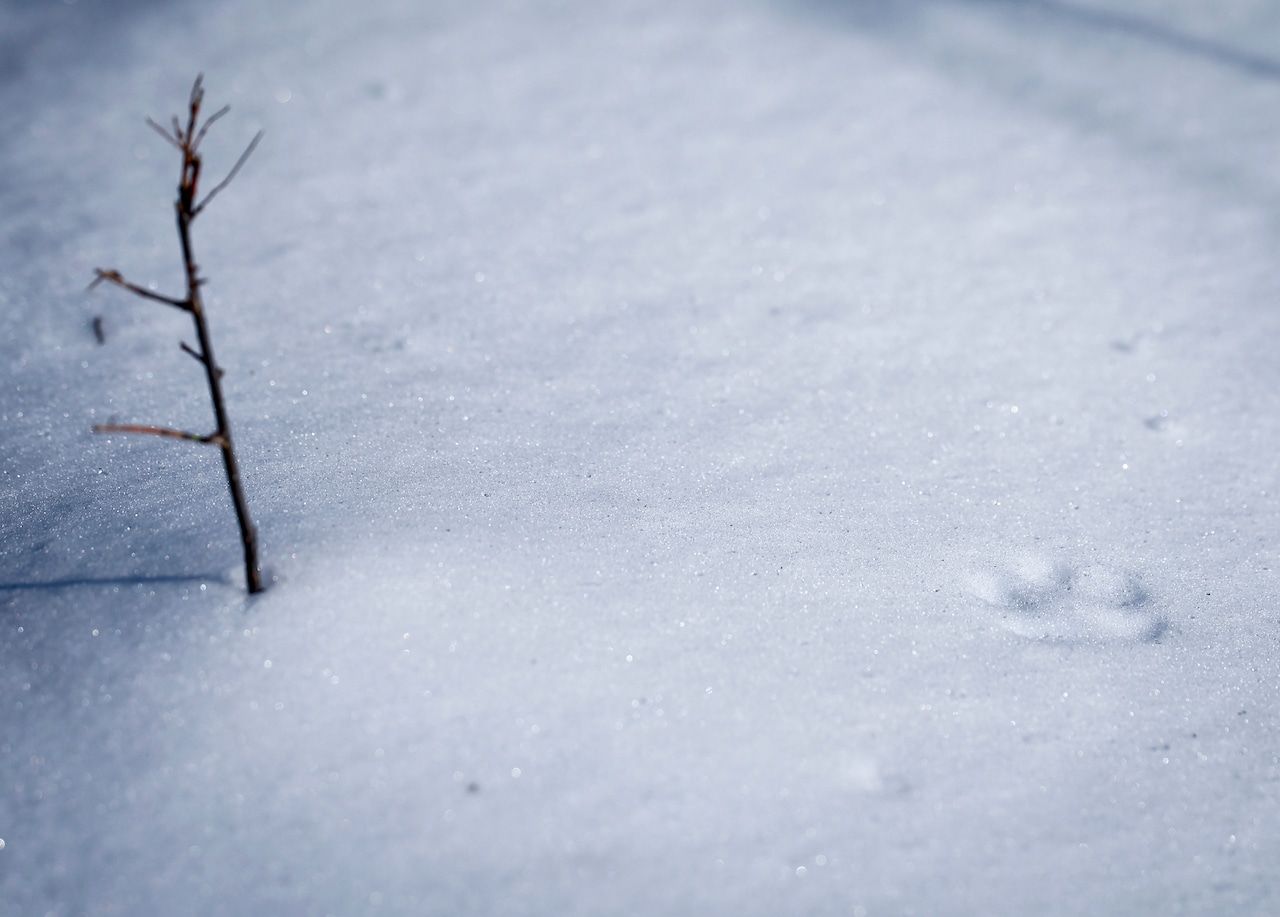
Unlike right after the last storm when ice topped off a foot or more of snow, making it hard for animals to walk around, deer are now moving around a lot. Their tracks are all over the fields, and they continue to come into the yard at night to drink from the heated bird bath.
The rabbit I recently wrote about is still here every night, but one day I saw it in the middle of the afternoon. For some reason it came out of wherever it was hiding and ran at full speed across the snow. It was funny watching it because at times it looked like it was skating rather than running. And once it rolled over but quickly got up and began running again.
At this time in the winter with weather conditions like they’ve been, there’s not much — or at times even any — outdoor wildlife activity to see except for the birds. Since we put white millet and cracked corn on the ground for them, in addition to having black oil sunflower feeders, there’s been loads of them in the yard.
I’m currently seeing lots of sparrows, most of which would be in the fields if they weren’t snow covered. In the winter, it’s not common to see Savannah, field, tree and fox sparrows, but I’ve been seeing all of them and a female eastern towhee from the living room picture window.
The most interesting birds I’m seeing, though, are nonmigratory northern cardinals. Among the many around is a leucistic adult male whose sides and back are gray, not red. Leucistic means that the bird’s feathers are lacking their normal pigment color. And there’s also an adult female that’s been affected by leucism. She has big white eye rings, which is something that cardinals aren’t supposed to have.