
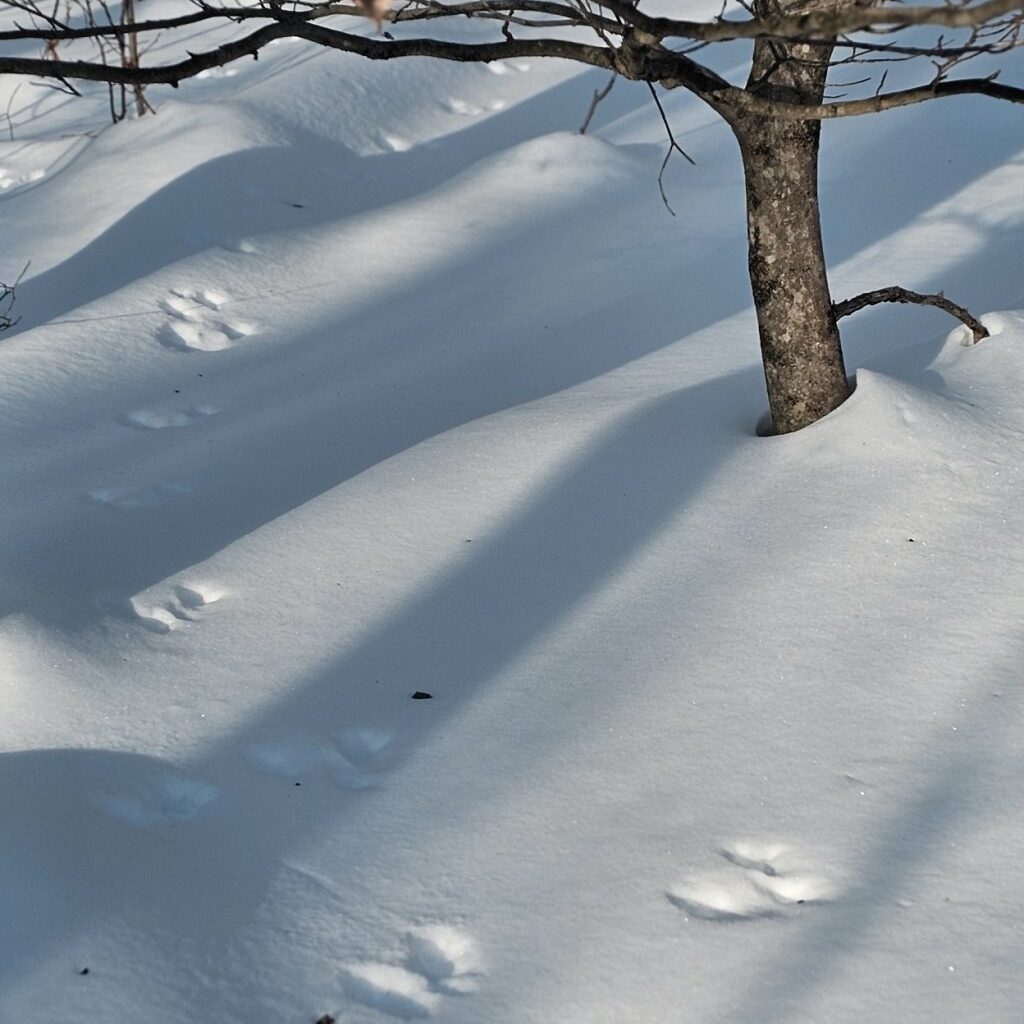
BARNESVILLE — A snowy winter walk on a quiet trail in the woods may seem very boring at first. The hardwoods creak, the wind blows, and your boots crunch the snow underfoot, but if you pause and gaze down into the snow, you’ll see something else.
You might not have noticed, but a lot has happened while you weren’t looking. Animal tracks, like short brushstrokes on a blank canvas, adorn the snow. Finding out what they are is like uncovering a secret story about nature.When it snows in Pennsylvania, we have plenty of chances to look for tracks in our backyard or on a nearby path. There are tracks of deer, foxes, squirrels and even the hard-to-find bobcat in the snow. For novices, it’s more important to start noticing overlooked details than to identify prints.The best time to track is usually just after a light to moderate snowfall, when there is just enough snow to see clues in it. The other optimum time of the day is early in the morning, especially if it snowed the night before. When the temperature is slightly below freezing, and the sun is low in the sky, you can often discern small details in the snow.
Start small. Go for a short walk in a nearby park, nature preserve or any tiny piece of woods that you can easily get to. You don’t have to travel far away. The reality is that animals have adapted to our presence and can travel closer than we may believe.
“Reading tracks in the snow can be fairly easy or it can be very difficult, depending on the depth of the snow and the temperature of the snow and the air,” said Pennsylvania naturalist and author Charles Fergus. “Sometimes tracks look clear and obvious, like when they’re made in an inch or two of damp snow.
“If they’re laid down in six or more inches of powder, they can be very hard to parse out. A good identification guide is a huge help. I like to photograph a track or tracks using my phone, then compare the images to those in “Mammal Tracks & Sign: A Guide to North American Species,” by Mark Elbroch, published by Stackpole Books. I find Elbroch’s photos, drawings, and word descriptions to be a great help in figuring out which bird, mammal, or other creature left a given track in the snow.”
Deer tracks are among the most common and easiest to spot. Two deer tracks, shaped like a teardrop with the front slightly pointed at the tip, can be easily identified. When they walk, their legs hold their hooves above the ground.
When a deer leaves a straight line of footprints that are all the same size and spaced 2-to-3 inches apart the deer was probably walking. The deer was probably running if the tracks are wider apart and the prints are deeper.
Red fox tracks are tiny and circular, usually 2 inches long, and have a clear diamond shape. You will observe four toe pads with clear claw marks that seem like dog tracks.
Fox tracks, however, are usually straight. A dog’s tracks are often less regular and more erratic, and a fox’s bushy tail will frequently leave a drag trace between its tracks.Squirrel paw prints often appear disorganized as they bounce along, and their little front feet fall behind their bigger back feet, making a Y shape. The pattern resembles two smaller dots with two larger dots behind them, and there is a good amount of space between each part of the Y.
Raccoon tracks are about the same size as little hands, 3-to-4 inches long. There are five toes on each foot, and they have claws. If you’ve ever seen a raccoon walk, you certainly noticed that it waddles.
When tracking, don’t rush. Tracks will fade, but one good trail will give more info than many prints. Be aware of what’s going on around you.
You may see indications of a struggle in the snow or a path that suddenly ends. You might even observe wing prints from an owl when it swoops down and snatches a mouse if the conditions are appropriate.
Tracking can turn a simple winter walk into something far more interesting. When you walk on the snow, now you can look down and begin to read the story of the woods and realize what animals are sharing your local trail with you.
(Dempsey is a hiking enthusiast and freelance outdoors writer. Contact the writer: outdoors@epulicanherald.com.)