
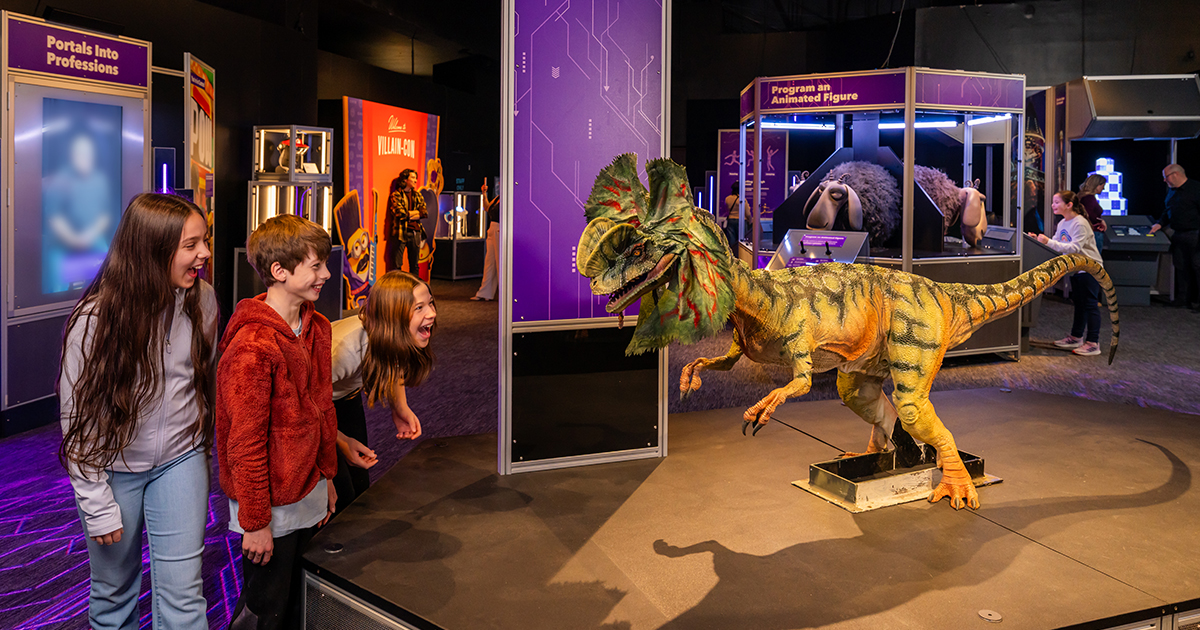
A hands-on focus on the STEM behind theme parks will inspire more future engineers than fairytale princesses — and it’s exactly what a science museum should be doing with pop culture.
Get our weekly picks of what to do this weekend and the latest on Philly’s arts and entertainment scene.
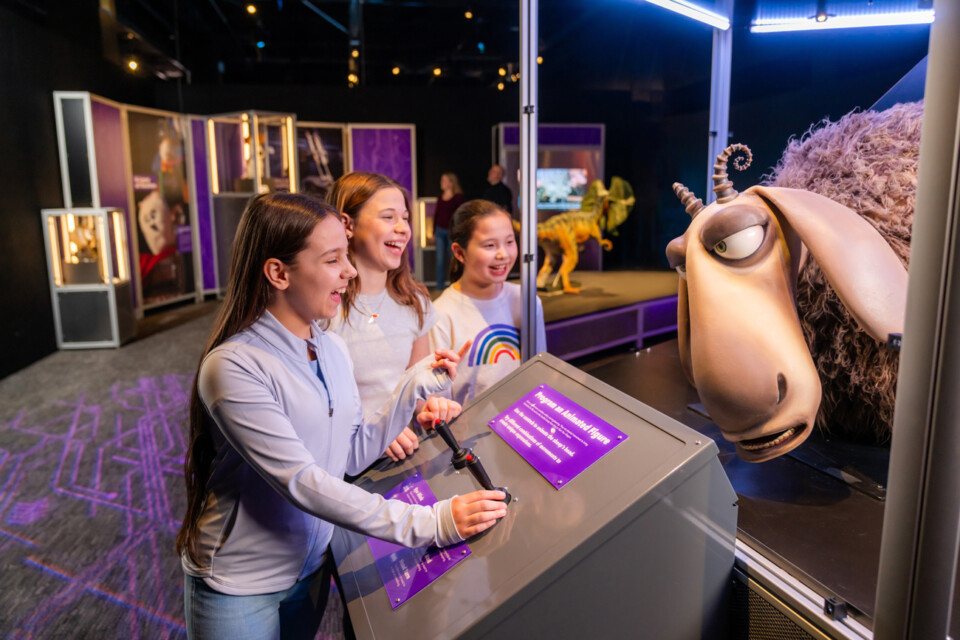
Programming an animatronic at the Franklin Institute’s Universal Parks exhibit / Photograph by Dylan Eddinger
If you’re walking into the “Universal Theme Parks: The Exhibition” at the Franklin Institute expecting a parade of Minions and Harry Potter photo ops, here’s a little heads up: You need to recalibrate.
Yes, the blockbuster franchises are part of this much-hyped exhibit — you’ll see props, costumes, design models, and familiar characters. And there are some immersive moments and selfie spots for good measure. But if you go in expecting “IP: The Exhibit,” you may find yourself wondering where all the movies are.
That’s not a flaw. It’s the point.
What makes the museum’s big new Universal exhibit work — and what makes it feel fundamentally different from other entertainment-driven museum tours — is that it’s built around process, not property.
And that matters, especially at a place like the Franklin Institute.
This Isn’t a Character Showcase. It’s a Science Exhibit.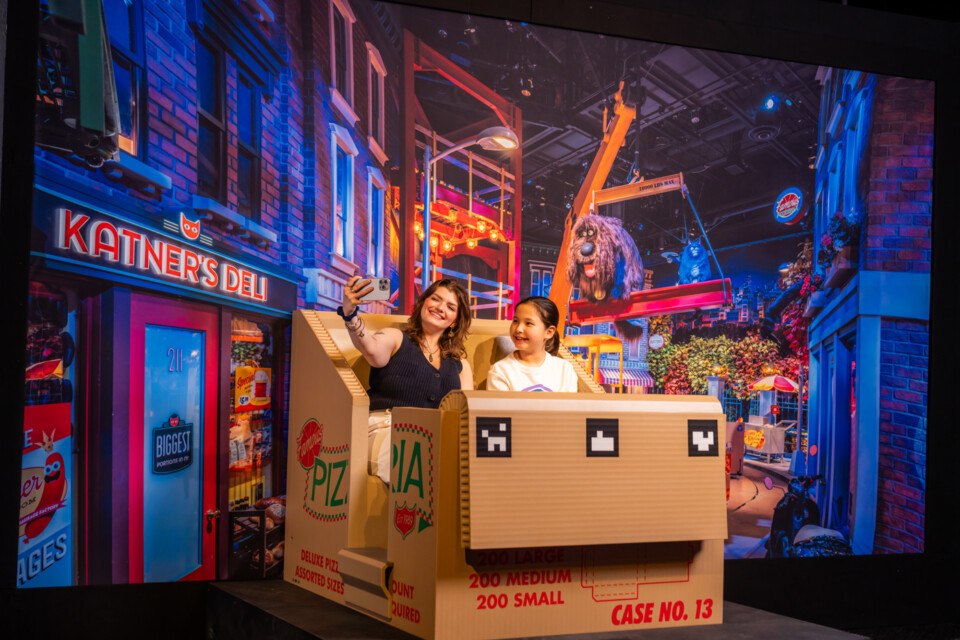
A ride photo op at the Franklin Institute’s Universal Parks exhibit / Photograph by Dylan Eddinger
When the Franklin Institute announced last year their plans for the Universal Parks exhibit, it felt like it might be comparable to their 2023 “Disney100” exhibit. Another animation/entertainment/theme park behemoth celebrating its vast catalog of intellectual property and innovations. But while Universal does have an array of recognizable characters in its portfolio, there isn’t the same emotional shorthand and uniformity of Disney there. Disney has a century of princesses and Mickey Mouse. Universal has … Shrek? Minions? A bloodthirsty shark?
Instead of trying to out-nostalgia anyone, Comcast and the Franklin Institute made a different choice when designing this exhibit. And it’s a smart one.
The 18,000-square-foot exhibition space is structured around how theme parks are actually built — the physics of thrill rides, the robotics behind animatronics, the digital media design that creates immersive environments, the technology that makes the spectacle believable.
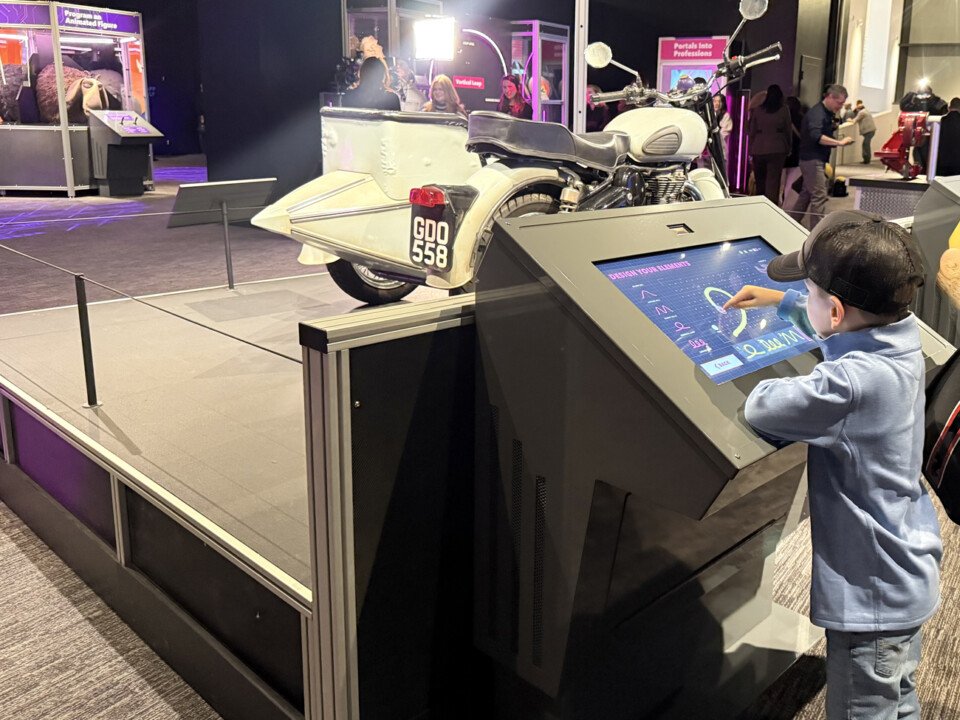
Ride design at the Franklin Institute’s Universal Parks exhibit / Photograph by Laura Swartz
Across eight galleries, visitors don’t just see artifacts. They see process.
They program animated figures. They experiment with projection mapping. They examine design models and mood boards. They watch video spotlights on storyboard artists, lighting designers, prop masters, engineers, and creative directors. Every object is contextualized within a stage of development — from early sketch to finished attraction.
It’s Future-Focused, Not Nostalgia-Driven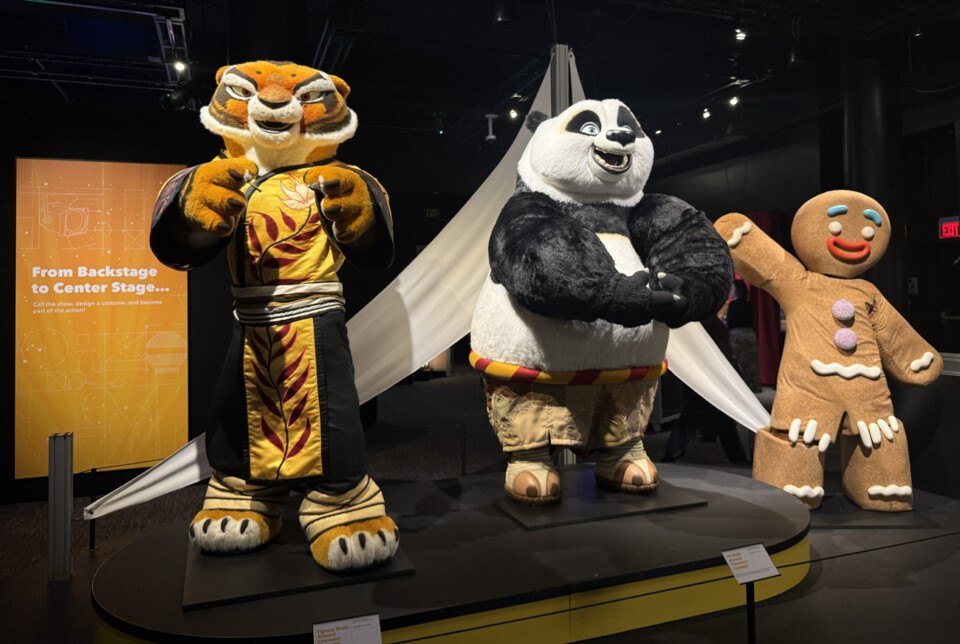
Characters at the Franklin Institute’s Universal Parks exhibit / Photograph by Laura Swartz
The most compelling part of “Universal Parks: The Exhibition” isn’t the recognizable IP — it’s the career visibility. This show makes explicit what’s often invisible: Theme parks are massive interdisciplinary undertakings. Behind every ride is a team of engineers, physicists, robotics specialists, coders, industrial designers, fabricators, architects and digital artists.
The end result is an exhibition that feels less like an immersive ad for Universal Parks (minus the intro room’s video, which inadvertently sets that tone) than a STEM exhibit wearing a theme-park costume. The recognizable characters get kids through the door, but the ultimate goal is to “inspire future idea-makers and inventors,” says Michelle Singer, senior vice president of political engagement at Comcast.
It helps that the exhibit was designed by the hometown team of the Franklin Institute itself along with Universal’s parent company Comcast (and design firm MDSX). The museum knows what works, and what engages the kids that come through their doors every day. The corporation knows that it’s quite possibly engaging their next generation of creatives. The product of the collaboration is more tactile, more interactive, and more purpose-driven than the Disney exhibition was. Every interactive introduces a concept. Every artifact is there to illustrate a stage in the design process.
And while there are some fun artifacts — look out for life-size park-worn costumes from Kung Fu Panda, a car you can sit in from The Secret Life of Pets ride, a giant drone mockup of Toothless from How to Train Your Dragon — the takeaway is less “I saw a Minion” and more “Someone built this. I could build this.”
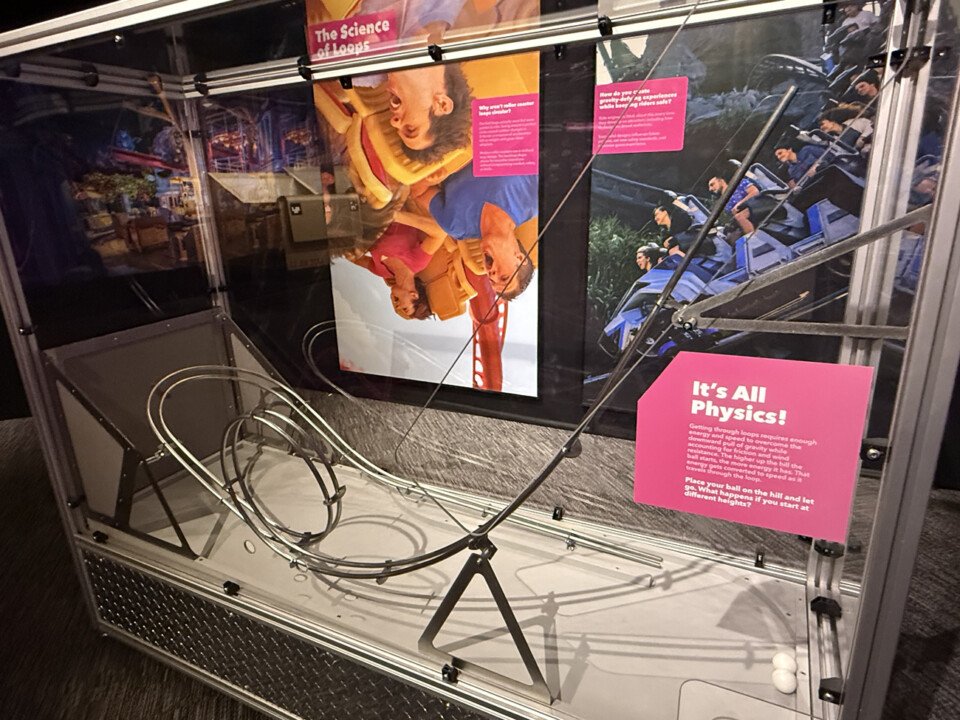
The physics of rollercoasters / Photograph by Laura Swartz
Case in point? Video screens spotlight real professionals, and one final photo op has kids make their Universal work badge. There are hands-on interactives everywhere, teaching visitors how projection tricks your eye, how adrenaline is calibrated safely on a rollercoaster, how psychology is used to invoke fear in a horror attraction, how story translates into space. It’s not about pretending to be a princess, but an engineer.
In other words? It’s exactly what a science museum should be doing with pop culture in 2026.
There’s Still Fun. And There’s Still Merch.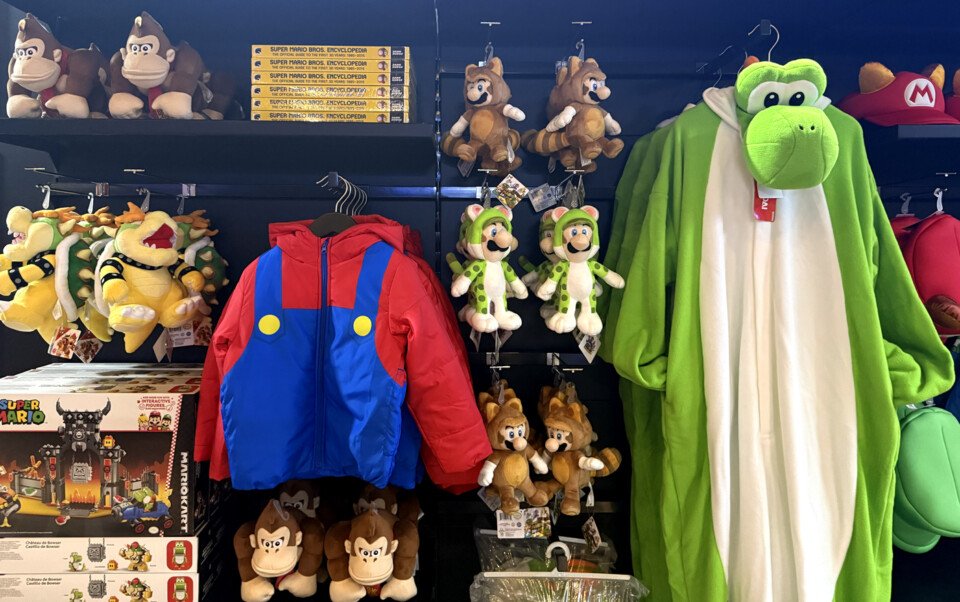
Gift shop at the Franklin Institute’s Universal Parks exhibit / Photograph by Laura Swartz
To be clear: This isn’t an austere engineering seminar.
There are immersive moments. You can stand inside a Jaws storyboard scene. You can snap a photo next to a towering Super Mario “?” block. You can pose with a Minion backdrop. The exhibit is playful and visually polished.
And yes, obviously, there is a gift shop with plenty of branded merchandise at the end. You’ll see more of the characters here than in the rest of the exhibit. The show isn’t divorced from capitalism. (Is anything in this country?) It just isn’t driven entirely by it.
Know Before You Go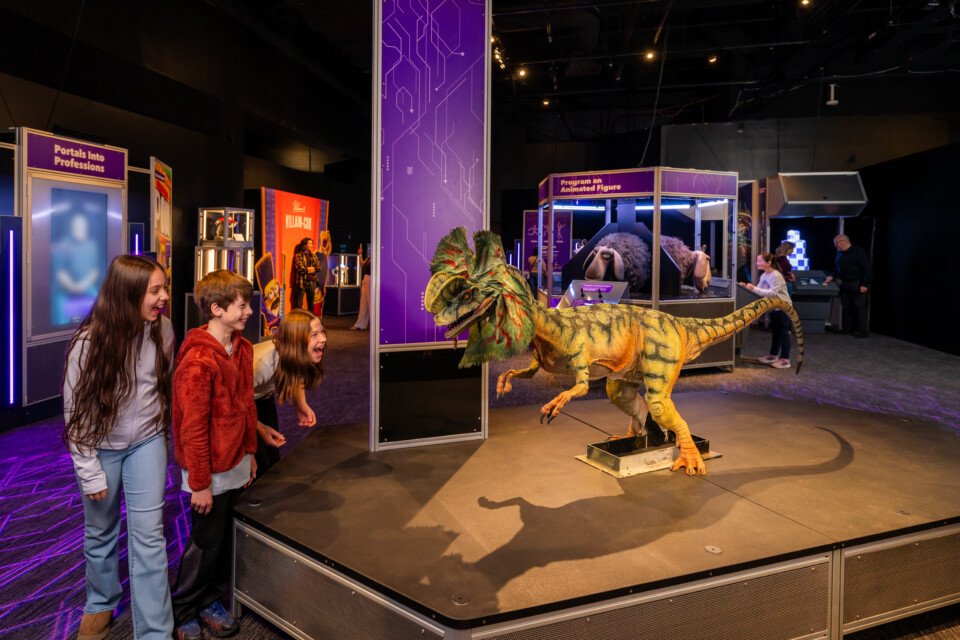
Photograph by Dylan Eddinger
“Universal Theme Parks: The Exhibition” runs at the Franklin Institute (222 North 20th Street) February 14th through September 7th. Timed tickets are available online and are $41-$43 for kids and $47 for adults (with discounts for museum members). If you’re looking to save some money, there are also evening tickets for $20, which include admission to the exhibit only, from 5 to 8 p.m. on Thursdays through Saturdays.