
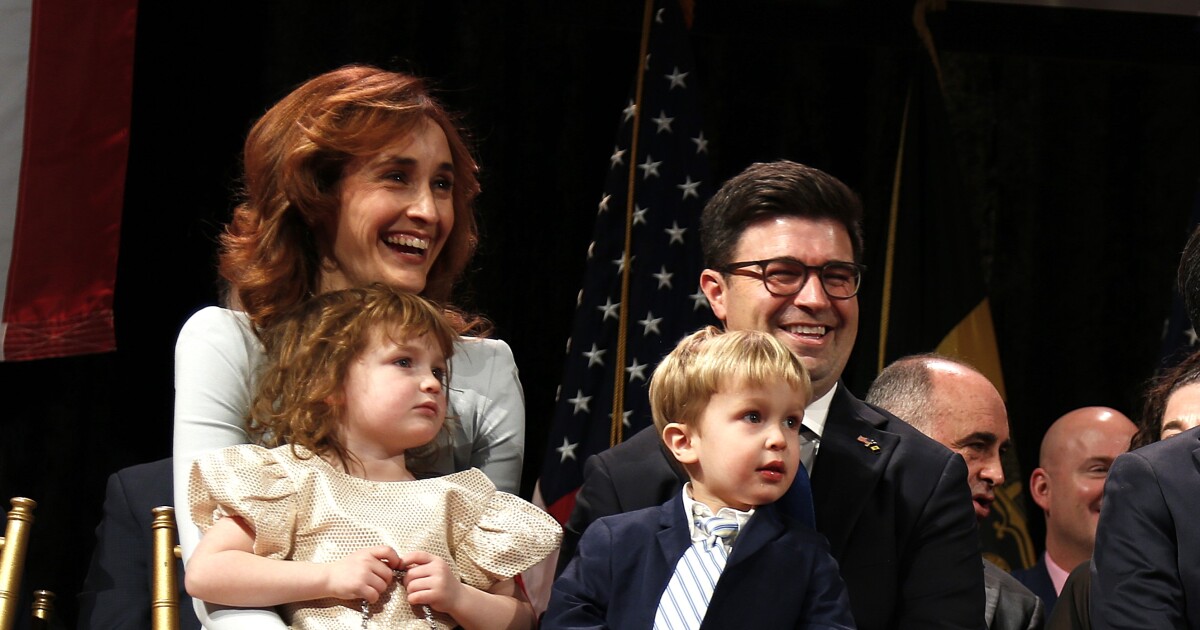
“The studies and the science behind the significance and early learning, it is just simply staggering,” First Lady Katie O’Connor said during a roundtable discussion she convened last week with leaders from Pittsburgh’s literacy and children’s organizations to explore ways to improve early education and literacy across the city.
A self-described “lover of reading” and parent to two- and four-year-old children, O’Connor kicked the conversation off, emphasizing the well-researched significance of the first five years of a child’s life.
“Those years, zero to five — there is no question. The children are sponges,” she said. “It is too late to start them [learning] at pre-K.”
The meeting brought together representatives from organizations including the Birmingham Foundation, Scholastic, Literacy Pittsburgh, Trying Together, Carnegie Library of Pittsburgh, the Children’s Museum of Pittsburgh, and the Grable Foundation, among others.
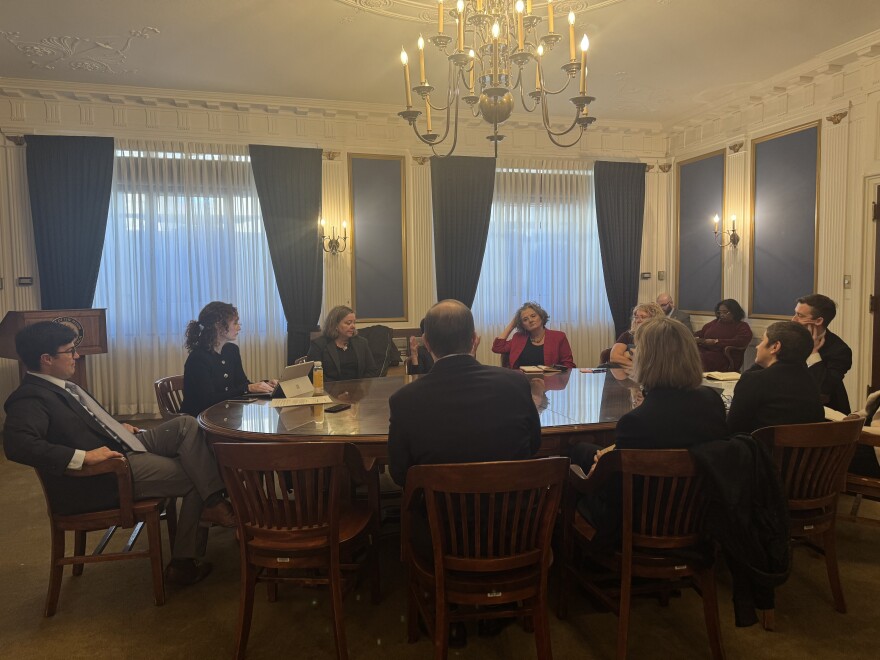
Pittsburgh Mayor Corey O’Connor hosted a roundtable discussion on early education with First Lady Katie O’Connor.
Participants discussed barriers to early education access, including awareness gaps about existing programs. Andrew Medlar of Carnegie Library noted that 10,000 Pittsburgh children read over 150,000 books during last summer’s reading program alone. The challenge, attendees agreed, is ensuring families know about these resources.
The group identified several priorities: creating unified messaging about available programs, improving support for early childhood educators, and meeting families where they are — whether at food banks, pediatricians’ offices, or grocery stores.
“We have all of the pieces,” said Michelle Figlar, Executive Director of the Birmingham Foundation. “With your leadership, we can put these pieces together and really have a comprehensive plan.”
The conversation comes as grade school reading scores at Pittsburgh Public Schools have continued to fall since the 2022-2023 school year. Schools closely monitor test results because research shows literacy is interconnected not only with educational attainment but also with mental and physical health outcomes.
It was largely a listening and learning session and moving forward, the Mayor and First Lady say they plan to continue to work with early education partners to identify immediate actions and long-term strategies.
“ I think you can end cycles of disadvantage by focusing on youth zero to five,” O’Connor said. “Firmly believe that.”