
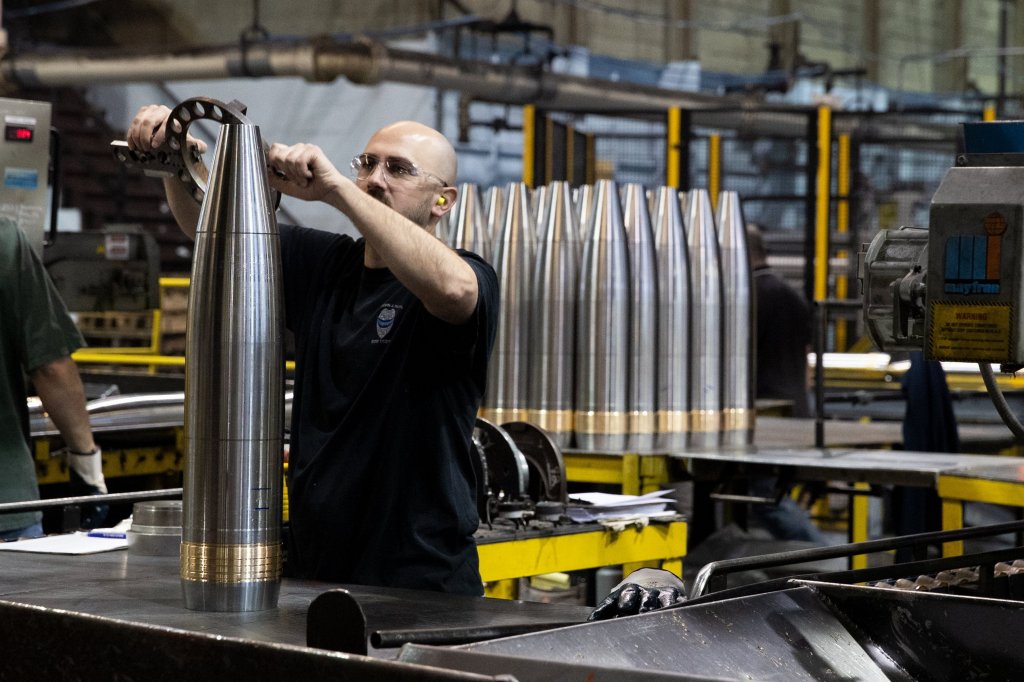
The Scranton Army Ammunition Plant seeks to gauge public interest in whether to establish an advisory board for possible environmental remediation at the historic complex that has manufactured ammunition since 1953.
The 15.3-acre site on Cedar Avenue originally was a Delaware, Lackawanna & Western Railroad steam locomotive production and repair facility dating to 1908 and is listed on the National Register of Historic Places, according to the Army.
In the early 1950s, the federal government converted the complex to an ammunition manufacturing plant and has since had various contractors operating there. General Dynamics-Ordnance and Tactical Systems, which makes large-caliber projectile shells there, has been the plant’s operating contractor since 2006.
In a public notice published Feb. 4 in The Times-Tribune, the plant solicits public interest in participation in a possible “Restoration Advisory Board” that would discuss potential environmental cleanup that might be required at the facility. The plant has identified in groundwater sampling per- and polyfluoroalkyl substances (PFAS), which are also known as “forever chemicals,” and additional testing is required to determine if the PFAS come from the facility’s activities or are migrating from upstream industrial sources, said Justine Barati, the director of public and congressional affairs of the Joint Munitions Command.
Under federal law and Department of Defense regulations, installations with an active restoration program but no advisory board are required to solicit for interest every two years, Barati said. Such an advisory board would be a formal, volunteer stakeholder group that would meet regularly and include officials from the ammunition plant, the Department of Defense, the U.S. Army Environmental Command, the state Department of Environmental Protection and the community, according to the public notice. It’s also possible that an advisory board would not be established, if there is little public interest, Barati said. The number of members on an advisory board could vary and there is not any set number for members from the public, she said.
“The composition of the RAB is designed to be diverse and balanced, reflecting the various interests within the local community,” Barati said.
More information on restoration advisory boards can be found at epa.gov/fedfac/restoration-advisory-board-rab-implementation-guidelines#recruiting.
For information on serving on a Restoration Advisory Board for the Scranton Army Ammunition Plant, contact Barati at Justine.A.Barati.civ@army.mil or 520-693-1317, by March 6, which is a 30-day deadline from the Feb. 4 publication of the notice.
A Restoration Advisory Board would not be involved in day-to-day operations at the plant. As a government-owned, contractor-operated facility, the plant is a public-private partnership that allows the government to own the plant while leveraging specialized skills and flexibility of the private company to run it, Barati said.
A “vital pillar of America’s national defense and a testament to the nation’s industrial resolve,” the plant and its output directly impact the safety and effectiveness of members of the military on the battlefield, Barati said. In meeting modern warfare needs, the plant in recent years has been undergoing significant modernization efforts to enhance its manufacturing capabilities, improve efficiency and increase production capacity, Barati said.
The Scranton plant is one of the few facilities in the country to manufacture 155 mm artillery shells used in howitzer systems, which are towed large guns with long barrels that can fire at various angles and hit targets up to 20 miles away, according to a 2024 Associated Press article. In September 2024, Ukrainian President Volodymyr Zelenskyy toured the facility and thanked the employees there for their work.
A 2023 article in The Times-Tribune reported the Scranton Army Ammunition Plant has nine buildings. Four buildings totaling 495,000 square feet once had DL&W workmen producing and repairing locomotives during the first half of the 20th century. Now, General Dynamics produces and stores shells at the Scranton plant until their shipment to Iowa, where robots safely install explosives amid thousands of empty acres.
Built in 1908, the main buildings remain largely unaltered and are in a national historic district, the Delaware, Lackawanna and Western Railroad Yard — Dickson Manufacturing Company Site. The Army acquired the DL&W site in 1951 and converted it for manufacturing ammunition metal parts. Ammunition production began in 1953 by the U.S. Hoffman Machinery Corp. In 1963, Chamberlain Manufacturing Corp. became the operating contractor. At that time, the plant was renamed from the Scranton Ordnance Plant to the Scranton Army Ammunition Plant. It also became known as Chamberlain, before General Dynamics became the contractor in 2006.
“The plant’s long history, dating back to its origins as a locomotive repair facility in 1908, combined with its current critical mission, makes it a powerful symbol of American manufacturing strength and its enduring role in global security,” Barati said.
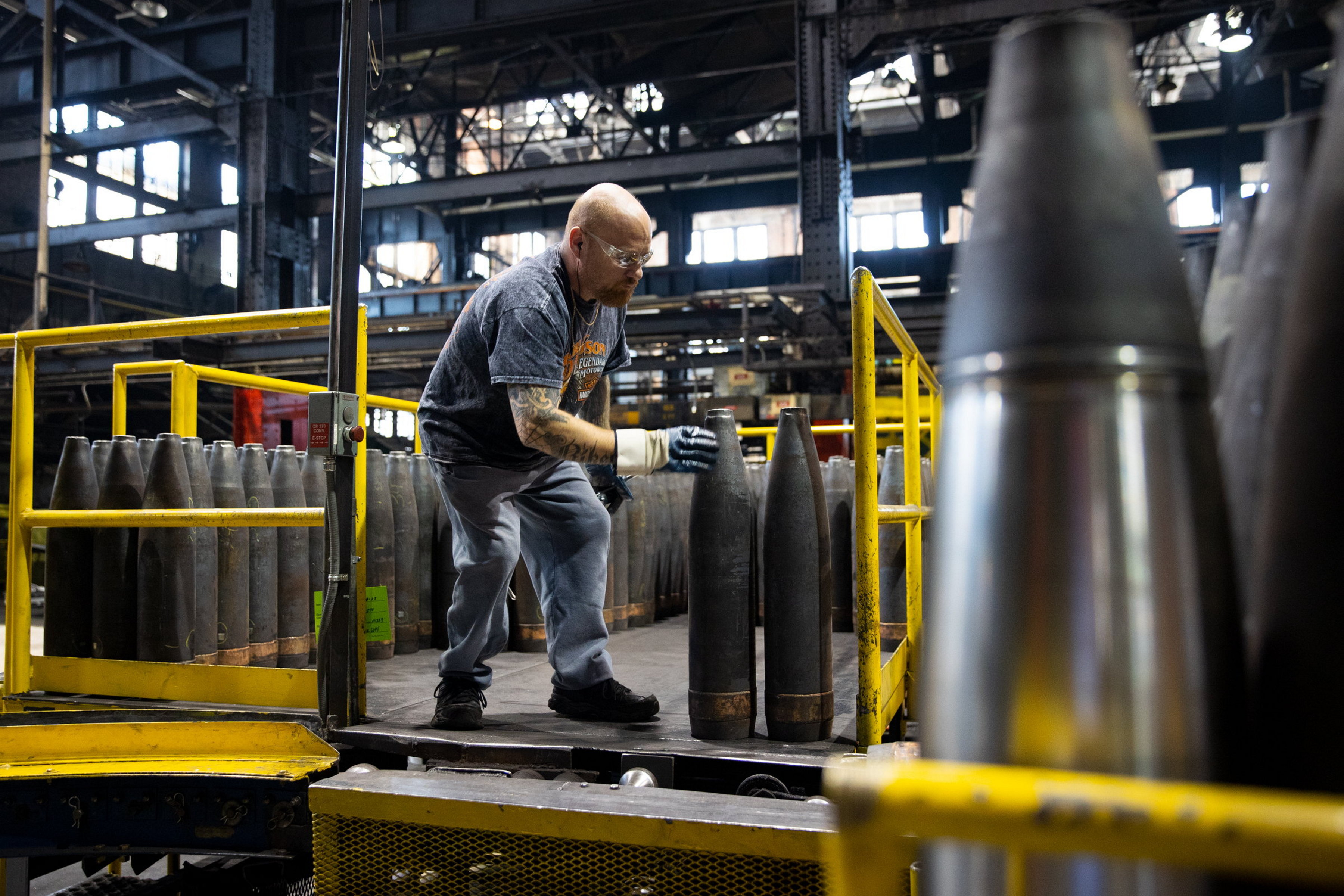
A General Dynamics worker moves 155mm shells along the assembly line at the Scranton Army Ammunition Plant in Scranton on April 12, 2023. (TIMES-TRIBUNE / FILE PHOTO)
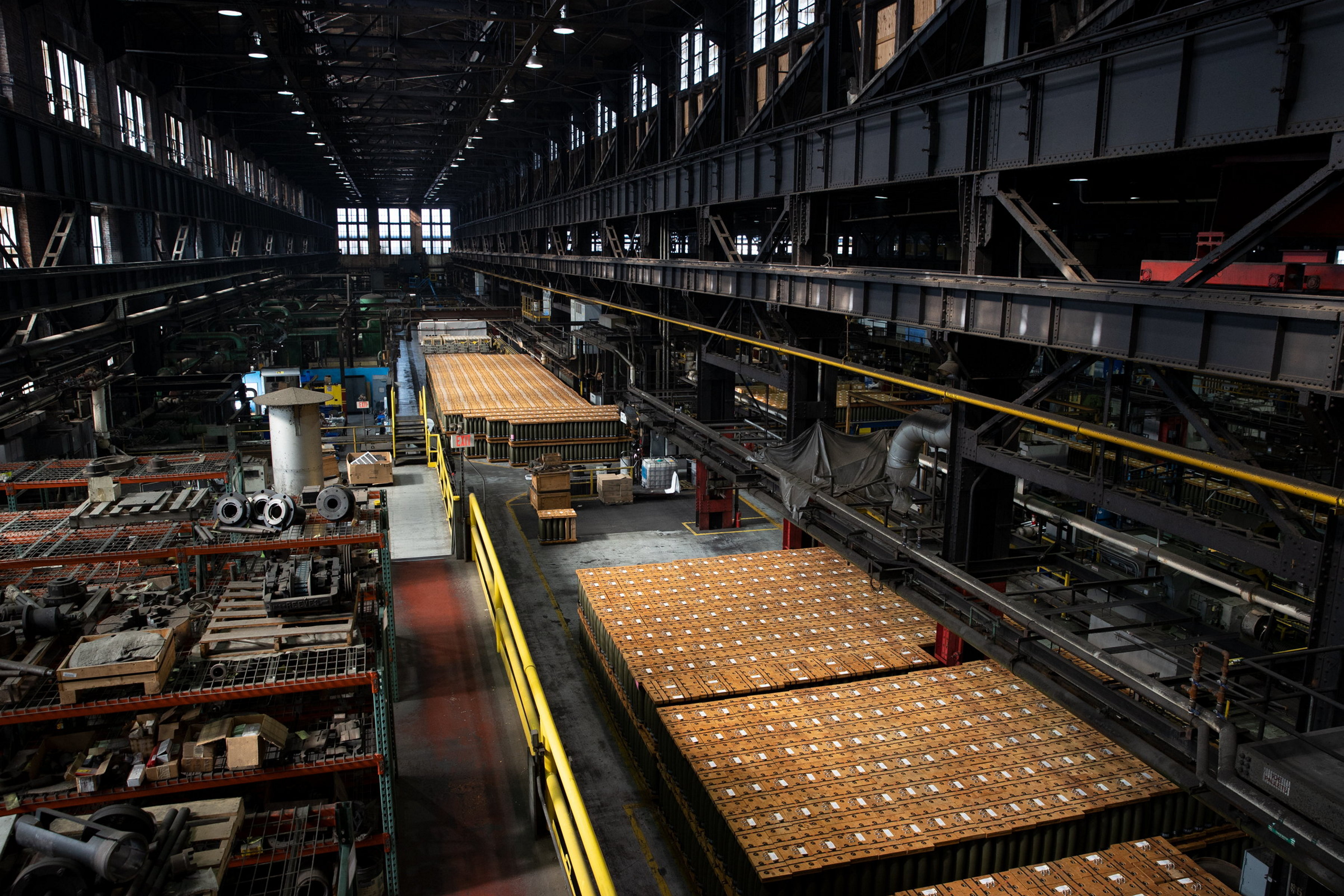
Pallets of 155mm shells are seen at the Scranton Army Ammunition Plant on Wednesday, April 12, 2023. (TIMES-TRIBUNE / FILE PHOTO)

In this photo provided by the U.S. Army, Ukrainian President Volodymyr Zelenskyy, center, tours the Scranton Army Ammunition Plant in Scranton, Pa., Sunday, Sept. 22, 2024. (Staff Sgt. Deonte Rowell/U.S. Army via AP)

Ukrainian President Volodymyr Zelenskyy, delivers remarks thanking the employees as Pennsylvania Governor Josh Shapiro, center, applauds at the Scranton Army Ammunition Plant, Sept. 22, 2024, in Scranton, Pennsylvania. (Commonwealth Media Services/Penn/Planet Pix via Zuma Press Wire/TNS)
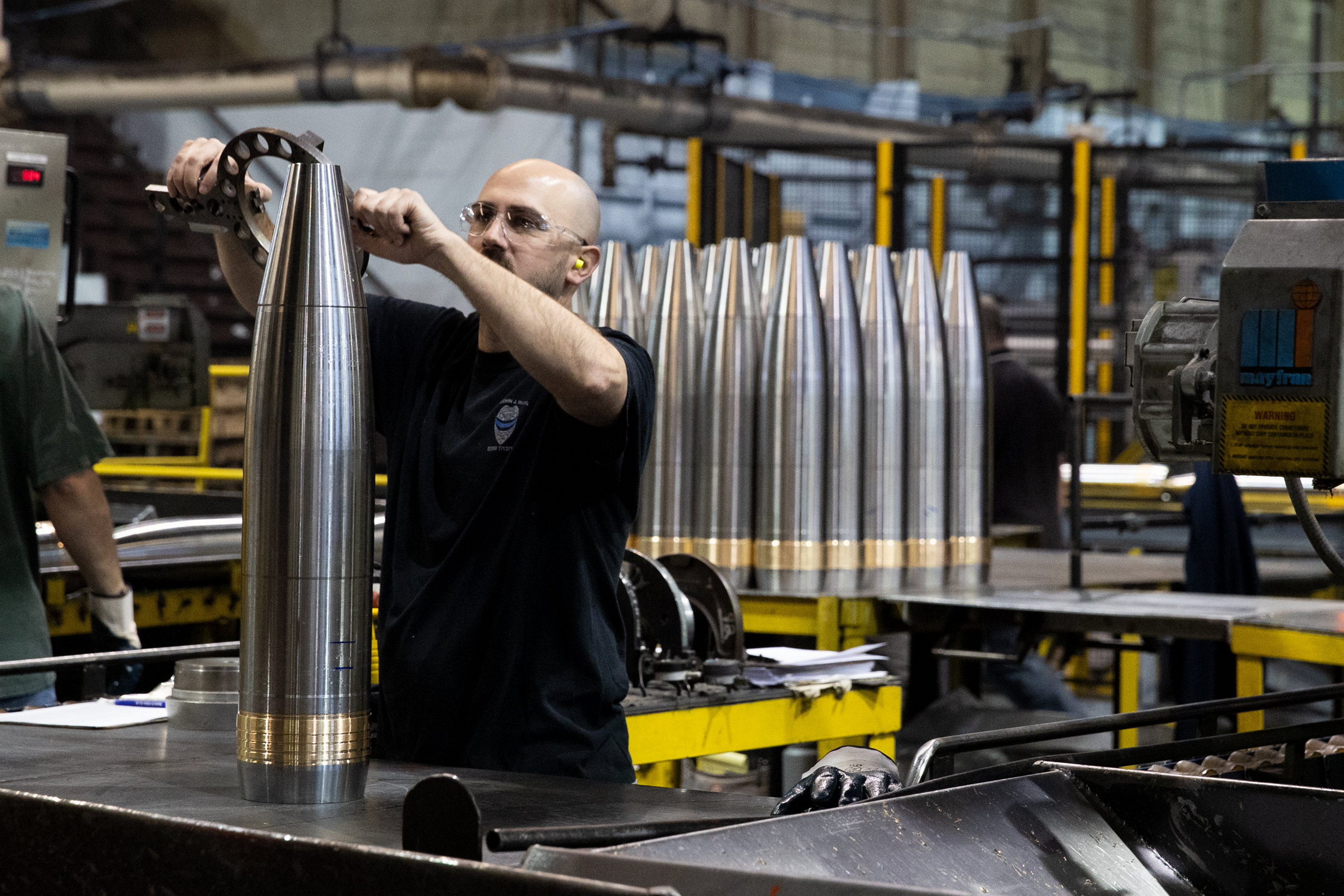
A worker assembles 155mm shells along the assembly line at the Scranton Army Ammunition Plant on April 12, 2023. (TIMES-TRIBUNE / FILE PHOTO)
Show Caption
1 of 5
A General Dynamics worker moves 155mm shells along the assembly line at the Scranton Army Ammunition Plant in Scranton on April 12, 2023. (TIMES-TRIBUNE / FILE PHOTO)