
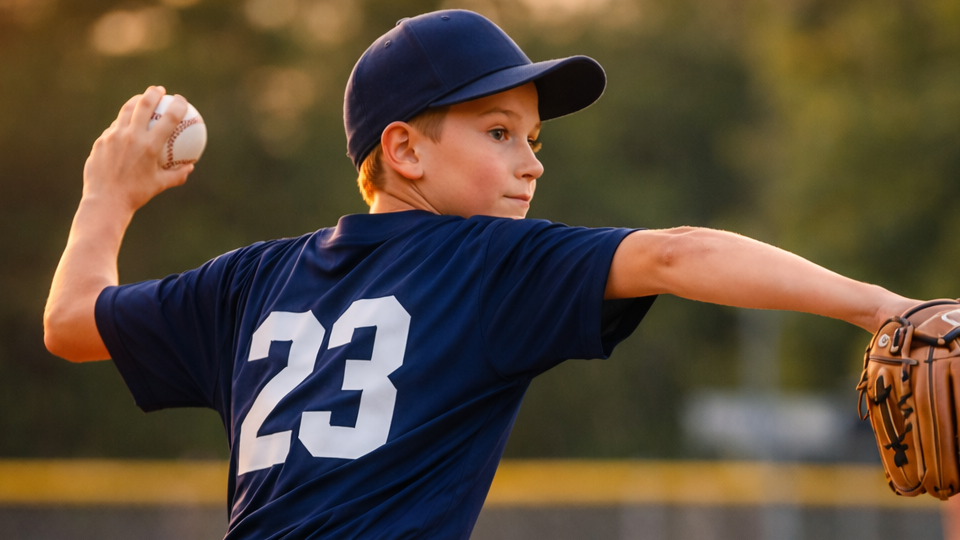

Youth baseball has never been more structured — or more intense.
Seasons overlap. Teams stack. Showcases fill weekends. Radar guns sit behind backstops in March. Velocity conversations that once belonged in college dugouts now echo across 12U tournaments throughout the Philadelphia region.
Now, as youth arms begin stretching out for another season, the Philadelphia Baseball Review is launching an educational series designed to give families something increasingly rare in today’s environment: clarity.
“The intensity level in youth baseball today is much higher, much earlier,” said Dr. Marty Egan, a Doctor of Physical Therapy with 15 years of experience, former strength and conditioning coach for both the Philadelphia Phillies and Pittsburgh Pirates, and owner of IronPhysio Sports Physical Therapy and Performance in Feasterville. “Competition ramps up fast, there’s less downtime, and kids are being asked to perform at higher levels sooner than ever.”
But one thing hasn’t changed.
“The arm adapts the same way it always has,” Egan said. “It responds to workload, recovery and fatigue. That biology hasn’t evolved just because the schedule has.”
In today’s youth baseball landscape, parents are often the only ones who see the entire workload picture. And that visibility matters more than ever.
For years, the youth baseball conversation centered on pitch type. Curveballs were blamed. Sliders were feared. Research over the past decade has shifted that focus. Total workload — not pitch selection — is the primary driver of arm injury risk. Studies have shown that youth pitchers who exceed roughly 100 innings in a calendar year face significantly higher injury rates. And in 2026 youth baseball, those innings rarely come from a single team.
They build through league games, weekend tournaments, extra playoff starts, high-intent lessons, bullpen sessions and long toss. Even the casual “just throwing a little” days contribute to cumulative stress.
“Parents are the only ones who can connect the dots,” Egan said. “Coaches track game innings. Instructors see bullpens. But who’s counting warm-ups? Who’s tracking long toss? Who sees the total workload across multiple teams?”
Innings don’t spike all at once. They accumulate quietly. And elbows don’t fail suddenly. They fail gradually.
“The elbow doesn’t care what uniform your child is wearing that day,” Egan said.
Pitch counts have become more common across youth leagues, and that progress matters. But pitch limits without true recovery are incomplete protection. Throwing 75 pitches on Saturday affects not only Saturday, but the days that follow. Recovery windows exist for a reason.
“There’s a big difference between low-intent and high-intent throwing,” Egan said. “High-intent throwing is stress, even if it’s labeled a lesson or long toss.”
A player might throw in a weekend game, attend a private lesson two days later and participate in a team practice shortly after. Technically, nothing appears out of bounds. Biologically, the arm may never have truly rested.
“The arm doesn’t distinguish between ‘game’ and ‘training,’” Egan said. “It only recognizes stress.”
Early season often presents the greatest vulnerability, particularly in colder climates like Pennsylvania and New Jersey. Many youth arm injuries surface in April and May. Muscles may feel strong after winter training, but connective tissue — tendons and ligaments — adapts more slowly.
“These structures respond to gradual progression,” Egan said. “Without that ramp-up, the elbow absorbs stress it isn’t prepared for.”
The risk can be masked by performance. Early-season velocity may jump. A pitcher may dominate. Coaches may understandably want more innings. That enthusiasm can quietly increase exposure during the most sensitive window.
“Sometimes early-season success is exactly when caution is most important,” Egan said.
Game intensity introduces another variable. Injury rates are significantly higher in competition than in controlled practice settings. Adrenaline rises. Effort climbs. Innings extend. High-leverage situations stretch fatigue limits.
“One game outing can represent the highest-intensity throwing of the entire week,” Egan said. “Intensity changes the math.”
During tournament weekends or showcase circuits, those stress spikes can repeat within compressed recovery windows. Counting appearances alone does not tell the full story.
“The body doesn’t measure innings,” Egan said. “It measures stress.”
Ultimately, arm care is not a band routine or a checklist. It begins with communication. Young players need more vocabulary than simply “it hurts.” Tightness differs from fatigue. Temporary soreness differs from lingering pain. An arm that still feels tired after appropriate rest can signal early overload.
“Tightness is different than fatigue,” Egan said. “Soreness that resolves with rest is different from pain that lingers. And if an arm still feels tired after proper recovery, that can be an early warning sign.”
Many youth players hesitate to speak up, worried about losing innings or roles. That silence is often where more serious injuries begin.
“Parents set the culture,” Egan said. “If honesty is rewarded, problems surface early. If toughness is rewarded at the expense of truth, issues get hidden.”
Arm care, then, is not a product and not a trend. It is a long-term approach built on tracking workload across teams, respecting recovery windows, progressing gradually, understanding the difference between practice and game stress and creating space for honest conversations.
Youth baseball will continue to accelerate. Schedules will expand. Showcases will multiply. Velocity conversations will grow louder.
The arm will not evolve to keep pace.
“The schedule has changed,” Egan said. “The biology hasn’t.”
The families who understand that — and act accordingly — give their players the best chance to stay healthy and stay on the field for the long run.
Recent Philly | Phillies Baseball News
YOUTH BASEBALL: Five things every youth baseball parent in Philly needs to understand about arm care (Feb 16)
COLLEGE BASEBALL: Widener brings back its middle, bets on depth to make noise in the MAC Commonwealth (Feb 16)
Who should hit cleanup for the Phillies? Bohm vs. García is a study in probability (Feb 16)
Bryce Harper responds to Dave Dombrowski’s October evaluation as Phillies open Spring Training (Feb 16)
COLLEGE BASEBALL: La Salle’s Groen, Karpaitis earn Philly Division I Player of the Week honors (Feb 16)
COLLEGE BASEBALL: Villanova edged 4-3 by FIU on walk-off fly, drops series (Feb 15)
COLLEGE BASEBALL: La Salle completes sweep, finishes opening weekend with 48 runs (Feb 15)
Phillies’ Aaron Nola must restore his fastball, and his foundation, in 2026 (Feb 14)
COLLEGE BASEBALL: La Salle stays hot, routs UMES 14-2 to clinch series (Feb 14)
COLLEGE BASEBALL: Saint Joseph’s splits doubleheader, powers to first win of season (Feb 14)
COLLEGE BASEBALL: Villanova falls to FIU after early lead slips away (Feb 14)
COLLEGE BASEBALL: La Salle erupts for 27 runs in triumphant return to diamond (Feb 13)
COLLEGE BASEBALL: Villanova rides Whooley’s three-run homer, strong relief to 7-4 win at FIU (Feb 13)
COLLEGE BASEBALL: Saint Joseph’s rallies to tie, falters late in 15-7 loss at High Point (Feb 13)
From dugout friction to October clarity: How the Phillies handled Castellanos (Feb 13)
COLLEGE BASEBALL: Opening Day arrives across Philadelphia as several programs begin 2026 season (Feb 13)
Phillies release Nick Castellanos, putting an end to a $100 million experiment (Feb 12)
COLLEGE BASEBALL: Philadelphia Baseball Review’s Division I Preseason Watch List (Feb 12)
Phillies pitchers and catchers report to Clearwater, carrying the promise of spring (Feb 11)
Phillies appear prepared to release Nick Castellanos before camp opens (Feb 11)
Andrew Painter isn’t just depth, he’s central to the Phillies’ window of opportunity (Feb 10)
No rush for Wheeler, no shortcuts for Crawford as Phillies set spring tone (Feb 9)
COLLEGE BASEBALL: Standard set, spotlight earned, now Jefferson is ready for the next step (Feb 9)
COLLEGE BASEBALL: Proven bats, young arms, local talent fuel Swarthmore’s Centennial push (Feb 9)
Three heavyweights: Braves, Mets and Phillies headline projections in 2026 NL East race (Feb 8)
As pitchers and catchers report, four storylines to watch in Phillies camp (Feb 7)
COLLEGE BASEBALL: Depth, experience position West Chester for PSAC contention (Feb 6)
Why baseball journalism matters in Philadelphia — and why what’s happening at The Washington Post should hit home here (Feb 5)
How Nick Castellanos went from symbol of resurgence for the Phillies to odd man out (Feb 4)
The truck that brings spring: Inside the 1,058-mile Phillies caravan to Clearwater (Feb 3)
COLLEGE BASEBALL: La Salle returns with a roster ranked to compete — and numbers to back it up (Feb 2)
NL East Power Rankings: Why the Phillies remain the team to catch (Feb 1)
COLLEGE BASEBALL: Villanova leans on returning core, leadership as Mulvey enters 10th season (Jan 31)
Phillies add veteran utilityman Dylan Moore on minor-league deal (Jan 31)
COLLEGE BASEBALL: “Unfinished business”: David Miller returns to La Salle to finish what was taken away (Jan 30)
The World Baseball Classic should be baseball’s loudest invitation to youth (Jan 29)
How a century of Temple baseball ended not with a final pitch, but a budget line (Jan 28)
Pokrovsky, returning bats power Penn’s push in Ivy League race (Jan 28)
From expectation to execution: Saint Joseph’s enters 2026 with something to prove (Jan 27)
Phillies News from the Philadelphia Baseball Review
Support the Mission. Fuel the Movement.
You’re not just funding journalism — you’re backing the future of youth baseball in Philly.