
By Jack Tomczuk
A federal judge, siding with attorneys from Mayor Cherelle Parker’s administration, ordered the National Parker Service to restore the slavery exhibit at the President’s House.
U.S. District Court Judge Cynthia M. Rufe issued the preliminary injunction Monday, on President’s Day, and opened an accompanying 40-page opinion with a quote from George Orwell’s dystopian novel “1984,” referring to the ‘Ministry of Truth,’ the government’s propaganda arm.
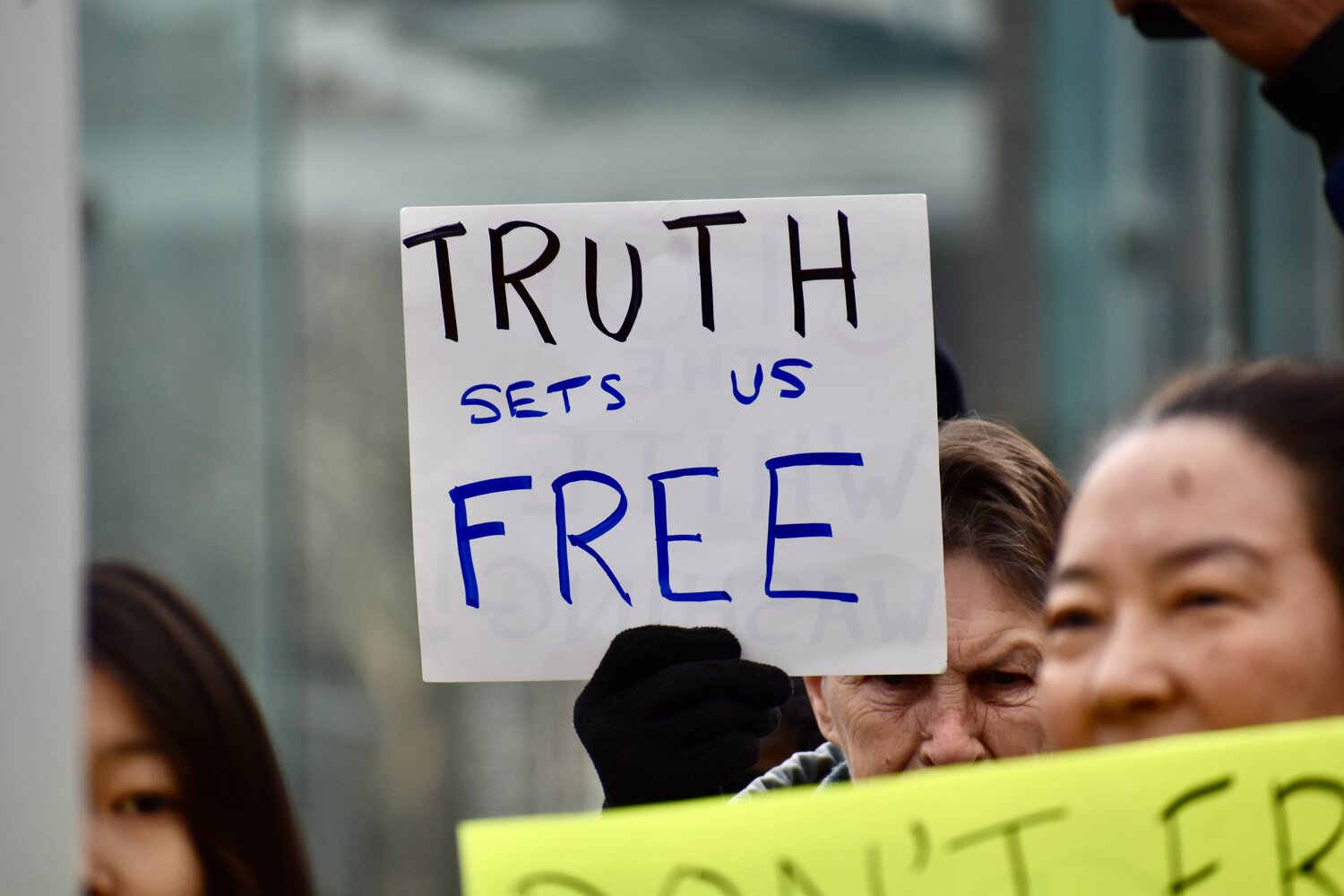
“An agency, whether the Department of the Interior, NPS, or any other agency, cannot arbitrarily decide what is true, based on its own whims or the whims of the new leadership, regardless of the evidence before it,” Rufe wrote.
Her ruling also barred the Trump administration from making any changes to the President’s House site, including the installation of replacement materials, without written approval from the city, pending the final outcome of the litigation.
No timeline or deadline is specified in her order. The 34 informational panels removed late last month are being stored in an NPS-controlled building on the grounds of the National Constitution Center, according to court documents.
Lawyers representing the NPS and Interior could appeal and ask a higher court to put the preliminary injunction on hold. Representatives from the departments have not responded to a request for comment.
NPS employees took down the exhibit Jan. 22, prompting an immediate lawsuit from the Parker administration and outrage from local elected officials, community groups and organizers who initially pushed for the exhibit more than 20 years ago.
The move was in response to President Donald Trump’s March 2025 executive order directing the removal of “descriptions, depictions, or other content that inappropriately disparage Americans past or living (including persons living in colonial times)” from all national parks.
Outside the entrance to the Liberty Bell Center, at 6th and Market streets, the President’s House features brick walls outlining the footprint of the long-demolished executive mansion, home to George Washington and John Adam during their presidencies from 1790 to 1800.
The exhibit that was removed examines the contradiction of slavery and freedom in early America, with a particular emphasis on the stories of the nine individuals Washington enslaved at the property.
“Each person who visits the President’s House and does not learn of the realities of founding-era slavery receives a false account of this country’s history,” Rufe wrote in her memorandum opinion.
The judge, who was appointed by President George W. Bush, found that the decision to abruptly tear down the panels violated Congressional legislation from 1948 authorizing the formation of Independence National Historical Park and an ensuing agreement with the city of Philadelphia.
Independence Hall, the Liberty Bell and much of the park grounds remain under the ownership of the municipal government and managed by NPS under that contract, she noted. Both sides are supposed to approve significant alterations, Rufe said.
Getting rid of the exhibit without permission, she ruled, also runs afoul of a 2006 agreement with the city to create the President’s House, and a 1998 federal law establishing the Network to Freedom, a collection of historical sites related to the Underground Railroad.
Ona Judge, who was enslaved by Washington, escaped from the executive mansion, and the President’s House was added to the national network in 2022.
Rufe was not persuaded by the federal government’s case, particularly during a Jan. 30 oral argument session.
“At the hearing, the City presented evidence,” she said in the opinion. “Defendants did not.”