
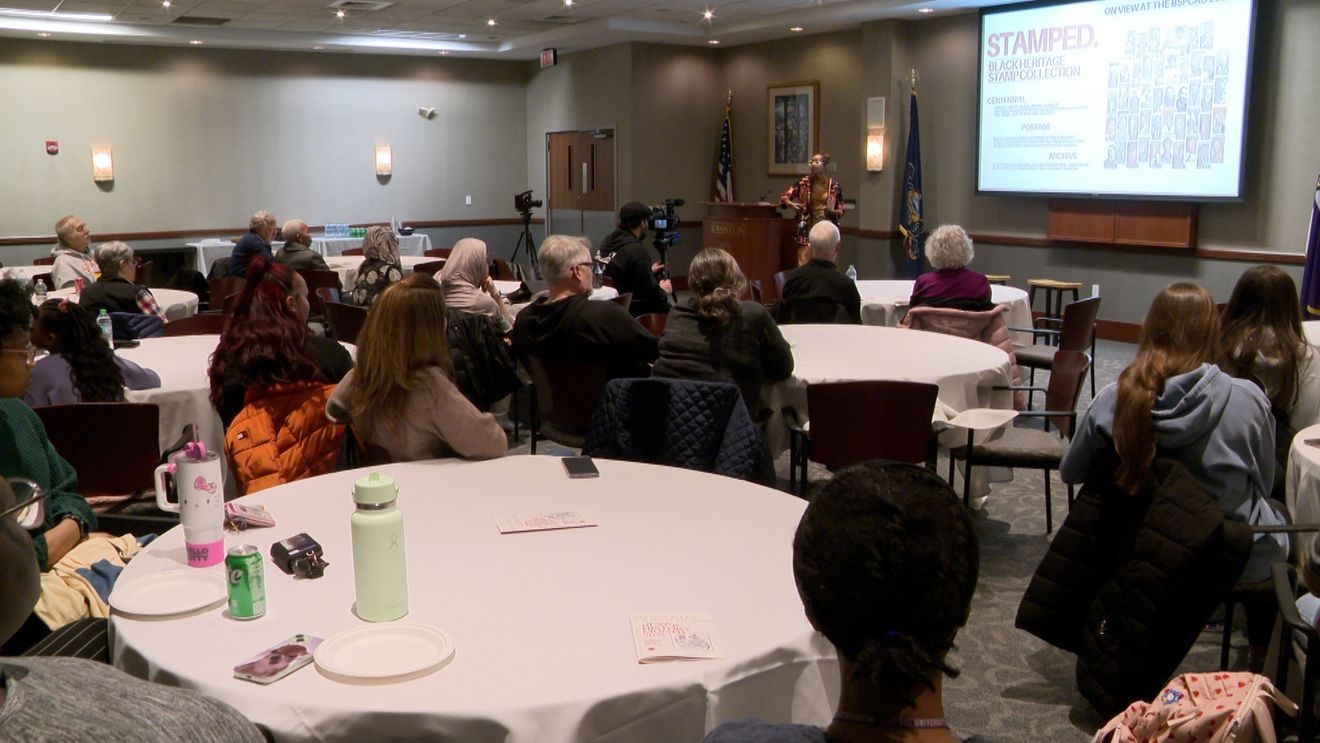
SCRANTON, LACKAWANNA CO. (WOLF) — The University of Scranton hosted “Trivia Night: Contributions of Black Northeast Pennsylvanians Across the Eras – From the Underground Railroad to Black Scranton” on Monday evening in the Rose Room of Brennan Hall.
The program brought together community members, students and local historians to celebrate Black History Month through a mix of presentations, local history and trivia games.
Glynis Johns, founder and CEO of the Black Scranton Project, discussed the importance of recognizing the region’s Black history and the significance of this year’s milestone observances.
“Especially this year, we are celebrating the centennial of Black History Month celebrations, started by Carter G. Woodson and the Association for the Study of African American Life and History in 1926. This year is a really big year, and I think it’s important to instill these initiatives and the importance of African Americans to American history. So yeah, there’s a lot to celebrate,” said Johns.
Johns shared how the Black Scranton Project has collaborated with the University of Scranton on a variety of community history initiatives over the years.
She highlighted past projects that included oral history collection efforts supported by the National Endowment for the Humanities.
She said these partnerships help make local history more engaging and accessible for the community.
The evening featured presentations by Johns and E.J. Murphy, program manager of The Destination Freedom Underground Railroad Walking Tour.
Murphy spoke about the history of the Underground Railroad and its influence on communities across Northeast Pennsylvania.
He connected the region’s abolitionist past to the historical landscape that organizations like the Black Scranton Project continue to document today.
After the presentations, guests took part in a Jeopardy style trivia game that tested their knowledge of local Black history, national figures and cultural contributions.
Johns said the trivia format is designed to make history more interactive and appealing to a wider audience.
She said the Black Scranton Project has hosted similar programs at different locations to spark curiosity and encourage people to explore the city’s diverse past.
The event was free and open to the public and included prizes, a Q and A session and light refreshments.
For more information on future events by the Black Scranton Project, visit their website.