
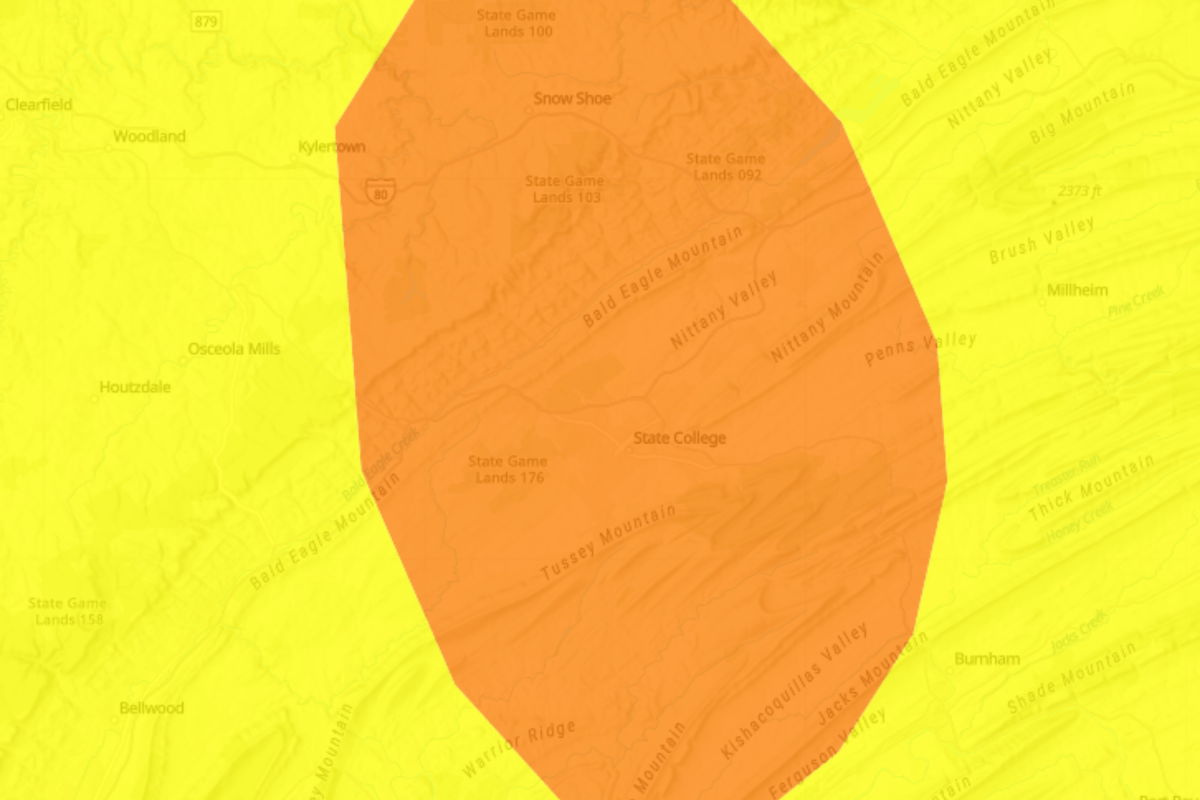
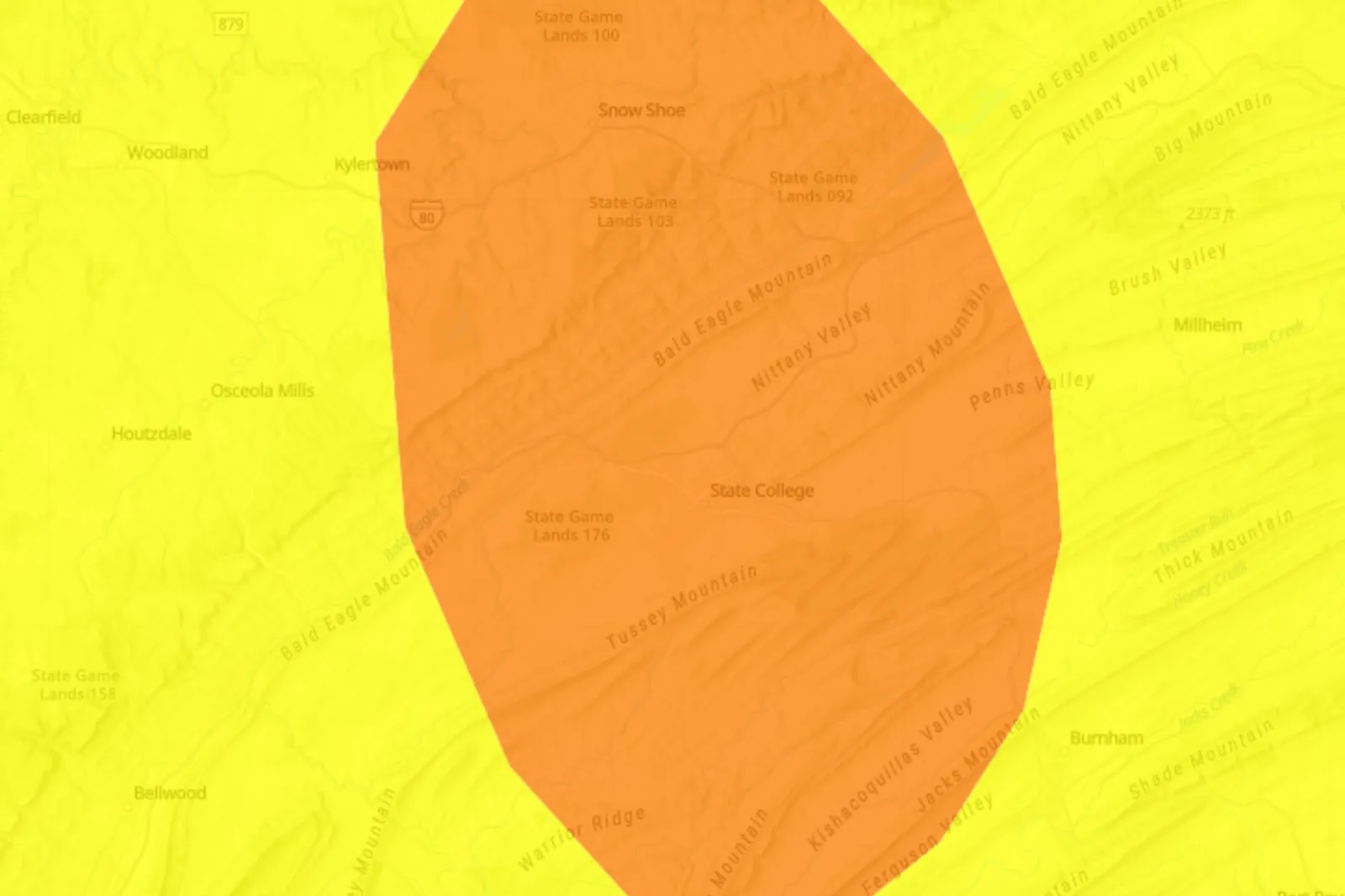
Over a million residents in communities across Pennsylvania, including those within the Susquehanna Valley, have been told to avoid “strenuous activity or exercise outdoors,” according to an air quality alert, issued by the National Weather Service (NWS).
The AirNow Map, which is produced by the Environmental Protection Agency (EPA), also shows that, as of February 17, 2026, at 2.15 a.m. ET, the air quality is “unhealthy for sensitive groups,” in this area.
The warnings are in place because there are elevated levels of fine particle pollution (PM2.5) in the atmosphere.
Who Is Affected by Poor Air Quality in Pennsylvania
According to both the NWS and the EPA alerts, the poor air quality is most likely to affect people in sensitive groups, which include the elderly, children, and people with existing heart and lung conditions, such as asthma.
PM2.5 refers to fine particles of pollution that are 2.5 micrometers or smaller, which can be unknowingly inhaled, traveling deep into the lungs, and in some cases even entering the bloodstream. Exposure to elevated levels of PM2.5 can often worsen existing health conditions or trigger symptoms such as chest tightness, shortness of breath, coughing, and eye, throat, or nose irritation.
Strenuous outdoor activity causes people to breathe faster and more deeply, allowing fine particles to penetrate the lungs more quickly and deeply.
 What’s Causing the Poor Air Quality in Pennsylvania?
Neither the NWS nor the EPA has confirmed what’s causing the elevated levels of PM2.5 across Pennsylvania.
PM2.5 can come from a variety of sources, including dust from unpaved roads and construction sites, emissions from vehicles and power or industrial plants, or smoke from wildfires or smokestacks.
Advice for Residents Affected by Poor Air Quality
The EPA warns that those in sensitive groups aren’t just affected by PM2.5 outside. They can also be affected indoors, including inside their homes.
As a result, residents in Pennsylvania are advised to keep windows closed, avoid burning candles, using wood‑burning stoves, or lighting indoor fires, and to use air filters or purifiers to help improve indoor air quality until conditions improve.
The EPA also recommends monitoring its AirNow Map, which provides near‑real‑time updates on air quality across the U.S.
How Does the EPA Measure Air Quality
The EPA’s Air Quality Index (AQI) measures air quality on a standardized scale from 0 to 500, with categories ranging from “Good” and “Moderate” to “Unhealthy,” “Very Unhealthy,” and “Hazardous.” Higher AQI values indicate greater health risks.
Good (AQI 0-50)
Air quality is considered satisfactory.
Air pollution poses little or no risk.
Everyone can safely enjoy outdoor activities.
Moderate (AQI 51-100)
Air quality is acceptable.
Some pollutants may pose a mild risk for a very small number of people who are unusually sensitive.
Most people can continue normal outdoor activities.
Unhealthy for Sensitive Groups (AQI 101-150)
Air quality may affect sensitive groups, including children, older adults, and people with heart or lung disease.
Sensitive individuals should limit prolonged or strenuous outdoor activity.
The general public is less likely to be affected.
Unhealthy (AQI 151-200)
Everyone may begin to experience health effects.
Sensitive groups may experience more serious effects.
All people should reduce prolonged or strenuous outdoor activity.
Very Unhealthy (AQI 201-300)
Health alert conditions.
The risk of health effects increases for everyone.
People should avoid outdoor activity, especially strenuous exercise.
Hazardous (AQI 301-500)
Emergency conditions.
The entire population is likely to be affected.
Everyone should avoid all outdoor activities and follow public health guidance.