
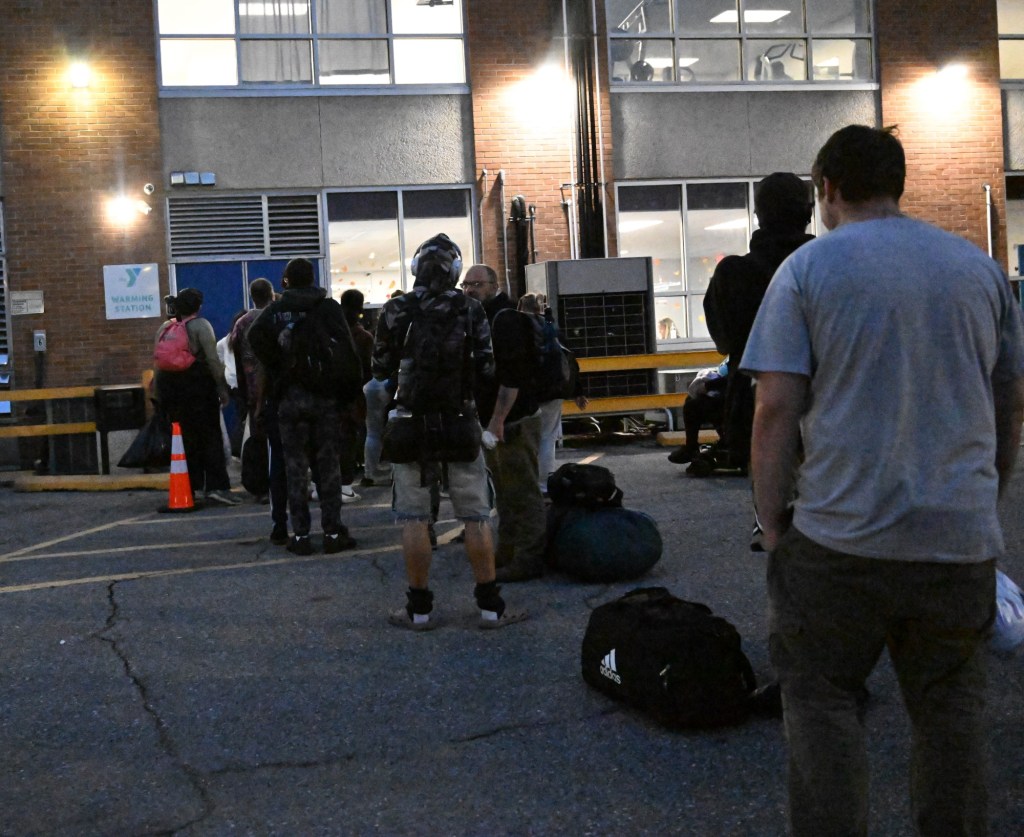
The nearly three weeks of sub-freezing temperatures following a snowstorm that dumped a foot of snow across the region stretched Lehigh Valley homeless shelters to their limit as they tried to help people with nowhere else to go.
Following a Jan. 25 snowstorm that saw municipalities across the region declaring snow emergencies, the Lehigh Valley saw little respite from the cold. Feb. 9 was the first day that temperatures rose above freezing since Jan. 23, according to weather service data.
The extreme cold put a strain on local homeless shelters, which saw an uptick in demand as more people facing imminent danger sleeping outside sought a warm bed and meal for the night.
Tami Unger, director of the YMCA warming station in Allentown at 425 S. 15th St., said the shelter was consistently at or even over capacity nightly since the Jan. 25 storm. The station coordinated with other local agencies to ensure that no one was forced to stay outside in the life-threatening cold, she told The Morning Call.
Stefanie Appel, community relations director at Allentown Rescue Mission, which serves men over 18, said the mission has served well over 100 men a day in its emergency shelter, which has 145 beds.
For two weeks following the Jan. 25 storm, the shelter, 355 Hamilton St., kept its doors open during daytime hours — it typically closes during the day.
“Because it’s been so brutal, we have had to make modifications,” Appel said. “The emergency shelter typically closes during the hours of 8:30 a.m. to 4:30 p.m. for guests to go out but we didn’t do that during this cold spell. We stayed open to give them a safe place to stay.”
The cold also led to an increasing need for cold-weather gear like gloves, hats and scarves, as well as more volunteers to man the kitchen during daytime hours. Appel said the rescue mission relied on dedicated volunteers and donors to meet those demands. Even members of the rescue mission’s transformation program — which provides homeless men with employment via the Allentown Rescue Mission Clean Team, as well as life skills training — pitched in to help keep the shelter’s doors open.
“We do have a nice staff of volunteers. Some of the men working here, they pitch in and help, some of the men in the transformation program were so cute, they shoveled so donors could get in during the snowstorm, they were so excited,” Appel said. “So we do get a lot of help from volunteers and our men that way but [there was a] great need for food and warm clothes during these trying times.”
Homeless residents lost some sense of stability when Allentown cleared a homeless encampment along the Jordan Creek in late September. City officials said the encampment was in a flood plane and posed a threat to residents’ lives and safety. The YMCA warming station, via funding provided by the United Way and the city, opened Sept. 29, six weeks earlier than scheduled, to give the displaced residents somewhere to relocate.
Bethlehem also evacuated an encampment along the Sand Island Trail last year, after Norfolk Southern — which owns the land where the encampment was located — asked the city to clear it.
Despite the sweep of those encampments, some homeless residents still choose to remain outside when they can safely do so for a variety of reasons, the YMCA’s Unger said.
“While encampment closures have brought more individuals indoors, there are still people who remain outside for a variety of reasons — including mental health challenges, distrust of systems, desire to remain with partners or pets, or difficulty adjusting to congregate shelter settings,” Unger said in an email.
Shelter staff said that, during frigid temperatures, support from the community — including donations and volunteer time — are more crucial than ever.
“The public should know that warming stations are truly life-saving services,” Unger wrote. “When temperatures reach dangerous levels, access to heat, food, showers, and safe sleep is not just supportive — it is critical to survival.”
Reporter Lindsay Weber can be reached at Liweber@mcall.com.