
This story is developing and will continue to be updated.
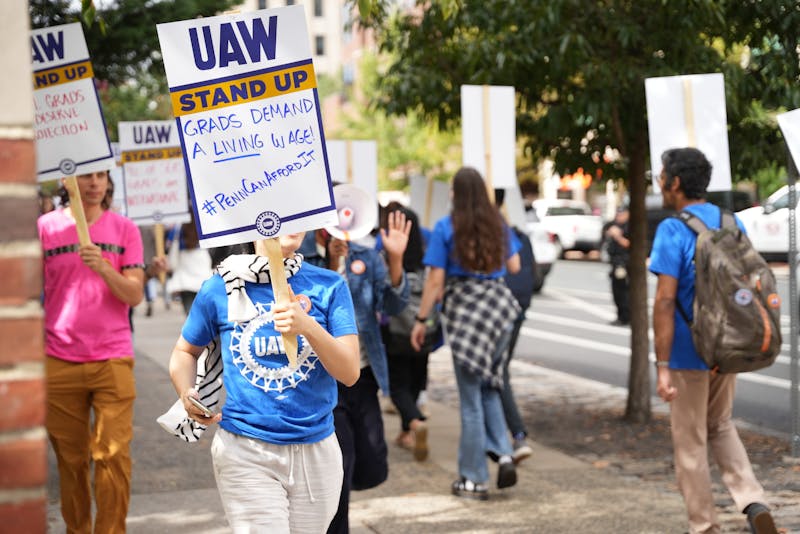
Penn reached a historic tentative agreement with its graduate student union on Monday night, narrowly averting a strike that would have impacted teaching and research across the University.
In a Tuesday morning press release, representatives from Graduate Employees Together — University of Pennsylvania wrote that the agreement was secured after administrators made “made key, last-minute concessions” during bargaining. It comes after more than a year of negotiations between the University and the union, which represents more than 3,700 graduate workers with teaching and research positions at Penn.
Under the agreement, graduate workers will receive an increased stipend and enhanced childcare and medical benefits.
“The Tentative Agreement also includes provisions on union security, protections against discrimination and harassment, support for international workers, improved vision and dental coverage, expanded benefits for parent workers, improvements to accessibility, and other workplace rights and protections,” the union wrote.
According to the press release, the agreement will raise the minimum doctoral stipend from $40,608 to $49,000 — a 22% increase — and Penn will establish a minimum hourly rate of $25.
“We are pleased to announce that a tentative agreement has been reached between Penn and GETUP-UAW,” a University spokesperson wrote to The Daily Pennsylvanian. “The next step will be the ratification of the tentative agreement by GETUP-UAW members. Penn has a long-standing commitment to its graduate students and value their contributions to Penn’s important missions.”
The spokesperson added that “we are grateful to all the members of the Penn community who helped us achieve this tentative agreement.”
The agreement follows mounting pressure on the University from local politicians, faculty, and students to finalize a contract before the Tuesday strike deadline. Before the Monday bargaining session, administrators and the union had reached tentative agreements on 26 proposals.
According to GET-UP’s website, a strike would have meant that graduate workers holding teaching and research positions would suspend their work responsibilities — including grading, leading recitations, holding office hours, and conducting certain research activities.
Workers with research appointments would have also refrained from starting new experiments and attending lab meetings for the duration of the strike.
Representatives from GET-UP overwhelmingly authorized a strike in November 2025, giving union leadership the authority to call a work stoppage if negotiations failed. Last month, the union announced it would suspend all teaching and research duties if the University did not reach a contract agreement by Feb. 17.
The agreement is subject to a ratification vote by union members.
Senior reporter Ananya Karthik covers central administration and can be reached at karthik@thedp.com. At Penn, she studies communication and economics. Follow her on X @ananyaakarthik.
Staff reporter Daniya Siddiqui covers campus advocacy and can be reached at siddiqui@thedp.com. At Penn, she studies political science.