
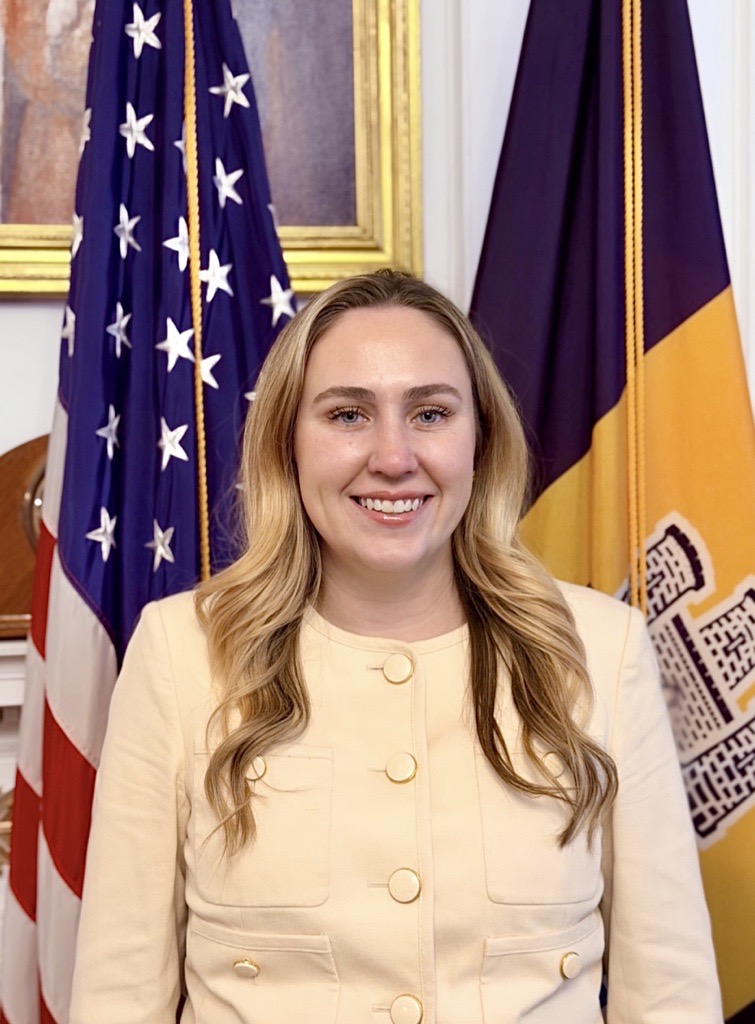
_0.jpeg) When Catherine Weis (MPA ’24) reflects on her path to public service, she keeps coming back to Pittsburgh. Today the city she calls home is also where she’s building her career— serving as Special Assistant to the Chief of Staff in Pittsburgh Mayor Corey O’Connor’s new administration.
When Catherine Weis (MPA ’24) reflects on her path to public service, she keeps coming back to Pittsburgh. Today the city she calls home is also where she’s building her career— serving as Special Assistant to the Chief of Staff in Pittsburgh Mayor Corey O’Connor’s new administration.
In her role at City Hall, Weis manages scheduling for the Chief of Staff, a responsibility that demands precision, coordination, and adaptability. But her work extends well beyond calendars. She also supports communications, administrative operations, and project management, helping ensure the mayor’s office runs smoothly during a period of transition.
“No two days are the same in my role, which is something I really enjoy,” Weis says. “The first month has been a period of learning and adjustment. Working closely with the Chief of Staff has been incredibly valuable, and he has been a great mentor as I grow in the role.”
Weis’ path to City Hall began long before she stepped inside. A Pittsburgh native, she returned home after earning her bachelor’s degree from Denison University with a strong interest in local politics and public service. She began working on legislative and judicial campaigns at the state level, as well as federal congressional races.
“I saw firsthand how local and state government can directly shape people’s lives,” Weis says. “That experience solidified my interest in public service.”
While on the campaign trail, she met several graduates of the University of Pittsburgh’s School of Public and International Affairs (SPIA), who spoke highly of their experience and inspired her to apply. She enrolled part-time in fall 2022, beginning her Master of Public Administration (MPA) coursework while continuing to work on political campaigns.
“My experience at Pitt further solidified my commitment to public service while giving me a strong foundation and practical skills I could apply in my work,” she said. “The very first class I took, Administration of Public Affairs, introduced core concepts of public management, governance, transparency and accountability and set the tone for the rest of my graduate experience. It prepared me not only for advanced coursework, but also for the realities and challenges of working in the public sector.”
GIS for Public Policy was another course that had immediate application. Weis applied the skills she learned in the classroom to her work on campaigns, analyzing voter turnout and vote-by-mail trends to identify geographic patterns that informed outreach strategies. She says that being able to translate data into actionable insights strengthened her ability to support decision-making.
In addition to the coursework itself, Weis credits SPIA faculty mentorship as a defining part of her graduate experience.
“My professors served as important mentors who emphasized applied learning. They challenged me to think critically about policy implementation, and to connect classroom lessons to the real world. Overall, my time here equipped me with the skills, confidence, and perspective I now use in my professional role.”
Looking back, Weis encourages current and prospective SPIA students to pursue hands-on experience, build relationships with professors and alumni, and remain open to unexpected opportunities. Her story shows that you don’t always need to know where you’re going to take the first step—impactful public service careers are built one class, one campaign, and one opportunity at a time.
“Be open to where your path might take you,” she said. “I didn’t start graduate school knowing exactly where I’d end up, but being flexible and developing practical skills helped guide me toward opportunities that fit my interests and strengths.”
Learn more about our Master of Public Administration program and explore concentrations including Public & Nonprofit Management, Policy Research & Analysis, and Social Policy. When you’re ready, request more information or learn what it takes to apply!