
In 2018, then-mayor Jim Kenney celebrated his court victory against the first Trump administration over Philadelphia’s so-called “Sanctuary City” policy.
“Sanctuary city, yeah!,” the mayor said in a dance as he high-fived his Chief of Staff.
Nearly eight years later, the policy he championed remains in place. It prohibits the city from honoring immigration detainer requests from U.S. Immigration and Customs Enforcement unless the person in custody has been convicted of a violent felony, and federal authorities present a judicial warrant.
The Trump Administration 2.0 has renewed its criticism of so-called Sanctuary Cities and threatened to pull federal funding– the same fight Kenney had and won.
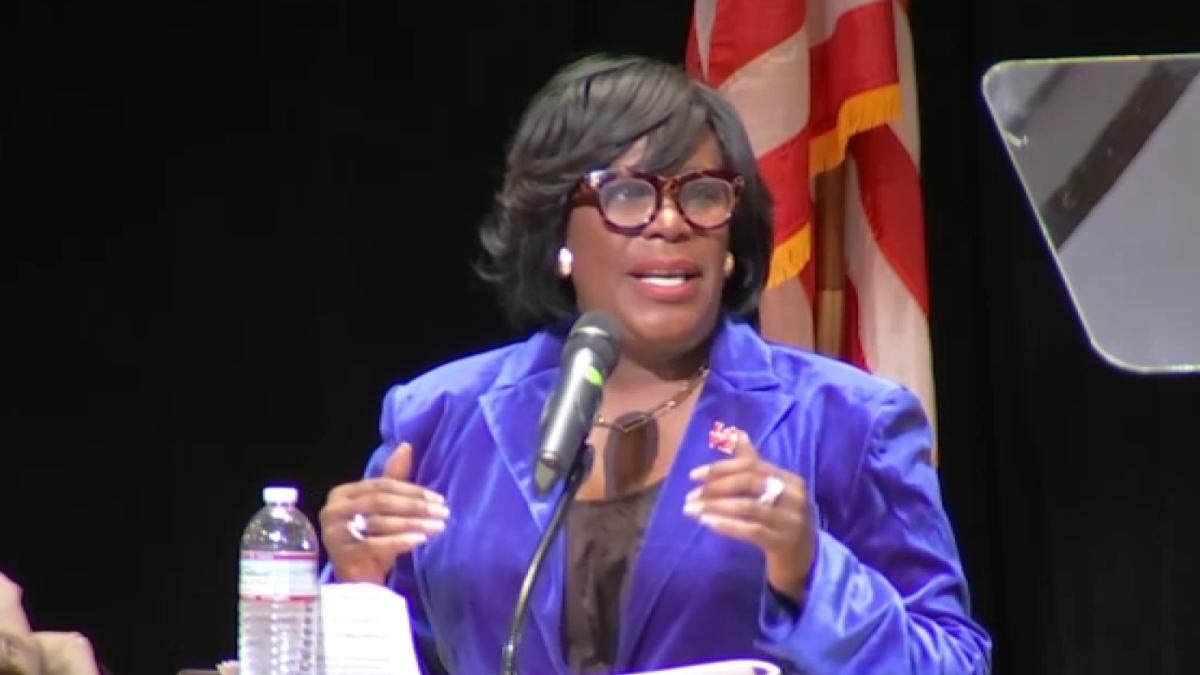
Mayor Cherelle Parker, however, is not referring to Philly as a Sanctuary City.
When asked last year, she said: “We’re officially and firmly a welcoming city.”
What’s the difference?
University of Pennsylvania professor Domenic Vitiello, who wrote a book on Sanctuary Cities, says the term Sanctuary City emerged in the 1980s in California.
“Churches and synagogues and other congregations hosted people fleeing Central American Civil Wars and being denied asylum in the United States,” Vitiello said, adding that the movement made its way across the country and into Philadelphia– though small at the time.
Then in 2001, then-Mayor John Street created a policy that kept immigrant information confidential. But according to Vitiello, it wasn’t until Michael Nutter signed an executive order regarding the ICE detainers in 2014 that the term “Sanctuary City” became widely used.
In 2016, Kenney embraced the order and the name. Yet, none of the three policies have the term or name “Sanctuary City.”
“Cities and states don’t really have the rights to very actively protect people, particularly to stand in the way of federal immigration enforcement,” Vitiello said.
In 2023, while Kenney was still in office, Philadelphia received the “Welcoming City” designation from the nonprofit Welcoming America– for its inclusion of the immigrant community through language access and a variety of immigrant-friendly initiatives. The 2023 designation is good for four years and costs the city $3,000 annually.
Since taking office in 2024, Parker has opted to refer to Philadelphia as a “Welcoming City.”
“An increasing number of politicians at the local and state levels across the United States have adopted the language of welcoming cities,” Vitiello said.
Former City Councilmember Maria Quiñones-Sánchez, who pushed previous and the current administrations to adopt Sanctuary City-type policies and protections, said the terminology matters less than the policy itself.
“I don’t think there’s any term that we could use to make everybody happy around this,” she said.
What she thinks is lacking is clarity from the Parker administration on how they are handling any ICE activity and requests in the city, and overall strategy when it comes to immigrants.
“I think that you need the mayor to say, I’m going to protect the citizens of Philadelphia, all the citizens. Documented and undocumented. I want to provide public safety in a way and I’m not going to use city resources to violate anybody’s due process,” she said.
We tried having that conversation with Parker, but her communications staff repeatedly declined. A spokesperson sent us a statement from City Solicitor Renee Garcia, saying in part:
“‘Sanctuary City’ is a broad term with no official definition. The City of Philadelphia does not use the term sanctuary city nor is there any ordinance, as you refer to, that officially designates the City as such.”
NBC10 wanted to hear what the mayor had to say. So, we went to an unrelated news conference— where we posed our questions about immigration.
When we asked what “Sanctuary City” means to her, she said her administration had already provided an answer to that question, and read the previously sent statement.
She did add the following about Sanctuary Cities:
“Usually when I heard the term being used, and I’m speaking about the last two years since I’ve been here, people have referenced it in relation to funding for the city of Philadelphia.”
She then referenced the 2016 executive order signed by former mayor Jim Kenney.
“Our commitment to our immigrant community is as it was in 2016, and nothing about that has changed. And that is what you’re going to hear from me as it relates to that question,” she said.
We tried asking some follow-up questions but she did not take those, and walked away.
We wanted to ask about her strategy.
After all, the existing policy impacts only people who are in custody and who have a detainer lodged against them..
City officials said Philadelphia received 72 ICE detainer requests since last year. In 2024, the city received 50. It is unclear in how many of those cases the city complied with or denied.
Philadelphia is home to more than 240,000 foreign-born residents, according to Census estimates — a significant share of the city’s population and a community closely watching how local leaders respond to federal immigration enforcement.
“People want a level of reassurance,” said Amy Eusebio, the city’s former executive director of the Office of Immigrant Affairs.
Eusebio resigned from her position shortly after Parker took office as Mayor. She declined to elaborate on the reason other than to say “we weren’t 100% on the same page.”
Eusebio said that advocates aren’t looking to Parker to pick a fight with the Trump administration, similar to how Kenney did. But they want communication on what she her administration is doing beyond the 2016 executive order.
“Lack of engagement leads to lack of trust,” she said.
Other advocates, including New Sanctuary Movement, which has an outstanding request to meet with the mayor over immigration issues, have moved on to get action from the City Council.
Councilmembers have introduced a package of bills aimed at limiting ICE’s work in Philadelphia.
It’s unclear where Parker stands on those. A spokesperson for her pointed to a statement she issued when the bills were introduced last month, saying in part that she is looking forward to reviewing the legislation “with our legislative experts in the Law Department.”
For its part, the Trump administration has put Philly on its list of Sanctuary jurisdictions. A spokesperson for the Department of Justice said:
“As welcoming as Philadelphia may or may not be, its sanctuary policies impede federal law enforcement by design and put its own citizens at risk.”