
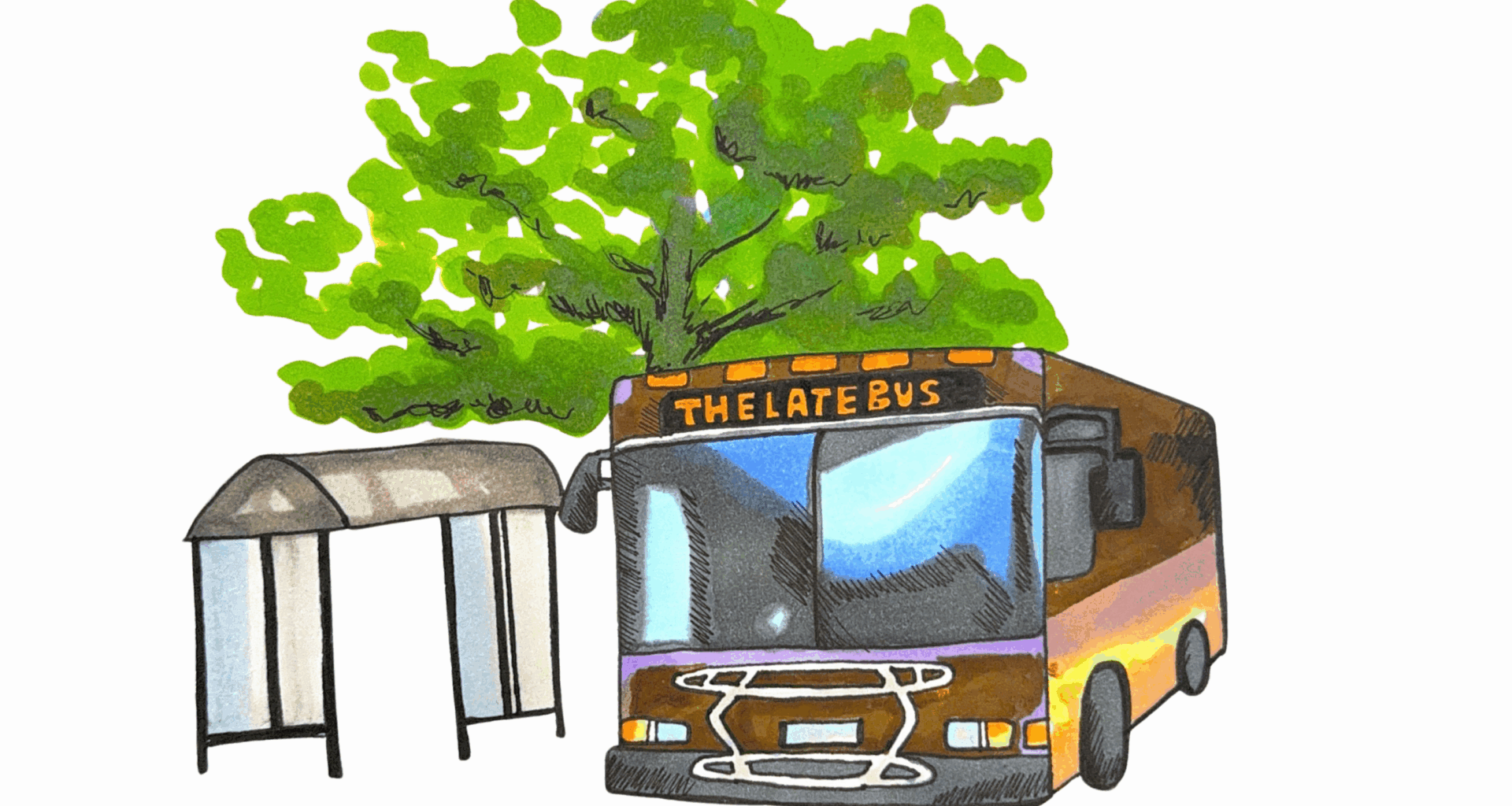
On any given weekday morning, a familiar scene unfolds at bus stops across campus.
Students huddle against the wind, repeatedly checking an app that often refuses to update. Someone squints down the hill, hoping to spot the bus. Someone else announces, confidently and incorrectly, “It’s two minutes away.”
Just like that, a crowd forms — not because the bus has arrived, but because no one knows if it ever will.
At a university built on a mountain, transportation isn’t a luxury. It’s infrastructure. Yet Lehigh’s bus system continues to feel like a waiting game students are forced to play.
The primary culprit is the transit app, goLehigh TRANSIT. In theory, it offers real-time tracking and route information. In practice, it offers false hope.
The bus icon freezes mid-route. Arrival times jump from “2-3 minutes” to “5 minutes” — then disappear entirely. Sometimes, the app won’t load at all, leaving students staring at a buffering screen as minutes tick by.
This isn’t a new problem. In 2023, the university switched tracking platforms promising improvement.
Students downloaded the new app, adjusted and relearned the interface — only to face the same issues. A different logo didn’t fix the underlying problem: unreliable information in a transit system where timing matters.
When the app fails, everything else follows. Students miss class, athletes scramble to make practice, and those who rely on the bus pad their commute with extra time they can’t afford to lose.
On a campus where elevation alone can turn a cross-campus trip into a 20-minute incline, “just walk” isn’t a realistic backup plan.
And when the bus does arrive, it’s often already full.
Overcrowding has become routine. Riders squeeze shoulder to shoulder, backpacks wedged between strangers, hoping the driver can fit one more person before the doors close.
During peak hours, buses pass stops entirely because there’s no space. Students watch them pull away, knowing the next bus may be just as packed — if it comes at all.
There’s something communal about the chaos. Bus stops have become unexpected social hubs. Stranded together, students connect. They joke about starting the trek uphill. They debate whether the app is wrong or whether the bus has simply vanished.
But inconvenience shouldn’t be mistaken for inevitability.
Lehigh’s geography makes reliable transportation essential. Our campus sits on a mountain, and the distance between classes is measured not just in minutes, but in elevation.
Winter weather raises the stakes. Waiting outside for extended periods in freezing temperatures is more than frustrating, it’s unreasonable, especially for students navigating full course loads and tight schedules.
The issue isn’t impossibility. It’s prioritization.
If the university relies on an app-based tracking system, that system must work. Real-time data must be real. If buses are routinely overcrowded, routes and frequency should be reevaluated, particularly during peak class-change hours. Clear communication about delays would be more useful than silence and a spinning loading icon.
Students shouldn’t have to structure their days around the possibility that transportation might fail. And they shouldn’t have to accept this as a seasonal inconvenience.
A campus that prides itself on innovation can — and should — build a bus system, and a bus app, that reliably gets students where they need to go.