
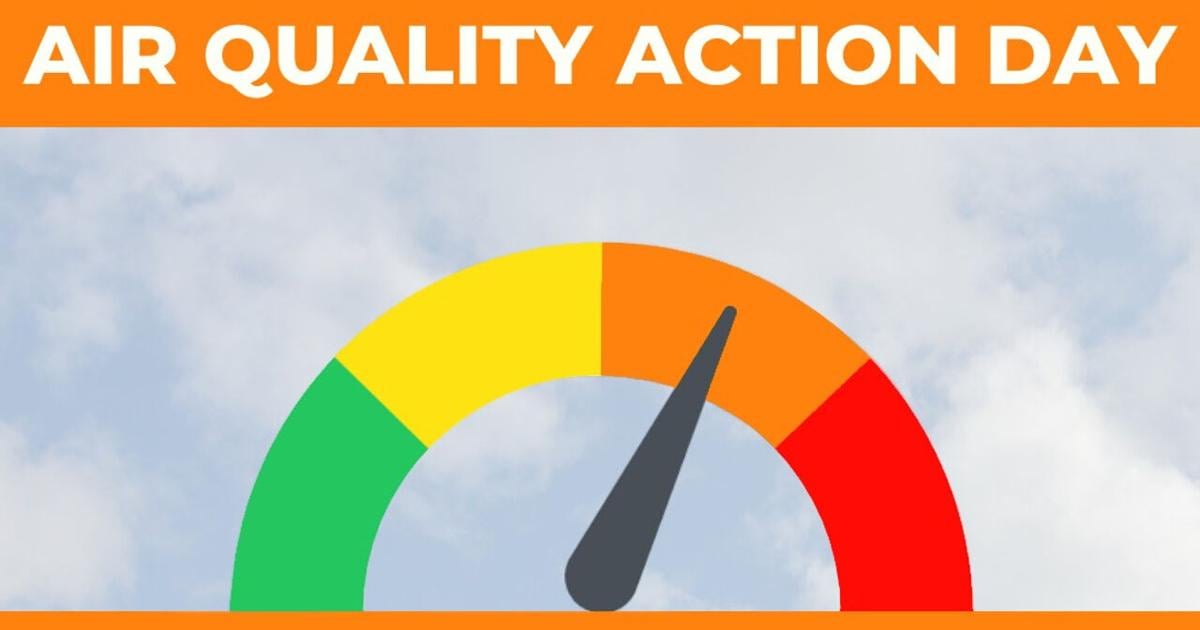
The Pennsylvania Department of Environmental Protection (DEP) has declared a Code Orange Air Quality Action Day for Wednesday, February 18, in the Susquehanna Valley region (Dauphin, Cumberland, Lebanon, Lancaster, and York counties), Lehigh Valley region (Lehigh, Berks, and Northampton counties) and Southeastern Pennsylvania (Philadelphia, Bucks, Montgomery, Chesterm and Delaware counties).
According to a press release from the DEP, sensitive groups of the population including children, older adults, and those with respiratory conditions should avoid heavy outdoor activity during this time.
Officials say very light surface winds, a temperature inversion, fog, and only light rainfall will act to bring PM2.5 concentrations to the Code Orange level overnight Tuesday and into Wednesday.
Residents are encouraged to check www.airnow.gov for current conditions in their area.
The DEP says on a Code Orange Air Quality Action Day, young children, the elderly, and those with respiratory problems, such as asthma, emphysema, and bronchitis, are especially vulnerable to the effects of air pollution and should limit outdoor activities.
According to the release, residents and businesses within the Air Quality Action Day areas are strongly encouraged to voluntarily help reduce fine particulate matter air pollution by:
Reducing or eliminating fireplace and wood stove use
Avoiding the open burning of leaves, trash, and other materials; and
Avoiding the use of gas-powered lawn and garden equipment

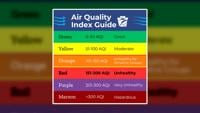
Image courtesy of the Pennsylvania DEP
The U.S. Environmental Protection Agency’s (EPA) Air Quality Index (AQI) provides standardized color codes for forecasting and reporting daily air quality. Green signifies good air quality; Yellow means moderate air quality; Orange represents unhealthy pollution levels for sensitive groups of people; and Red warns of unhealthy pollution levels for all. An Air Quality Action Day is declared when the AQI is forecasted to be Code Orange or higher.
For more information, visit DEP, or EPA’s AirNow.