
Faster air quality data for public health decisions
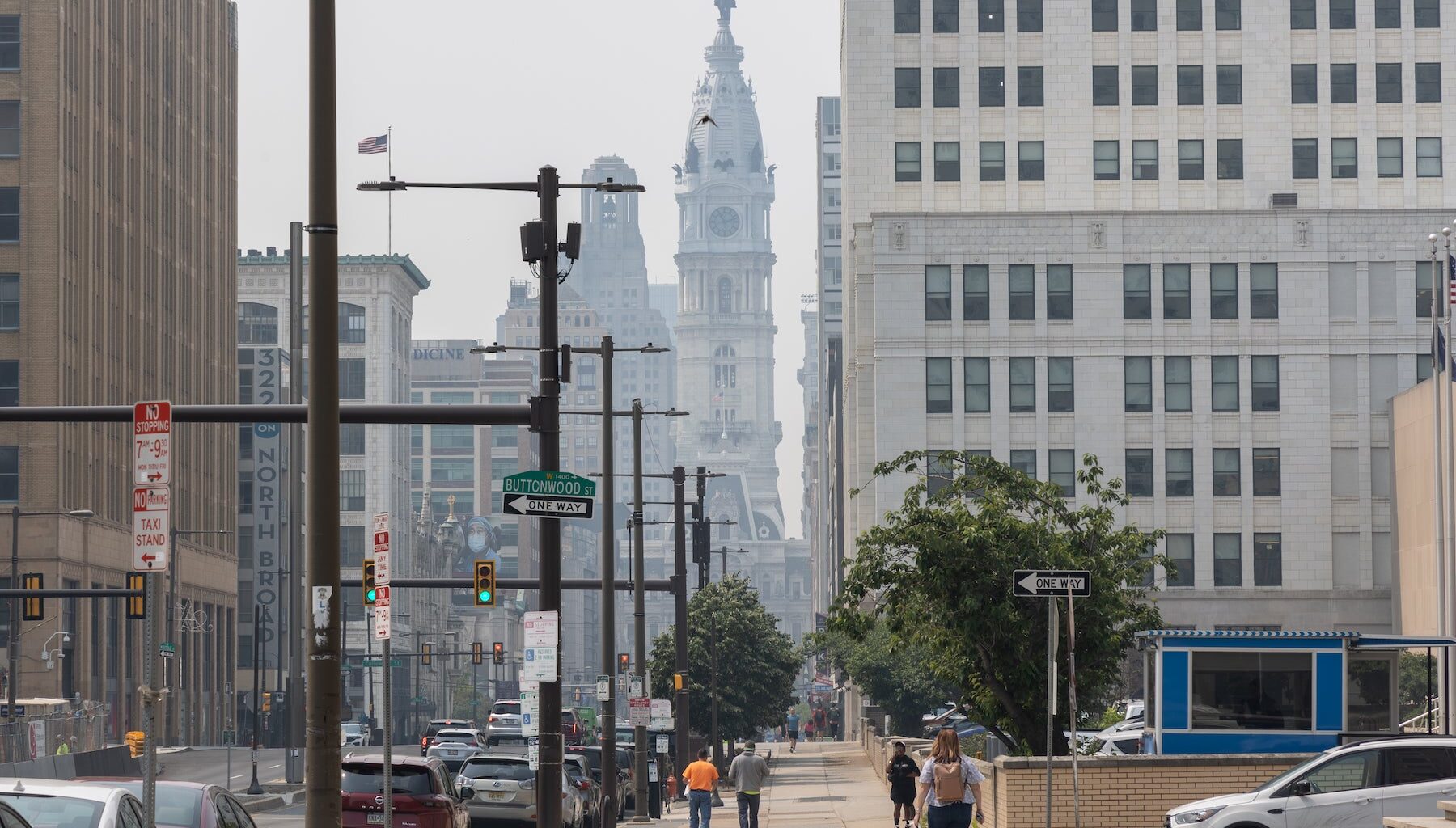
Raval-Nelson said the new monitors will inform the city’s public health messaging during air quality emergencies, such as the Canadian wildfire smoke that blanketed the city in 2023, when she said public health guidance from the city was delayed.
Howarth hopes the new network will do a better job of detecting pollution during incidents such as the fire and series of explosions that occurred at the Philadelphia Energy Solutions refinery in South Philadelphia in 2019. Public health officials said after the explosion that the air was safe to breathe, based on handheld monitors and on-site monitoring systems.
“There were the large, black, billowing clouds that just so happened to be drifting toward New Jersey — basically across South Philadelphia — and didn’t actually pass over any of the [city’s stationary] air monitors,” Howarth said.
Garrow said the data the city collected at the time indicated no impact on the air quality within the neighboring community, and that the new network of monitors would provide a more detailed look during any similar situation in the future.
Still, the new monitors don’t measure every air pollutant. Howarth noted they don’t capture volatile organic chemicals or carcinogens. She also worries the hourly data updates could mask shorter-term spikes.
Howarth hopes the monitors will illuminate disparities in air quality between neighborhoods, created by the combination of traffic and industrial pollution.
“If someone lives in an intersection where there’s lots of idling cars, their air pollution may be significantly worse than someone living a few blocks away,” she said.
City public health officials say the Breathe Philly website can help people with respiratory or cardiovascular conditions make their own decisions about when to avoid strenuous activity outside, close windows or stay indoors. Raval-Nelson said the city made sure to place sensors throughout Philadelphia, especially in areas that have “always faced more environmental burdens than environmental goods.”
“Knowledge is power,” Raval-Nelson said.