
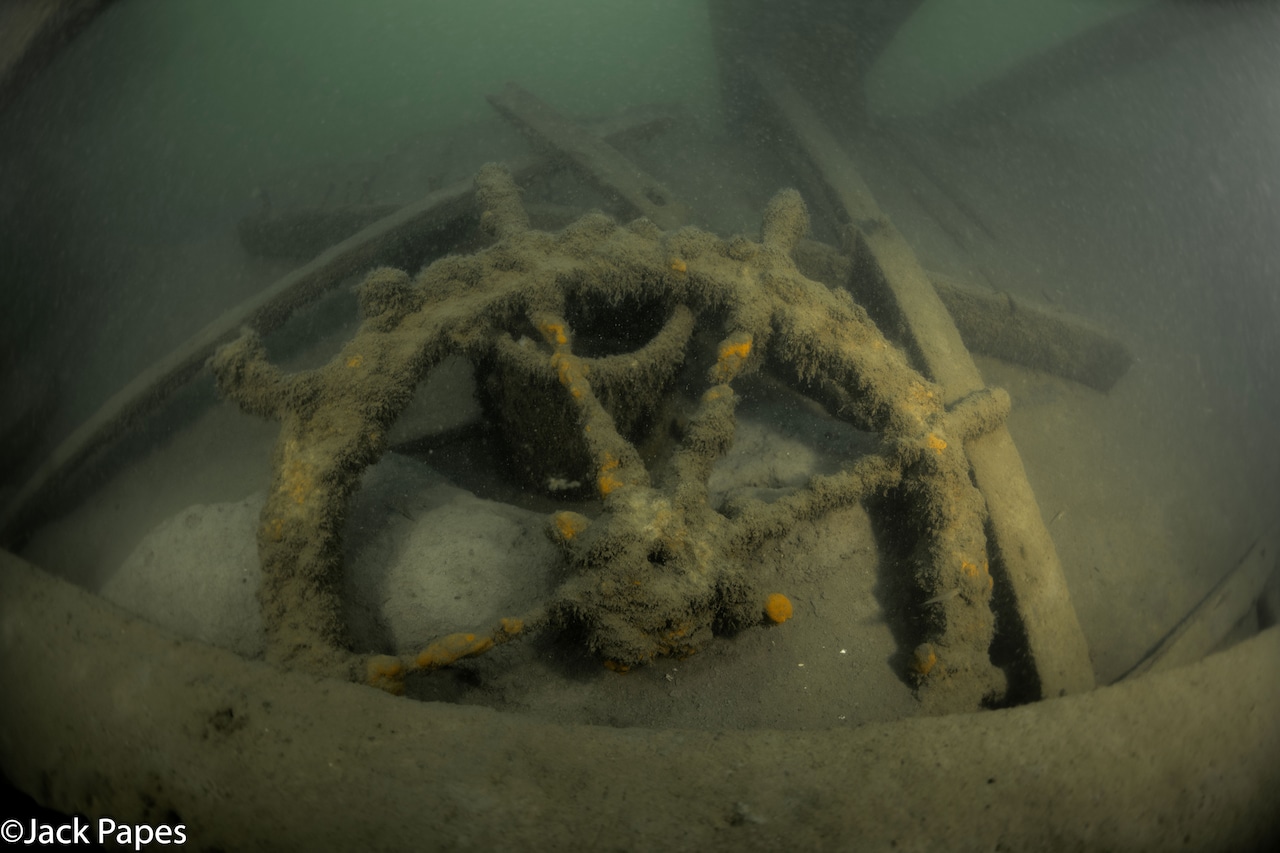
TOLEDO, OH — Maritime history researchers have identified a Lake Erie shipwreck that was the site of a fatal 2024 dive as a stone-hauling vessel that sank in the 1860s named the Clough.
The National Museum of the Great Lakes and Cleveland Underwater Explorers (CLUE) announced Wednesday, Feb. 18 that the wreck was positively identified following historical research and multiple site visits.
Museum officials said CLUE co-founder David VanZandt died June 1, 2024 while diving on the wreck during an expedition to study the site.
Built in Lorain in 1867, the 125-foot bark was owned by Amherst quarry operator Baxter Clough and sank Sept. 15, 1868 while transporting stone used in Great Lakes commerce.
The vessel was rigged with square sails on the foremast and schooner sails on the main and mizzen masts. It sank just a year after it was built.
Researchers said confirming the wreck identity carried special significance for the dive team following VanZandt’s death.
VanZandt, 70, of Lakewood, was an engineer at Zin Technologies who specialized in space flight hardware for the NASA Glenn Research center. He began diving in 1995.
“This discovery represents both a significant chapter in Great Lakes maritime history and a meaningful continuation of David VanZandt’s legacy,” said Carrie Sowden, director of archaeology and research at the National Museum of the Great Lakes.
To highlight the find, a temporary exhibit was created about the ship and the identification process. The exhibit opens Feb. 18 and runs through April 16 at the museum in Toledo.
Cleveland Underwater Explorers, founded in 2001, locates and documents Lake Erie shipwrecks through technical diving and historical research.