
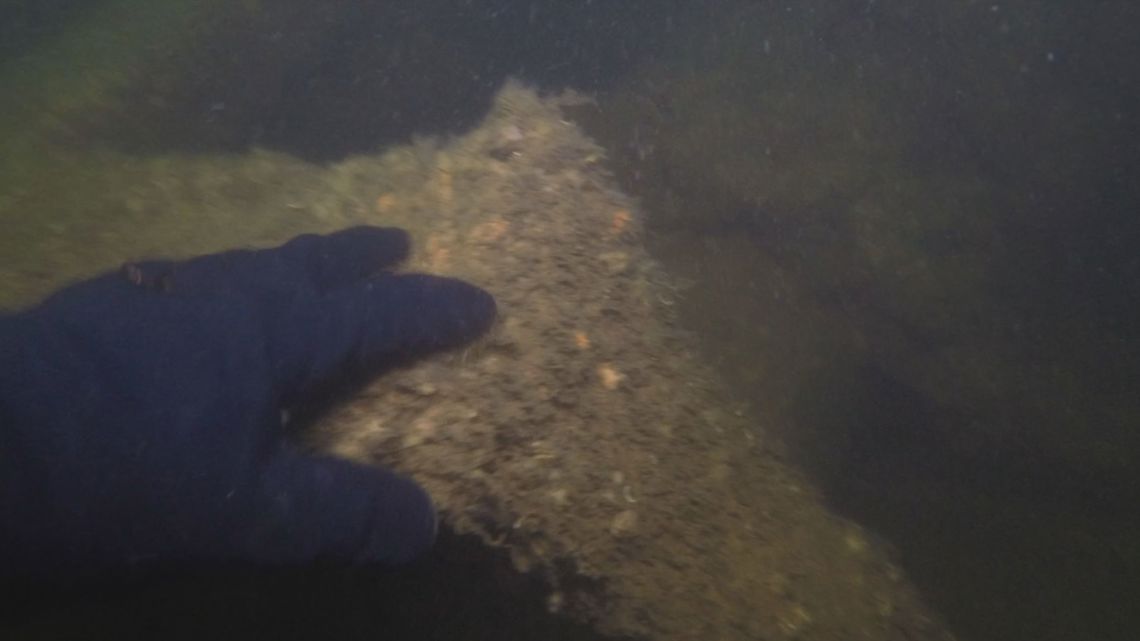
A micro-exhibit at the National Museum of the Great Lakes is celebrating the discovery of the ship. It will run through mid-April.
TOLEDO, Ohio — A piece of maritime history hidden beneath the waves of Lake Erie for more than 150 years has been found and identified.
On Wednesday, the National Museum of the Great Lakes (NMGL) and the Cleveland Underwater Explorers (CLUE) announced the confirmation of a newly discovered shipwreck, the Clough (pronounced CLAW). To celebrate the discovery, a temporary micro-exhibit highlighting the vessel opened at the museum on Wednesday.
The Clough was a three-masted bark built in Lorain, Ohio, in 1867. It was used primarily to haul stone for Baxter Clough, a quarry owner from Amherst, Ohio. The 125-foot ship sank on Sept. 15, 1868, just a year after its launch, during a sudden storm while transporting sandstone and grindstones.
Of the eight people on board, seven perished. Only one survivor remained to tell the story of the ship’s final moments.
Tom Kowalczk, lead director for CLUE, said the survivor’s narrative helped researchers understand how a ship carrying such heavy cargo could sink so quickly.
“The wind was so violent when it hit the sails of the boat that it keeled it right over on its side,” said Kowalczk. “The force of the wind was so severe that it laid the railing of the deck right down into the lake and allowed the water to rush in quickly.”
Because the heavy stone cargo was not secured, gravity took over. The stones slid across the deck, preventing the ship from righting itself. It filled with water and sank in minutes.
A ‘Time Capsule’ Beneath the Surface
CLUE members spent more than a decade searching for the Clough, covering about 250 miles of the lake with side-scan sonar. While the team first located the wreck in 2022, it was not positively identified until late 2024.
The shipwreck sits in about 60 feet of water northeast of Cleveland. Despite the passage of time, the cold, fresh water of Lake Erie has preserved the wooden vessel remarkably well.

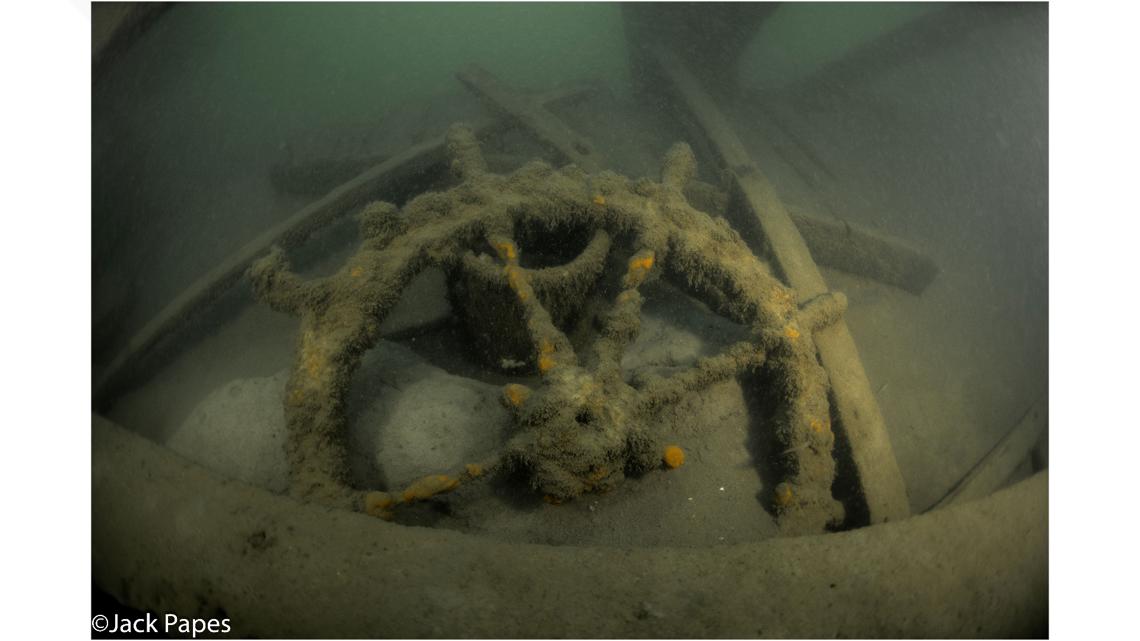
“It’s almost like a time capsule,” said Kowalczk. “Most of the superstructure still stands up off of the bottom. The main steering wheel is there, capstans and hatch covers. It’s like the entire boat is just sitting there.”
Chris Kraska, deputy director of archaeology for CLUE, noted that the cargo itself was the “first clue” that led to the ship’s identification.
“It’s completely loaded,” Kowalczk added. “There’s stone blocks and they sold a lot of grindstones also, big rectangular blocks of stone for building.”
The confirmation of the Clough is bittersweet for the exploration team. The initial dive to the wreck on June 1, 2024, resulted in the tragic death of CLUE founder David VanZandt.
“The discovery carries deep meaning for CLUE and NMGL,” the organizations stated in a press release. “The wreck site is associated with the tragic loss of CLUE founder David VanZandt. Both organizations [are] committed to completing the identification process with care, accuracy, and respect.”
Carrie Sowden, director of archaeology and research at the National Museum of the Great Lakes, emphasized the importance of this find to VanZandt’s memory.
“This discovery represents both a significant chapter in Great Lakes maritime history and a meaningful continuation of David VanZandt’s legacy,” Sowden said.
The temporary micro-exhibit at the National Museum of the Great Lakes will run from Feb. 18 through April 16.
Visitors can view underwater video of the shipwreck, site drawings, and learn about the archaeological work that led to the confirmation of the Clough.
“It’s really exciting that we can share this with the public in a way that might be meaningful,” said Kowalczk. “There’s something about descending through the lake, and then having this ship materialize in front of you.”
The museum is located at 1701 Front St. in Toledo. Admission includes access to the special exhibit.