
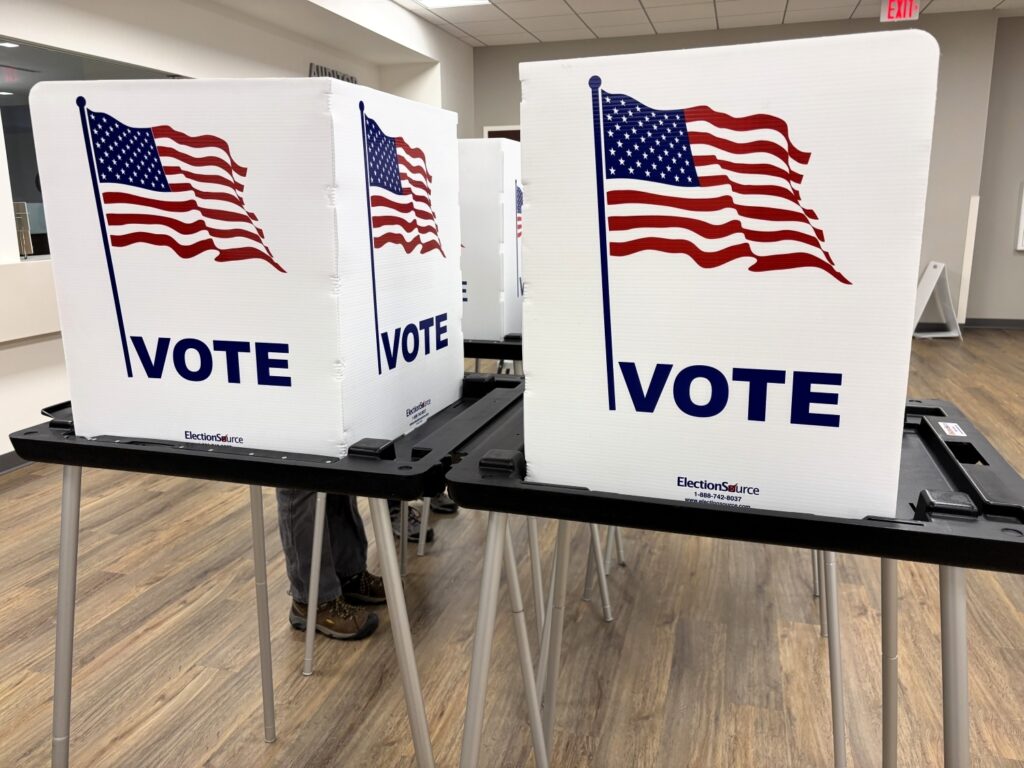
Booths await voters at the Pennington County Administration Building during early voting on Jan. 19, 2026, for a municipal election in Rapid City, South Dakota. (Photo by Seth Tupper/South Dakota Searchlight)
Pennsylvanians may be getting unexpected knocks on their door, or seeing hopeful campaigners out collecting signatures over the next three weeks.
That’s because the period for potential primary candidates in the commonwealth to file their nomination petitions began Tuesday.
Candidates who want to appear on the May 19 ballot are required to collect hundreds or thousands of signatures from potential voters, depending on the office they’re seeking.
A candidate for governor would need 2,000 signatures, including at least 100 each from ten separate counties. A lieutenant governor candidate is required to gather 1,000, including at least 100 from five counties. A congressional candidate must garner 1,000. A general assembly candidate would need 300.
Candidates also have to provide fees of between $25 and $200, depending on the office they’re seeking.
The last day to circulate and file a nomination petition is in less than three weeks, on Tuesday, March 10. Some campaigns say they’re already done collecting the required number of signatures.
SUBSCRIBE: GET THE MORNING HEADLINES DELIVERED TO YOUR INBOX
After the petitions are submitted, challenges against them can be filed by March 17. State Rep. Chris Rabb (D-Philadelphia), for example, has already filed his document to seek federal office in the 3rd Congressional District. The seat is currently held by Democrat Dwight Evans, who announced he will not be running for reelection.
Rep. Ben Waxman (D-Philadelphia) issued a memo seeking co-sponsors last week for a bill that would lower the bar for requirements on candidates seeking office. His proposed legislation, which has yet to be introduced, would eliminate filing fees and lower signature requirements. He says the move would, “make running for office more accessible for potential candidates and will increase ballot diversity for voters.”