
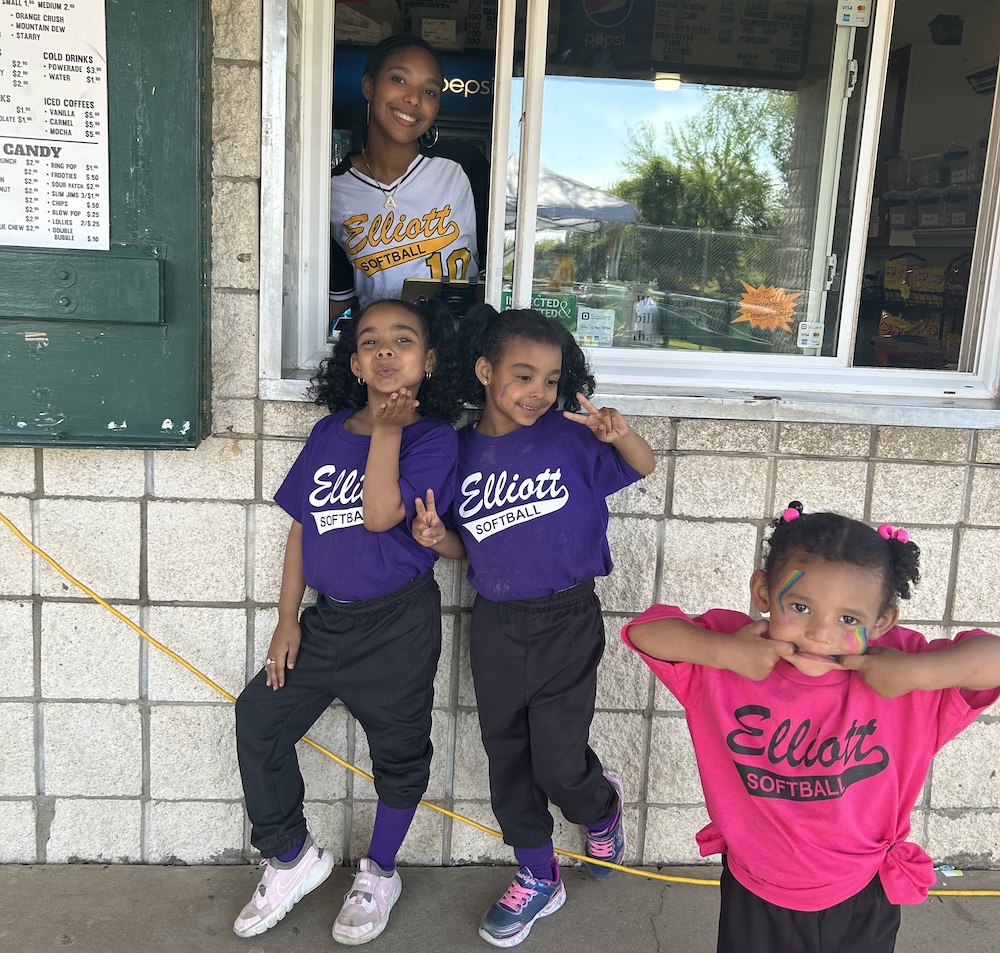
Growing up Black and a girl in Pittsburgh has meant learning who I am while the world tries to tell me who I should be.
Some of my earliest memories are small ones: sitting on front steps in the summer, my hair freshly braided, listening to music float out of someone’s open window. I remember the feeling of belonging in those moments — like the neighborhood itself was holding me. That kind of care isn’t loud or flashy; it lives in familiarity, in people knowing your name and your people.
But I also remember being watched more closely at school, spoken to more sharply in stores, and expected to “know better” even when I was still just a kid. Being a Black girl here has always meant holding joy and pressure at the same time.
Beauty, Identity, and Being Seen
For many Black girls, beauty is something we learn to question early. Our hair, skin and clothing are often treated as problems to fix instead of expressions to celebrate. I remember worrying about whether my natural hair would be seen as “unprofessional” or “distracting,” even when it felt the most like me. That kind of self-monitoring becomes second nature, learning how to anticipate judgment before it ever arrives.
That’s why Black spaces in Pittsburgh matter so much. From community centers to dance studios to church basements where aunties remind you how beautiful you are, these spaces push back against narrow beauty standards. They teach Black girls that our curls, our skin tones, and our styles are not trends — they are traditions.
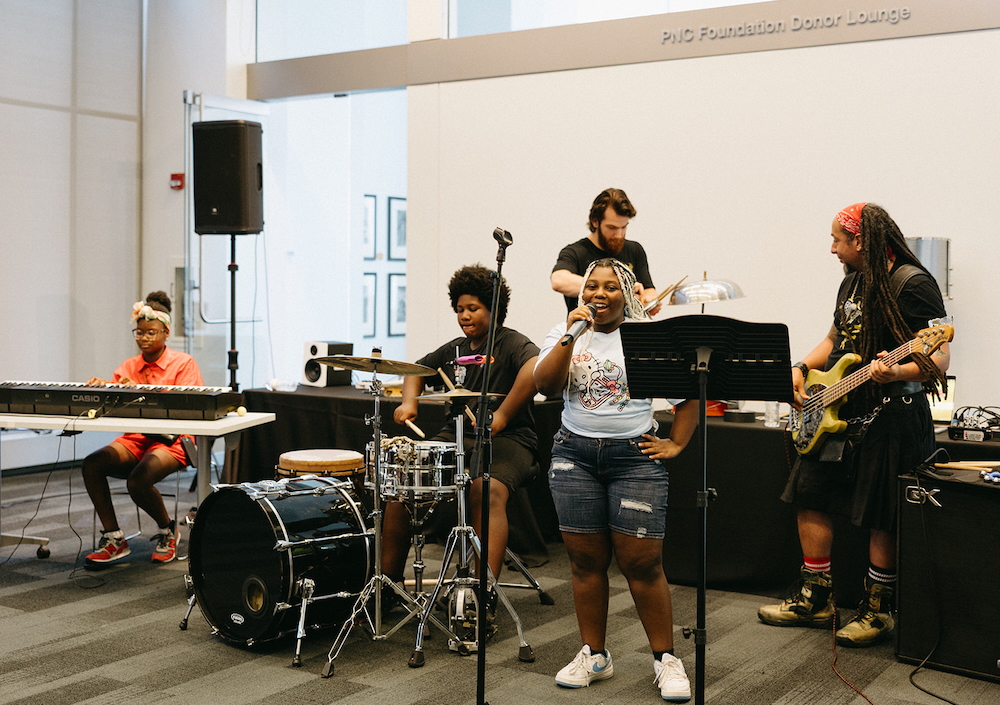 Summer camp photo courtesy of the August Wilson African American Cultural Center.
Places like the August Wilson African American Cultural Center and The August Wilson House honor Black storytelling as something sacred. Dance spaces like Hill Dance Academy Theatre and Balafon West African Dance Ensemble allow Black girls and children to move freely in bodies the world often tries to control.
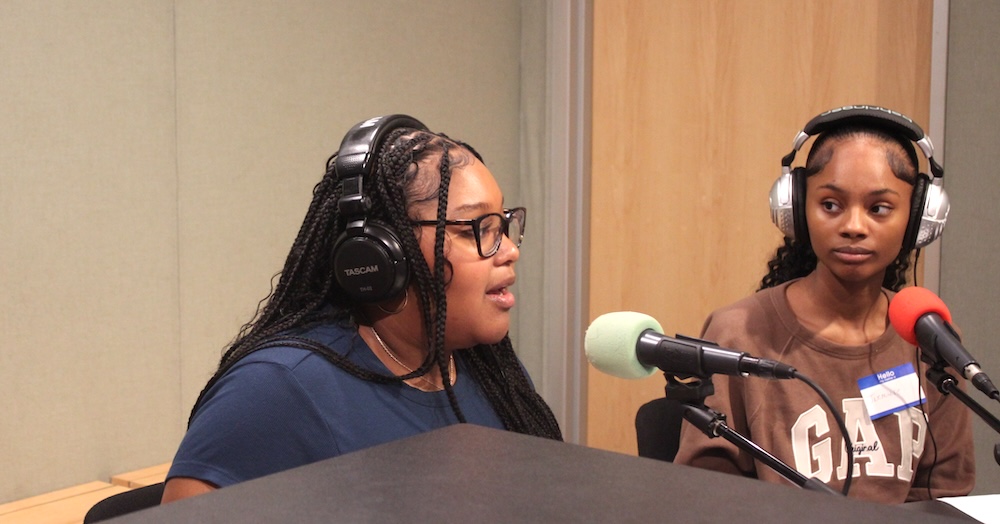 Students sharing thoughts during Streaming Justice 2025. Photo courtesy of SLB Radio.
Creative homes such as the Manchester Craftsmen Guild, Kelly Strayhorn Theater, SLB Radio and Alumni Theater Company give Black you the permission to be expressive, bold and seen on their own terms. Even local Black-owned wellness and care spaces like Plants for Skin, Serenity Bloom, and Freeman Family Farm Store quietly affirm that black children deserve gentleness, beauty and rest.
Safety, Belonging, and Community Care
There are places where being a Black girl can feel uncomfortable or unsafe — classrooms where you’re disciplined more quickly, public spaces where you feel stared at, situations where you’re expected to act older than you are. Many Black girls in Pittsburgh learn early how to make themselves smaller just to move through the day. This pressure to be mature, calm and controlled is often mistaken for strength, when it really is survival.
But community changes that. In neighborhoods, after-school programs, and family gatherings, Black girls find protection and affirmation. One of my friends once told me, “I feel safest when I’m around people who don’t question my tone or my emotions.” That sense of safety — of being understood without explanation — is powerful. It is often the difference between merely existing and actually breathing.
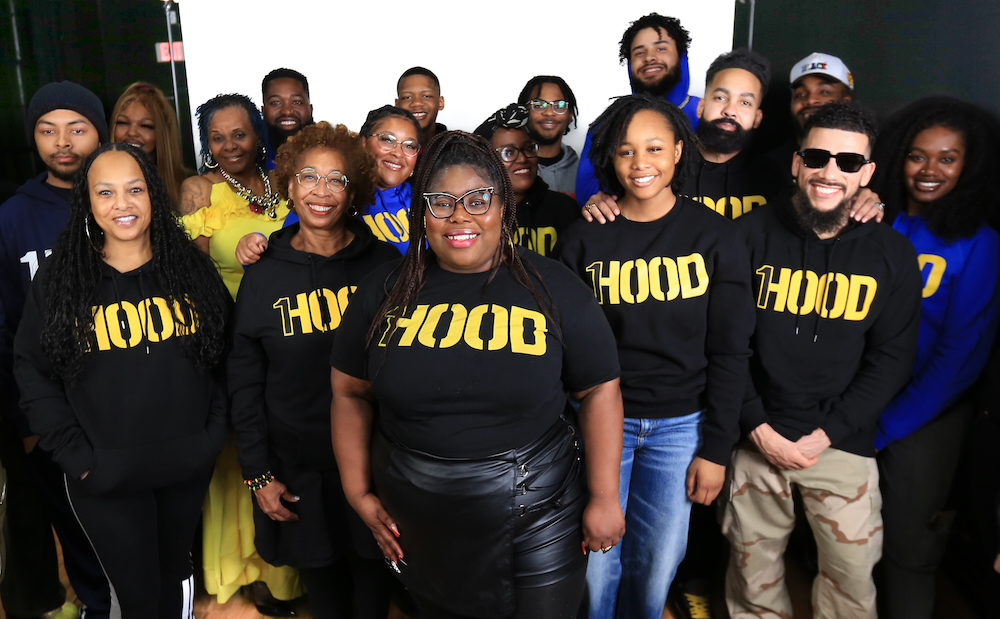 Photo by Emmai Alaquiva courtesy of 1HOOD Media.
Creativity as Survival and Joy
Creativity has always been a way for Black girls to define ourselves on our own terms. Music, writing, fashion and art give us space to speak freely. For me, writing became a place where I could ask questions, tell the truth, and feel heard. On the page, I don’t have to shrink or translate myself, I get to take up space.
Pittsburgh is home to programs and organizations that nurture that creativity — from youth writing workshops to media collectives that encourage Black girls to tell their own stories. These spaces don’t just teach skills; they teach confidence. Organizations like 1Hood Media and Pittsburgh Urban Media remind Black girls that our voices are not only valid, they are necessary.
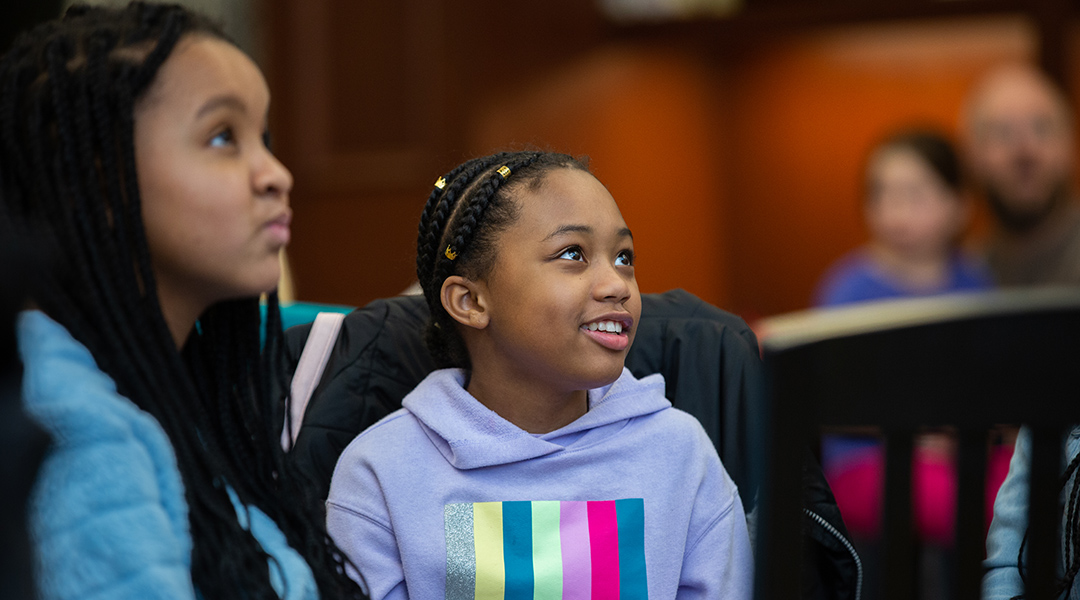 Photo courtesy of the Carnegie Library of Pittsburgh.
Sisterhood and Support
Black girlhood is not something we experience alone. It’s built through friendships, shared jokes, group chats and late-night conversations where we finally admit how tired we are of being “strong.” Other Black girls have taught me how to trust myself, how to laugh through hard days, and how to believe I deserve softness, too. Sisterhood is where vulnerability becomes safe instead of risky.
Mentors, family members, coaches and teachers also play a role. When adults choose to protect Black girls instead of policing them, it changes everything. It tells us that we are worthy of care without having to earn it.
Why Black Girlhood Deserves Care
Black girlhood in Pittsburgh is full of brilliance, creativity and resilience — but it also deserves protection. Supporting Black girls means making their joy, safety and childhood a shared responsibility. It means treating their well-being as a priority, not an afterthought. Listening to Black girls, believing them, and creating spaces where they can simply be children should not be optional.
If you want to support Black girls in Pittsburgh, consider volunteering with or donating to organizations like 1Hood Media, which uplifts youth voices, or local mentorship and arts programs that center Black girls’ well-being. Investing in these spaces is an investment in a more just and compassionate city.
Black girls are not problems to be solved. We are stories worth hearing, lives worth protecting, and futures worth investing in. And Pittsburgh is better when we are allowed to grow up fully seen.