
By Jack Tomczuk
City Council on Thursday passed a three-year moratorium on the breeding and sale of puppies, amid a rise in dogs entering the municipal shelter system.
Lawmakers also approved a measure designed to crack down on tobacco sales to minors and finalized a ballot question that would make permanent an office tasked with overseeing foster homes, juvenile detention centers and other youth residential facilities.
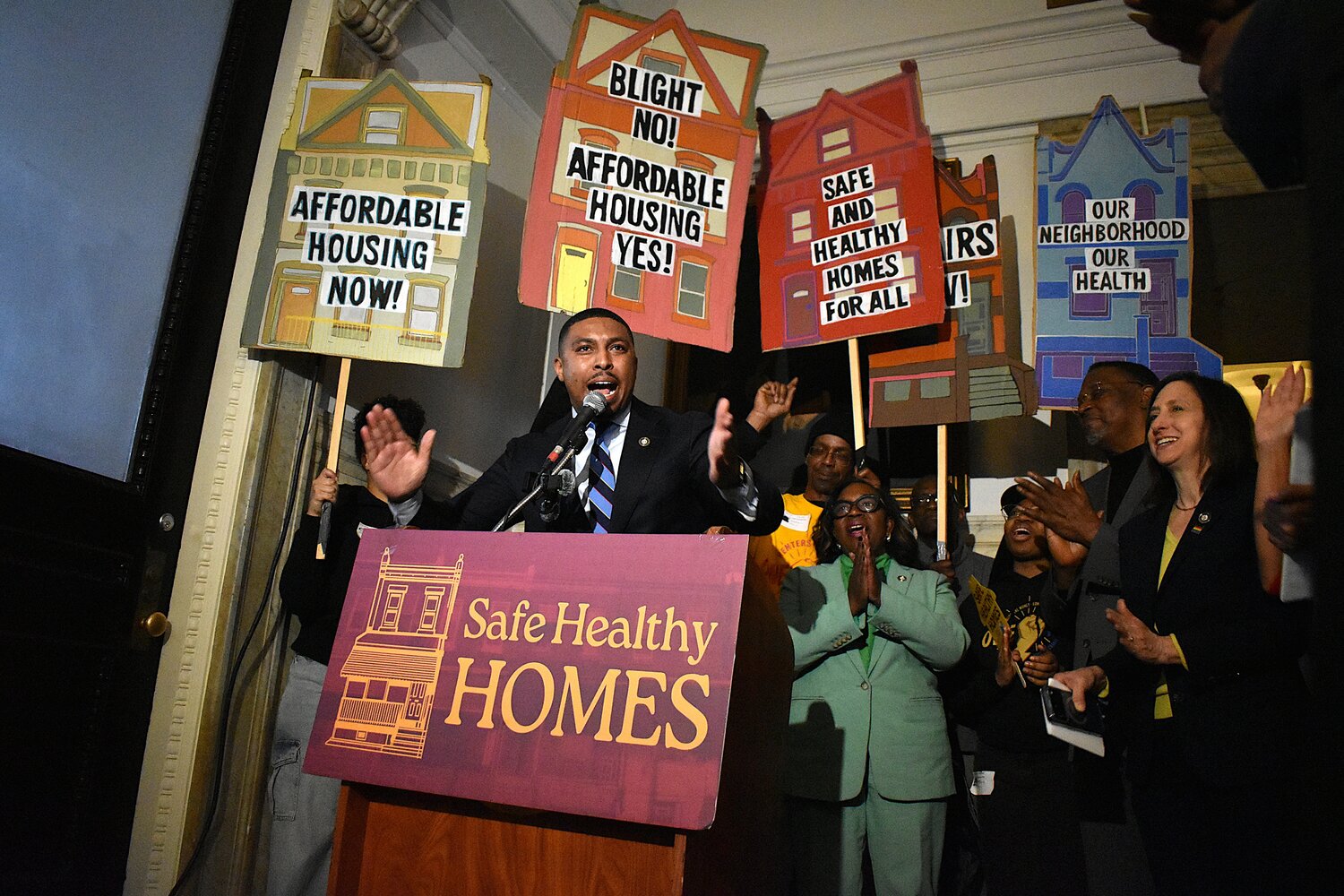
Meanwhile, Councilmember Nicolas O’Rourke told reporters he has enough support to move forward with his package of legislation aiming to bolster protections for renters.
Puppy moratorium
Legislators voted unanimously in favor of the puppy bill, despite opposition from a prominent dog show organization.
The law stipulates that owners of female dogs must take “reasonable measures,” such as spay surgery and separation from males, to prevent the birth of a new litter. It also bans the advertising or transfer of any dog under 7 months old.
Prospective puppy owners are barred from purchasing an animal outside city limits to evade the moratorium, and any Philadelphian who acquires a puppy must maintain the seller’s kennel license or rescue number.
Exempted from the ban are nonprofit animal shelters or rescues and anyone with a state-issued kennel license.
“This bill is about responsibility, compassion, and common sense,” the legislation’s author, Councilmember Cindy Bass, said in a statement. “Philadelphia’s animal shelter system is under real strain, and unregulated breeding has contributed to overcrowding, abandonment, and public safety risks.”
Representatives from the American Kennel Club, which promotes the National Dog Show, held annually in Montgomery County, testified against the moratorium, saying it would harm hobby and show breeders.
“The American Kennel Club is asking this bill to be tabled so a stakeholder work group, which should have been step one, may be established,” the AKC’s Charley Hall testified Thursday.
Bass said the three-year pause will give lawmakers time to consider a permanent solution to the shelter challenges.
Animal welfare advocates cheered as the bill passed. They believe the temporary ban will reduce overcrowding at ACCT Philly and the need to euthanize dogs to free up space for newcomers.
If and when Mayor Cherelle Parker signs the legislation, it will go into effect 90 days later, with the moratorium lasting 36 months.
Tobacco training
Pop-up smoke shops have proliferated across the city in recent years, with some stores allegedly selling to those under 21 years old, the legal limit.
In an attempt to curtail that activity, lawmakers unanimously passed a measure requiring proprietors whose businesses are shut down for tobacco violations to undergo training overseen by the Philadelphia Department of Public Health.
Inspectors will not lift a cease operations order unless a “nuisance abatement plan” includes classes on tobacco regulations. The education must be completed within 60 days, according to the text of the law.
“We must protect our children at all costs,” Councilmember Anthony Phillips, the bill’s sponsor, said.
The measure is part of Council’s broader focus on so-called ‘nuisance’ establishments, which often hawk drug paraphernalia and other legally questionable products.
It will also go into effect 90 days after being signed by the mayor.
Youth Ombudsperson
Voters in the May primary will likely be asked whether the Office of the Youth Ombudsperson should be enshrined into the city’s governing document, based on legislation passed Thursday.
The department was established by Mayor Jim Kenney through a 2022 executive order, and it has since uncovered the illegal use of solitary confinement at the Juvenile Justice Services Center, among other findings.
Its role is to monitor child welfare, juvenile justice, and behavioral health residential placement facilities by responding to complaints, conducting evaluations and educating young people about their rights.
“By their nature, executive orders are temporary,” said Stefanie Arbutina, vulnerable youth policy director at Children First. “Our children’s safety should not be.”
Safe Healthy Homes
Back in June, following an hourslong hearing, a City Council committee decided to hold two of the three bills incorporated into O’Rourke’s Safe Healthy Homes plan.
The only component that did pass – creating a fund to help renters who need to relocate because a city inspection found their home could no longer be occupied safely – was included in the first budget for Mayor Cherelle Parker’s Housing Opportunities Made Easy, or H.O.M.E., plan.
O’Rourke had said he would return to the other two measures, dealing with tenant organizing and authorizing a proactive unit inspection program.
Both bills have been extensively amended in the months since, and O’Rourke announced Thursday that he now has the support of all members of Council’s housing committee.
During a rally for the Safe Healthy Homes Act on Thursday morning, Theresa Howell, a member of One Pennsylvania Renters United, said she has been forced to confront rodents, bedbugs, mold and lead in her home, as a result of a negligent “slumlord.”
“There are so many landlords that are profiting off of our suffering. It is almost as if we are paying for our own demise,” she said. “Something needs to be done quickly, swiftly about these people.”
Another hearing needs to be scheduled to advance the legislation; while it is expected to be considered in the coming weeks, no date has been set.
Keywords
City Council,
puppy moratorium,
tighten tobacco rules,
push renter protections