
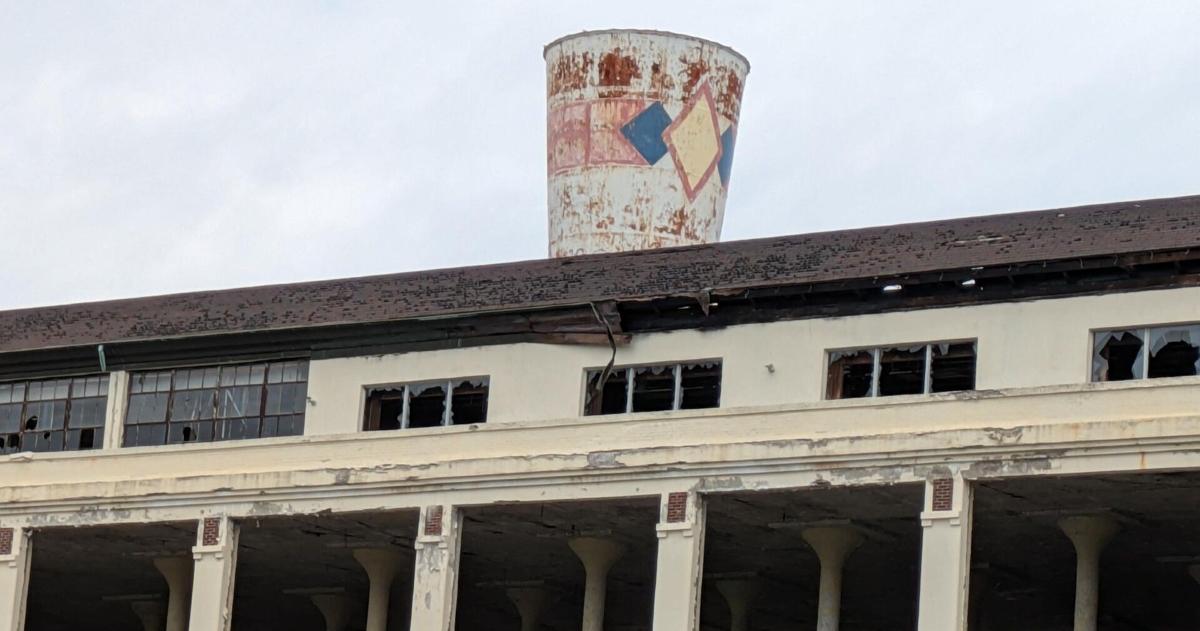
EASTON, Pa.- Call it TIF, the sequel.
Brian Bartee of the New York-based Skyline Investment Group, which is spearheading the redevelopment of the former Dixie Cup factory in Wilson borough, Northampton County, told county council on Thursday night that he intends to again seek approval for a TIF, or Tax Increment Financing plan.
In November, council voted against the 20-year, $26 million TIF, which is a tool that allows for future gains in real estate values to be used now to pay for redevelopment costs.
In simpler terms, the higher property taxes that would be levied against the refurbished property are phased in later, so the developer can use that deferred tax revenue upfront to pay off loans incurred in the redevelopment.
When council members said ‘no’ the first time around (the vote was 5-4), they did so after the Wilson Area School District and Wilson borough had given their blessing to the TIF.
But Northampton County Council looks a lot different now than it did in November.
Of the commissioners who voted ‘no’- Democrats Ron Heckman and Lori Vargo Heffner; and Republicans John Brown, Tom Giovanni and John Goffredo- only Vargo Heffner and Giovanni are still on the panel. Democrats Jason Boulette, Theresa Fadem, David Holland and Nadeem Qayyum won seats in the last election and were sworn in earlier this year.
Bartee’s team is in the midst of transforming the old factory at 12 S. 24th Street, which closed in 1983, into 405 apartments. He previously said it’s a $185 million redevelopment.
Bartee gave an update on the project Thursday night during the Economic Development Committee meeting that preceded council’s regular bi-monthly meeting. “We’ve been at this since February of 2023,” he said.
According to Bartee, they’ve spent about $4 million on remediation, which is now complete and waiting approval from the Pennsylvania Department of Environmental Protection. Also, interior demolition is about 85% complete. “It’s going to be a complete white box,” Bartee said. The first apartment units most likely will be available in August of 2027.
The average monthly rent for the Dixie Cup apartments- a mix of one- and two-bedroom units- will be just under $2,500. Bartee said a recent study shows the prices are in line with current market conditions.
“The demand for it speaks for itself,” said Bartee. “With Eli Lilly coming, you’re going to need housing. The housing shortage up here is so vast, and we’re going to look to plug some of that gap.”
Once Bartee was finished with his brief presentation, commissioners were allowed to ask questions. The first came from Boulette: “So are you asking us for a TIF again?”
“Yes, we’re looking to come back for a revote March 19,” Bartee responded.
Boulette pointed out that Bartee previously said the project would continue, even without the TIF; he asked Bartee if that was still the case.
Bartee called the TIF a vital part of the capital stack. “We just would like to have the support in mind from all the taxing bodies versus me having to do a break-glass scenario to make the building work in spite of the county, because this is going to be celebrated,” he said.
Earlier in the same meeting, Bartee pointed out that, after the first TIF was denied, “We didn’t stop, just because we didn’t get a favorable vote. That’s okay, that stuff happens, but it really means a lot to us to have the county support in line as well, because we’re all in this together, all of us. So, I need everybody. That’s why I’m back here before the county council again.”
Later in the evening on Thursday, during its regular meeting, council authorized the filing of a Redevelopment Assistance Capital Program (RACP) application for the Dixie Cup project.
The move means the county can act as a “pass through” to get the $500,000 state grant to Skyline.
RACP is a Commonwealth grant program administered by the Office of the Budget. Projects must have a total cost of at least $1 million and are “primarily economic development projects… that have a regional or multi-jurisdictional impact.”
The grant is reimbursement-based, meaning the developer must spend the money upfront and then request repayment from the state.