
By Jack Tomczuk
Philadelphians now have access to real-time data about the air quality in their neighborhood.
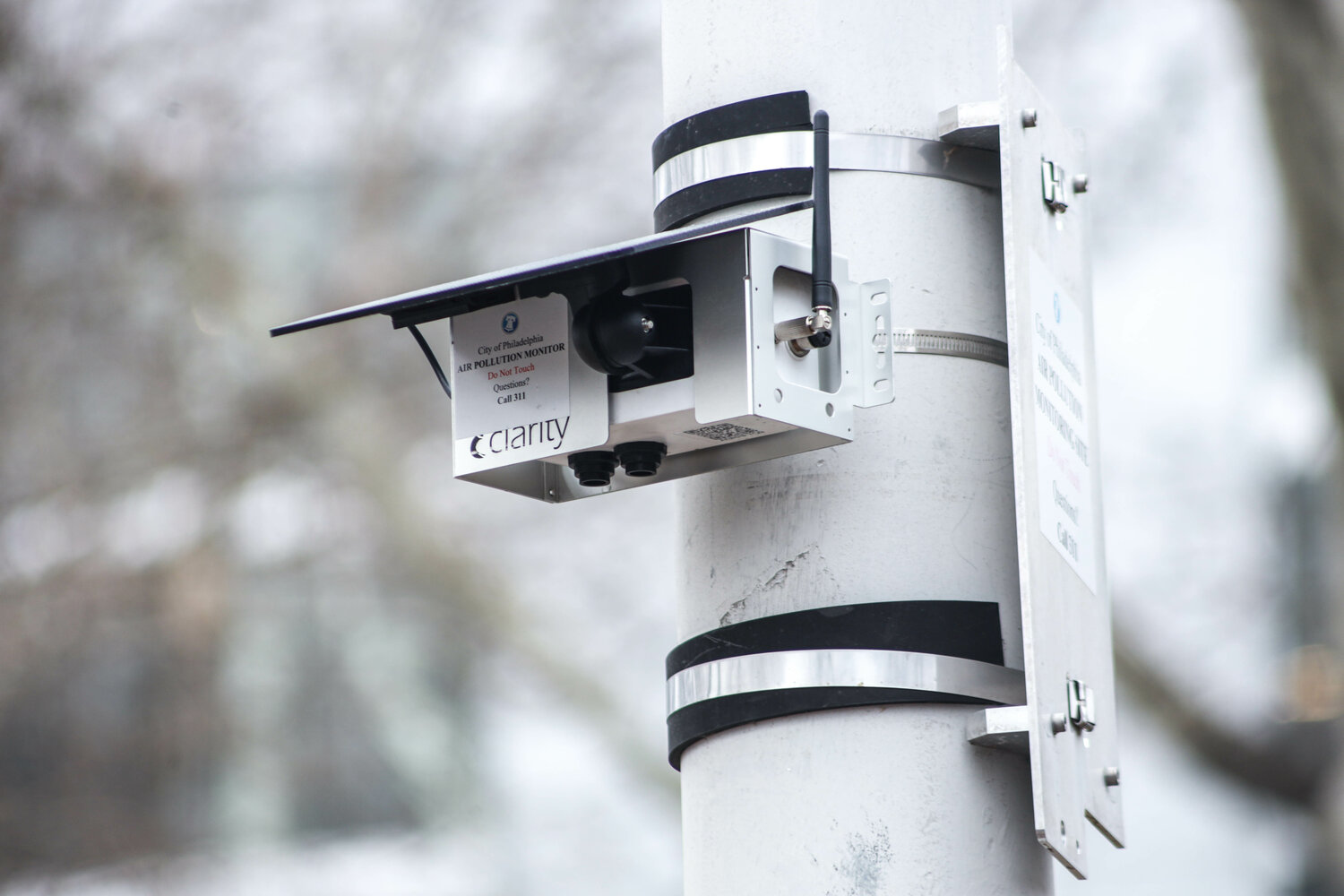
Mayor Cherelle Parker’s administration has deployed 76 air quality sensors, enough so that every city address is within a mile-and-a-half of one of the small devices, officials said.
Information from the ground-level sensors is being uploaded on an hourly basis to Breathe Philly, a new online dashboard available at phila.gov/breathephilly. Individuals can input an address to see the closest location or select a colored dot from a map.
The devices, created by Clarity, a California-based company, measure fine particulate matter (PM2.5) and nitrogen dioxide (NO2). Both can cause serious negative health effects if inhaled at high concentrations.
In addition to current levels, Breathe Philly provides information about trends and recommendations for how people may want to respond, particularly if air quality is poor. Data is also displayed from the city’s longstanding air quality monitors.
By spring, the Philadelphia Department of Public Health hopes to equip some of the sensors with the ability to tabulate ozone, also known as O3.
Health Commissioner Palak Raval-Nelson said the network is “the culmination of years of effort” and the first such system in the country.
Her department, in a news release, said the sensors will enhance the city’s ability to “research neighborhood-level trends, respond to specific air quality concerns, and develop evidence-based regulations to continue decades of progress in air quality.”
“We’re excited to use the Breathe Philly network in our work to improve air quality, but we’re just as excited to see how residents use it – whether you’re a citizen scientist, the parent of a child with asthma, or just a resident enjoying the outdoors,” Raval-Nelson added, in a statement.
Air quality can be influenced by weather patterns, far-away wildfires and localized incidents, such as a large blaze that broke out last week in Grays Ferry.
Health department inspectors were dispatched to collect air samples Thursday, while the fire was still burning. A day later, officials said that testing showed no pollutants were released at levels threatening human health.
The Parker administration announced the sensor network Wednesday, hours after the state Department of Environmental Protection declared a Code Orange Air Quality Action Day for southeastern Pennsylvania due to expected PM2.5 levels.
DEP representatives recommended that children, older adults and those with respiratory conditions avoid strenuous outdoor activity.