
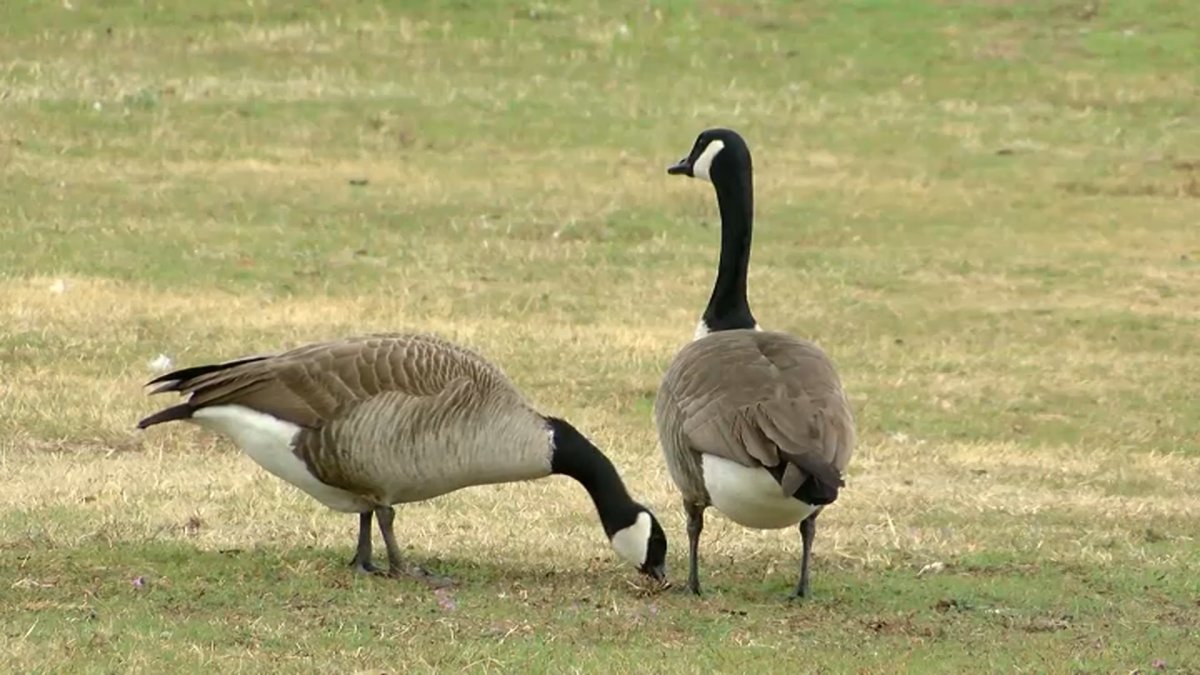
Geese are reportedly dying in large numbers throughout the state of New Jersey causing a new concern over bird flu.
According to New Jersey’s Department of Environmental Protection, over 1,100 dead or sick wild birds were reported all over the state between Saturday, Feb. 14 and Monday, Feb. 16.
Nearly all of the reports were about Canada geese.
The following counties have reported dead geese:
Hainesport, Burlington County
Sicklerville, Camden County
Edison, Middlesex County
Holmdel, Monmouth County
Manalapan, Monmouth County
Matawan, Monmouth County
Basking Ridge, Somerset County
In Gloucester County, the Borough of Pitman announced on Tuesday that Betty and Alcyon parks are closed after dead geese were reported around the lake.
Glen Dalakian lives in Colts Neck and said that he and his wife counted over 100 dead birds on the reservoir behind their house since Saturday, Feb. 14. Some were still alive but acting strangely.
“Floating around and swimming around in circles. Some were throwing their heads around erratically and rolling over in the water,” Dalakian explained.
Local officials are working to remove the dead birds when possible as the NJ DEP Fish and Wildlife team is coordinating with landfills to safely dispose of the carcasses, state leaders say.
“This is a significant number of birds, water fowl, dying on the landscape in single locations, beyond what we have seen in previous years on a broad level,” DEP State Wildlife Pathologist Dr. Patrick Connelly told NBC10. “This virus, we know it’s more stable at these cold temperatures and so it’s able to better persist, both in the environment and in the host.”
The DEP wants residents to report sick or dead birds, especially if they are in a group of five or more.
New Jersey logged its highest amount of bird flu activity last year but officials say they state could possibly break that record if the latest reports continue at their current pace.
Pa. Gov. Shapiro kicks off extra support to poultry farmers to fight bird flu
The Commonwealth of Pennsylvania has reported that over 14.3 million birds have died since the current bird flu outbreak started in February of 2022.
Since the beginning of 2026, state leaders say that the bird flu virus has impacted 7.2 million birds.
On Wednesday, Feb. 18, Gov. Josh Shapiro deployed 42 USDA employees and six Commonwealth workers to help veterinarians, Penn State Extension experts and National Guard members to help stop the spread of the virus.
“I know farmers are worried given the recent increase in cases, but I want them to know that my Administration is standing with them and continuing our aggressive response to protect Pennsylvania flocks,” Gov. Shapiro said in a statement.
To learn more about how Pennsylvania is handling the bird flu, click here.
Delaware on heightened alert against bird flu
Poultry farms are a massive business in Delaware and now state leaders are doing what they can to protect flocks from the bird flu. NBC10 Delaware Bureau reporter Tim Furlong reports.
Officials in Delaware say that they are on heightened alert to protect poultry farms which are a massive industry for the First State.
“Poultry is by far the single largest product that we produce on Delaware farms and avian flu presents a real risk, not just getting chickens to the grocery store but to the survival of these farms,” Del. Rep. Sarah McBride said.
One poultry farmer – Georgie Catanza – said that her farm lost 145,000 broiler chickens last year due to an infect.
Catanza said she is fighting hard to prevent it from happening again.
“That anxiety and that concern that it could happen again is overwhelming. It is a traumatic event for a grower to go through. I’ll never be the same that I can tell you,” Catanza explained.
In 2025, Delaware tested thousands of chickens and they are testing corporate and backyard chickens right now, officials said.
“We are in as good a place as we can be at present,” Del. Secretary of Agriculture Don Clifton said.
Tips to avoid getting bird flu
No birds in Camden County have tested positive for bird flu as of Wednesday, Feb. 18, officials said.
The county’s Department of Health and Human Services shared recommendations to protect yourself from the virus:
Avoid contact with dead or sick birds by not touching them or their droppings.
Do not bring wild animals into your home.
Practice good hygiene by washing your hands with soap and water or use hand sanitizer.
Cook poultry thoroughly by making sure chicken, turkey and egg products reach an internal temperature of at least 165 degrees.
Keep your pets away from wild birds.
Monitor for flu-like symptoms and if you have had contact with birds recently, seek medical advice right away.
For more information from the CDC on bird flu, click here.