
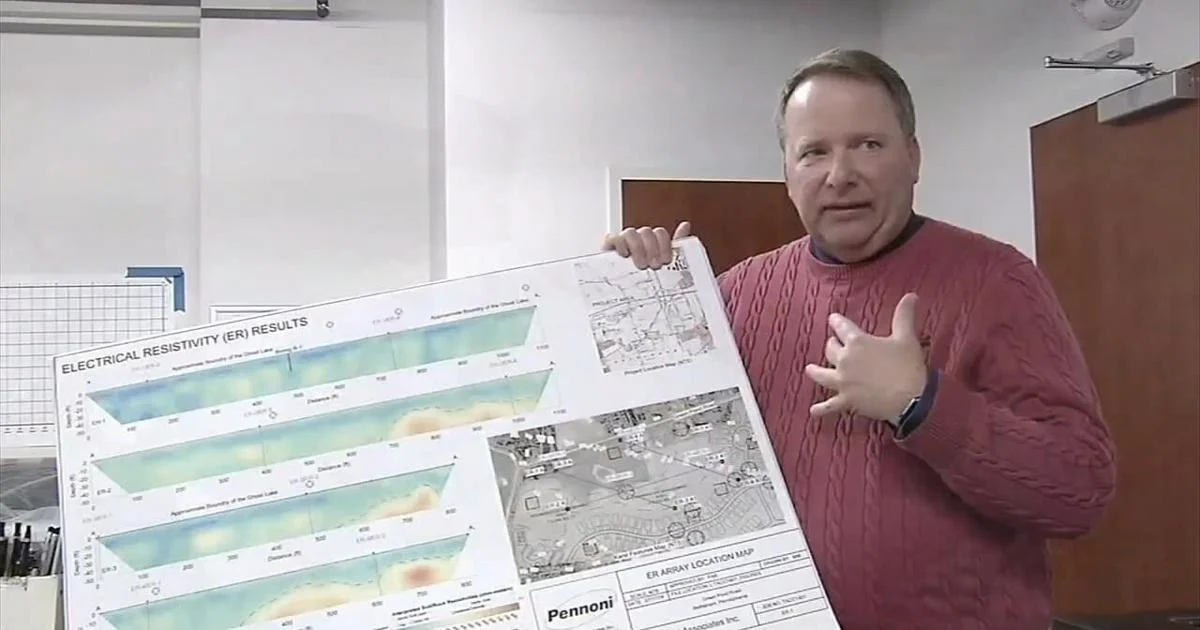
BETHLEHEM, Pa. – According to a local geologist, our region is one of the worst for sinkholes.
“Most of the time, sinkholes occur because of water,” said Senior Geologist Mike Morykin at Pennoni Associates.
Water, changing weather patterns and development, Morykin told us, are all contributing factors to the formation of sinkholes.
“A lot of the limestone here is very old so it dates back to 560 million years plus, some of that’s even older, so it’s had a lot of time to go through a lot of changes, a lot of weathering. So almost what you have, if you think of it, is like network of pipes and the fractures in the rocks, they become enlarged,” Morykin explained.
Morykin has followed the events in Phillipsburg, New Jersey, and estimates the repairs to Summit Avenue will take one to two weeks.
“The first thing that came to my mind, because of the size and the fact that it was opening up in different locations, that it was probably brought on or exacerbated by a water main leak so that’s typical. The hard part is determining which happens first,” Morykin stated.
The voids fracturing from the collapse sites are mapped out with ground penetrating radar so a remediation plan can be put into place.
“A void is an air-filled cavity,” Morykin said.
Once the water main is repaired, there are several ways to densify the soil above — including cement, polymer injection or landscape fabric.
“It’s very dependent on the conditions that you encounter and what infrastructure is there. In most of the municipalities and the local governments, they already have ordinances in place that require you to do an extensive carbon and geology study. So, you’ll go out and you’ll see what kind of formation may be underlying the site, you identify areas that might be problematic or where there are known sinkholes and then develop a remediation plan,” Morykin concluded.