
The remaining slavery exhibits at the President’s House Site at 6th and Market streets in Old City do not have to be restored for now after an appeals court ruling Friday. With so much attention lately on the site, CBS News Philadelphia went deep into our archives to see how the exhibit came to be.
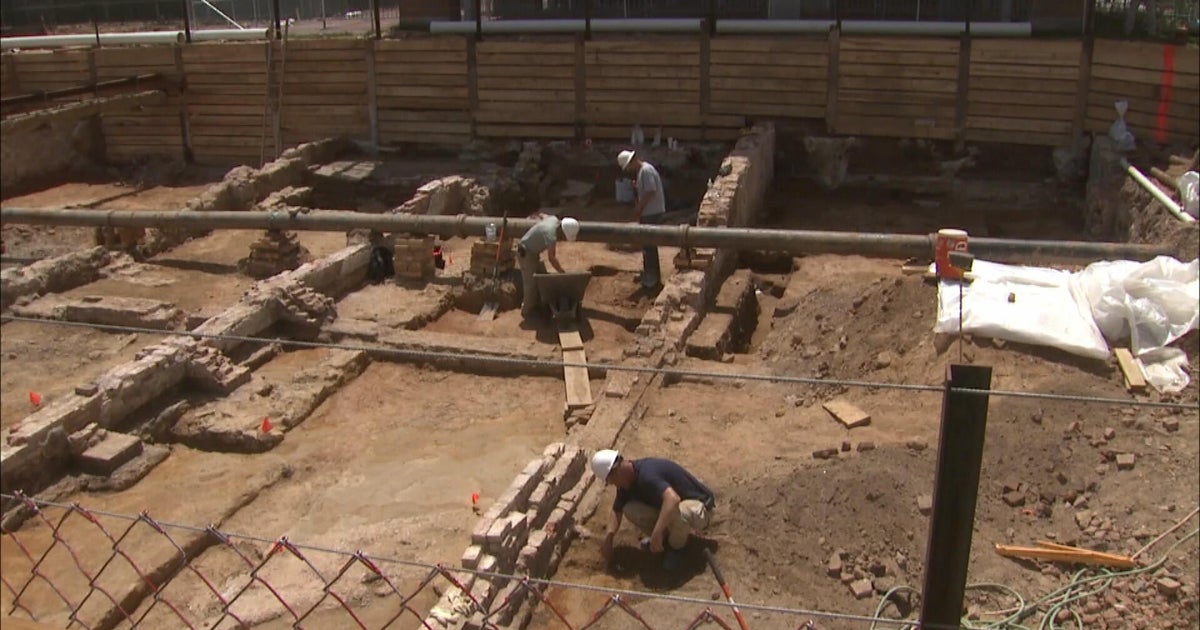
It all started in 2000 when the City of Philadelphia prepared to relocate the Liberty Bell. When starting construction on that project, archeologists uncovered the foundation of a house.
Fast forward a decade and our cameras were rolling in 2010 when then-Philadelphia Mayor Michael Nutter cut the ribbon marking the grand opening of the President’s House, an exhibit commemorating the home where Presidents George Washington and John Adams lived when Philadelphia was the nation’s capital. However, it’s the displays around the site that tell a more complete story, one never told before, about enslaved people in Philadelphia.
At the ceremony in 2010, Nutter said, “While the Declaration of Independence soared with the assertion of the self-evident truth that all men are created equal, President George Washington operated his residences with the labor of enslaved people of African descent.”
The site was designed to examine the paradox of freedom and slavery and honor the nine enslaved people who lived at the house under Washington. It had taken years of research and examination to reach that grand opening in 2010 and the archeological dig started in 2007.
That year, they found a bow window where Washington likely stood to greet guests and the foundation of the kitchen, where the enslaved people would have spent their time.
In 2007, archeologist Cheryl LaRoche told CBS News Philadelphia, “We can look at the hero. We can look at the man. We can look at slavery and we can look at the interpretation of freedom both on the part of the statesman and the part of the enslaved workers.”
Fast forward to today and we asked LaRoche what she remembered most about the project.
“The public was so interested in this site, they built a wooden platform to overlook the archeological excavation,” said LaRoche, who remembered people showing up every day to ask questions and learn about the findings.
“We were able to have some of the deepest conversations I have ever had in my life on that platform,” she said.
That was all happening while officials and city leaders worked to find the money and resources to bring the truth to the surface.
The Pennsylvania governor at the time, Ed Rendell, supported the project and helped secure funding. The National Park Service collaborated with the city on the design, so when it opened in 2010, the President’s House was celebrated as a new window into the past and a foundation for truth.
“It’s no longer an abstraction. He’s (Washington) standing here and seven feet away and one story down, we know slavery is underneath his feet, it’s undergirding his life. It’s undergirding the nation,” said LaRoche.
The project ended up costing a total of $11 million and was funded in part by Philadelphia taxpayers. It’s been a free exhibit ever since it opened in 2010.
More from CBS News