
As often happens in our part of the country, we’ve been going through a February warmup. No doubt it will get cold again, but it’s a nice temporary change from zero-degree days.
Obviously not all the snow has disappeared, but a lot of it has, and for a while it’s nice to see green or brown grass that was covered with a foot of snow for weeks.
David has been filling the bird feeders for me because of the snowy and icy ground, so he’s been seeing places in the yard that I haven’t seen for a long time. And this past Wednesday he told me to come out and look at something, which turned out to be snowdrops with flower heads in a small grassy area. A few columns ago I said that snowdrops probably wouldn’t be blooming this February due to all the snow, but I was wrong.
Snowdrops (genus Galanthus) are indigenous to eastern Europe and Asia but were brought to North America by the settlers in the late 18th century. And since then they have become so naturalized that they seem almost native.
Unlike what we’re used to, these plants need a good cold, not warm, spell to break their dormancy. They have antifreeze protection with proteins in their sap that keep them from being damaged by ice crystals or snow.
On a recent trip into a local suburban area David was driving so I kept looking for signs of snowdrops or other plants coming up in people’s yards. But while I didn’t see anything except for yuccas that stay green and tall in the winter, I did see something that made me smile: A frozen hummingbird feeder was hanging from a shepherd’s crook in someone’s yard.
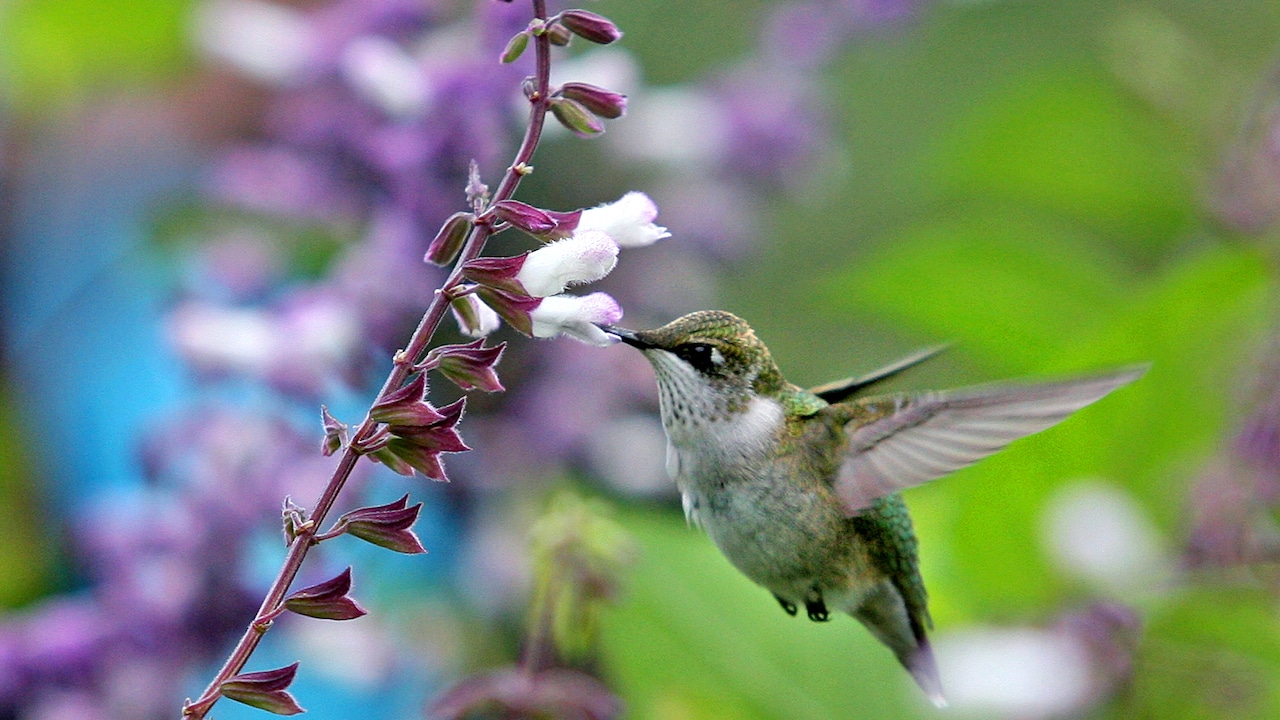
That made me think of the annual flowers I usually buy to plant in pots for hummingbirds. That list is long, so I’ll just mention two that I try to never be without in the summer. They are salvias of all kinds, regardless of color or other attributes. These non-natives that die at the end of summer have trumpet-shaped blossoms that hummingbirds like, and they produce natural nectar with a sugar content that measures between 20 to 30%.
I didn’t see any live animals except for gray squirrels on that trip, nor did I expect to, but I did see two dead skunks. And now with the warmer weather more of them will be out and about.
I also didn’t see any birds except for crows and one woodpecker that flew across the road in front of us. Even people who don’t recognize most birds know what a woodpecker looks like. The most common one in our area is the black and white downy woodpecker, which is what I saw.
There is, however, a different half-again-bigger but lookalike woodpecker that can be confused with a downy. The hairy woodpecker is visually the same but it’s about 3 inches bigger. Using a suet cage for reference, downies are about the same size while hairies are always longer.
If you want to sex these two woodpeckers, it’s easy. Juvenile males have red on top of their heads while adult males have red on the backs of their heads. Females, meanwhile, have no red on them at all.