
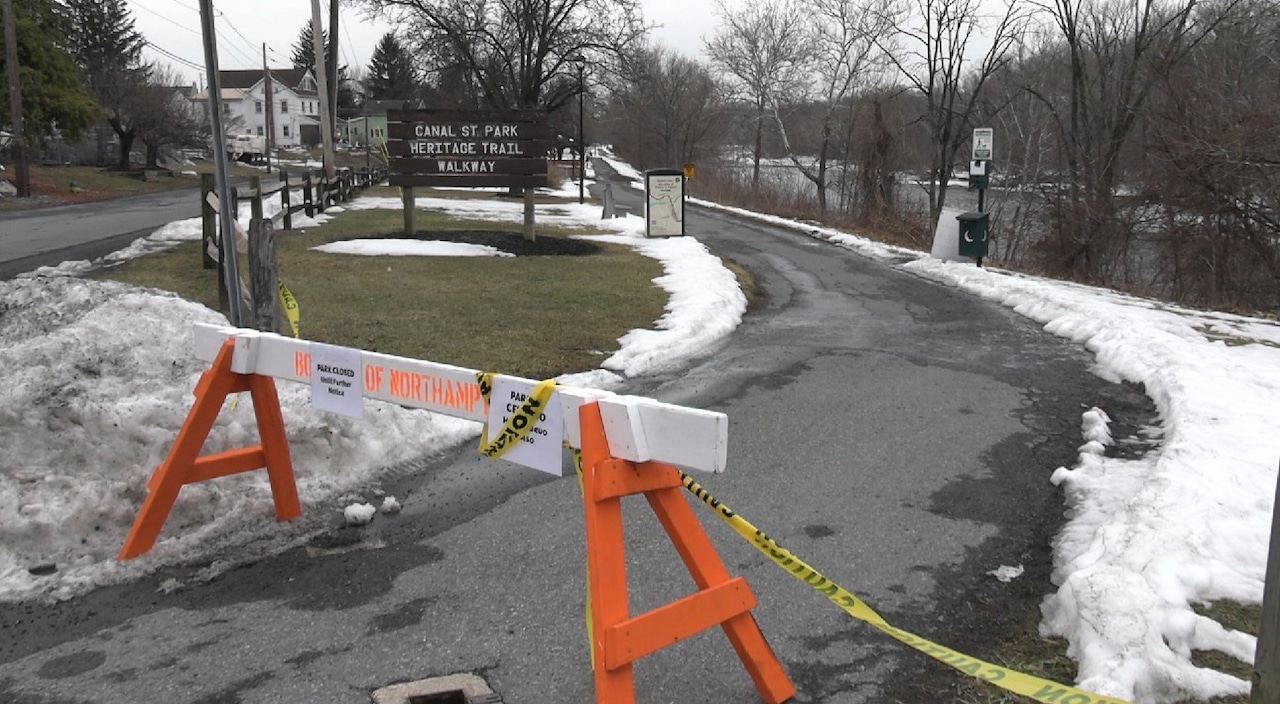
Concerns about bird flu in the Lehigh Valley prompted the closure of additional recreational amenities in the region, including the D&L Trail through Northampton Borough.
The Delaware & Lehigh National Heritage Corridor on Friday announced the closure, in effect until further notice. It comes a day after borough officials said they closed Canal Street Park along the trail and the Lehigh River following the discovery of dead geese.
Allen Township on Friday also announced the closure of Howertown Park until further notice due to waterfowl exhibiting symptoms of the highly pathogenic avian influenza that is circulating across multiple states.
In Northampton Borough, Pennsylvania Game Commission officials said Friday they recovered 30 to 50 dead Canada geese from the Lehigh River that were reachable from the bank.
“However, due to the ice and moving water, it is unsafe to retrieve the dead geese in the middle of the water,” commission spokesman Josh Zimmerman told lehighvalleylive.com.
HPAI is suspected, although testing was not immediately completed to confirm the cause of the die-off, he said.
Geese exhibiting symptoms of a bird flu infection “that are obviously not going to make it would be humanely euthanized,” Zimmerman said, with no plans to cull geese that appear healthy.
The ongoing outbreak of bird flu includes more than 1,100 dead or sick wild birds reported to authorities in recent days across neighboring New Jersey.
According to the U.S. Centers for Disease Control and Prevention, an A(H5) strain of bird flu is widespread in wild birds worldwide and causing outbreaks in poultry and U.S. dairy cows with sporadic human cases in dairy and poultry workers domestically.
“While the current public health risk is low, CDC is watching the situation carefully and working with states to monitor people with animal exposures,” the agency says on its website. “CDC is using its flu surveillance systems to monitor for A(H5) bird flu activity in people.”
People can catch bird flu by touching sick or dead animals, their secretions or contaminated objects, according to the Pennsylvania Department of Health, which notes raw milk from sick cows is another possible source.