
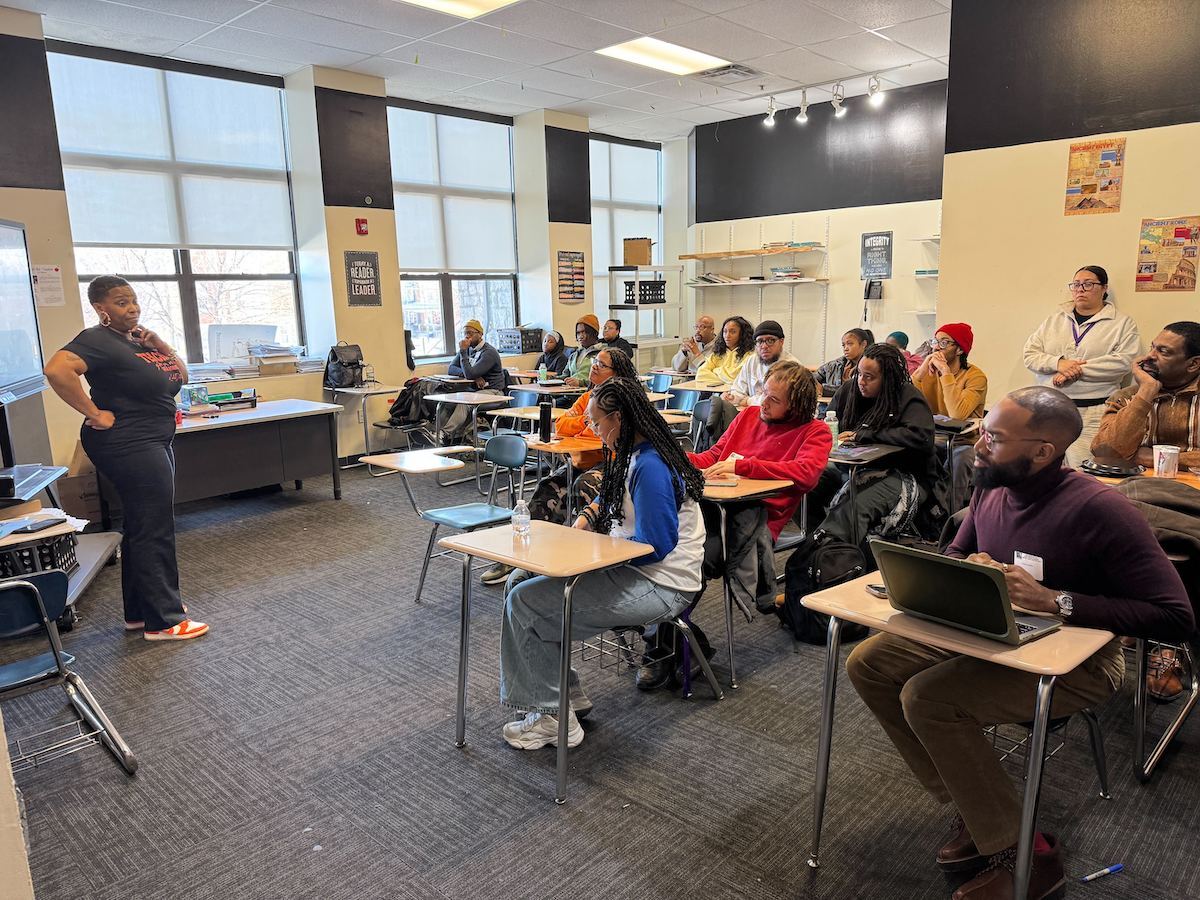
Edwin Perez and Amber Austin, teachers from the Baltimore County area, said they found out about the event on social media. They attended the summit to contribute to the conversation on community-centered education and to take what they learned back to their colleagues, students and community.
“It has to be something that continues throughout the year — talking about Black identity, Black culture, support for our Black students or support for our Black community,” Perez said.
Understanding the fullness of Black history is foundational to that goal, Austin added. “I think it’s important for us to ensure that we are not only having a continuity of legacy but a continuity of correct and accurate legacy, and in these conversations we are not gatekeeping information, we’re sharing stories, especially from our elders,” she said.
Attendees and speakers were also invited to contribute to a time capsule of educational messages, notes and pictures commemorating 20 years of Philadelphia’s Black education leadership.
Organizers said sustaining Black history education within local communities has taken on new urgency, against a political backdrop that includes growing efforts nationwide to limit race-based curricula, financial aid and student services, and the recent removal of a set of exhibits about enslaved people from the President’s House Site in Philadelphia.
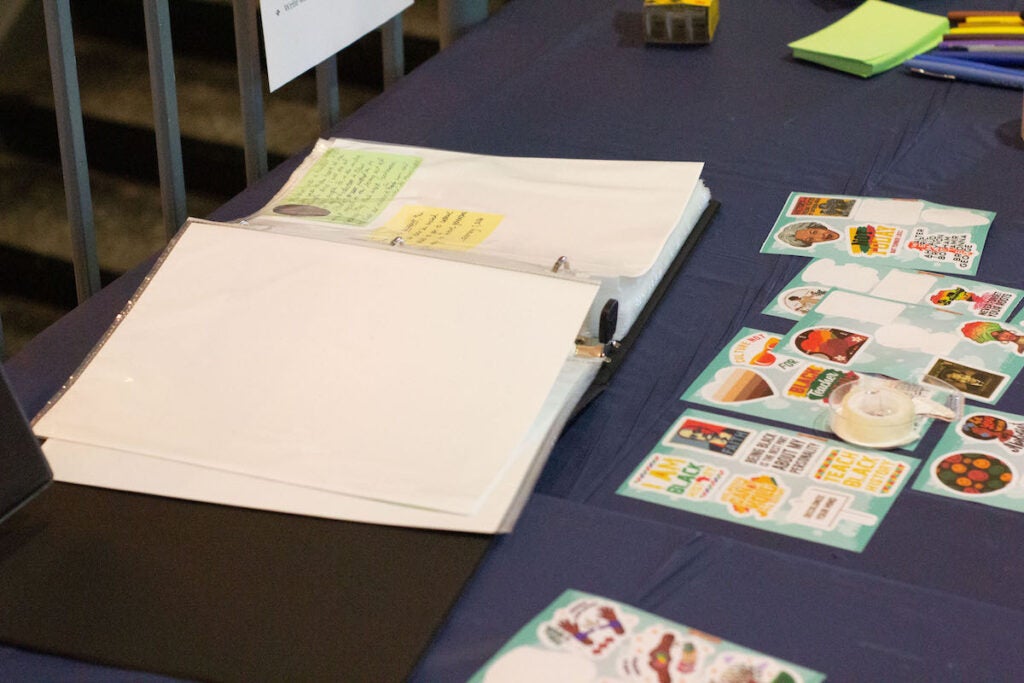 Stickers and paper provided for attendees and participants to create content for time capsule project. (Eric Nixon/WHYY)
“In today’s anti-Black world when we see Black histories being erased from museums, classrooms — literally from the streets of Philadelphia — events like this are more important than ever,” Blackprint 20 committee member Abigail Henry said.
Chris Rogers, coordinator of the Henry Oswood Tanner House in North Philadelphia, spoke about how classrooms are not just rooms in a school. He said the classroom can extend to any space where members of a community can share history and educate one another. “We create classrooms all over the place,” Rogers said. “Like, even when I’m waiting for the 21 in West Philadelphia. So, opportunity there to talk about the history and the connections.”