
Officials in the Abingtons, Dunmore and Scranton are acting now to address future data center development.
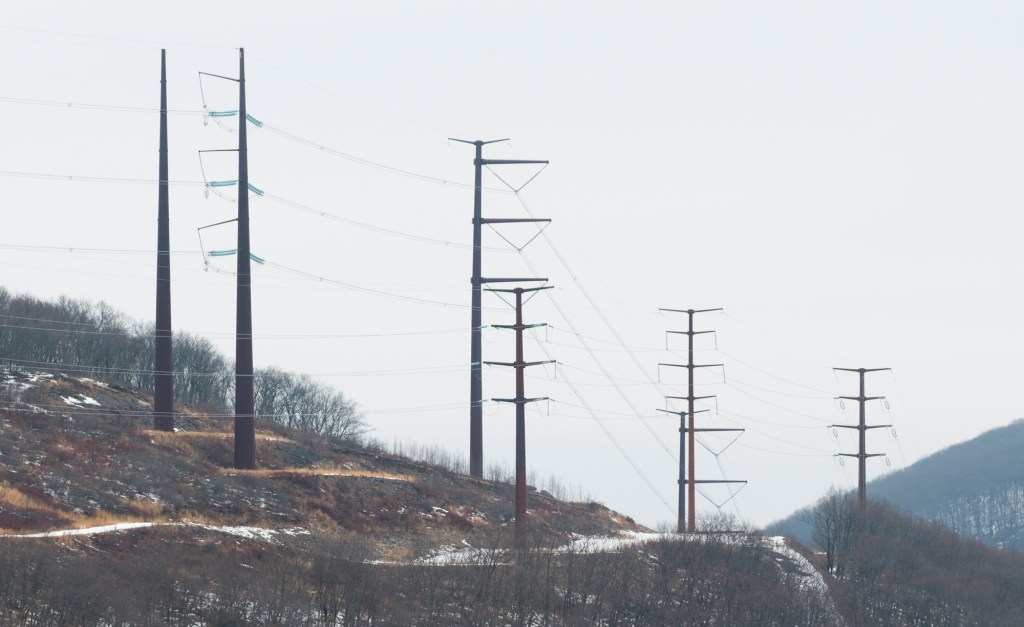
Data center proposals in Lackawanna County have so far followed high-tension power lines — which also stretch across Newton, Ransom and South Abington townships and Scranton. Data centers would look to tap those lines to fuel computer hardware needed to power artificial intelligence and cloud computing.
Earlier this year, Scranton Materials sought zoning relief for a data center campus on its Newton Road property in Ransom Twp., data centers’ first foray into the Abingtons. And while high-tension power lines don’t go through Scott Twp., data centers have been proposed near the township’s borders.
Abingtons municipalities, along with Scranton and Dunmore, are part of the Scranton-Abingtons Planning Association, a zoning collaborative that allows municipalities to share land uses. SAPA’s current comprehensive plan does not include language that outlines data centers.
With an update to the comprehensive plan a few years away, Lackawanna County planning officials advised municipalities to address data centers on their own.
Updating zoning
Officials in Dunmore and Scranton and Newton, Scott and South Abington townships said while they have not received applications for data centers, they are reviewing zoning laws or enacting ordinances to regulate their development.
South Abington Twp. Supervisor Chairman Mark Dougherty said the township’s ordinance will put data center regulations in place before a developer proposes one in the township. He anticipates supervisors will vote on the ordinance at their March meeting.
Dougherty isn’t surprised a data center was proposed in the Abingtons because it is a largely rural area.
“I wanted an ordinance in place in case they did knock on our door, we could say, ‘Well, here’s our ordinance,’” he said. “We’re getting ahead of the ball, figuring out where it could go and what restrictions we could put on it via ordinance prior to them coming to us.”
Scott Twp.’s ordinance would allow data centers and solar farms to be built only in an industrial zone in the northwest corner of the township.
Supervisor Chairman Mike Giannetta said the township’s planning commission will discuss the ordinance at an upcoming meeting. Once the commission votes, the ordinance will go before the supervisors board, he said.
Giannetta said having solar farms and data centers in the same zoning district keeps them away from residential areas, while also complying with the law. He pointed out that several proposed data centers in Dickson City and Archbald are near the township.
Newton Twp. Supervisor Chairman Doug Pallman said the supervisors have discussed data centers and agree that they wouldn’t fall into the township’s current zoning, which only allows for rural resource, rural residential and village mixed use development.
“In our opinion, data centers would not fit into any of those three categories,” he said.
Pallman said while the township’s rural resources zone allows for energy uses, such as solar farms, he doesn’t consider data centers an energy use. He said they fall into industrial zoning, which the township doesn’t have.
“If anything, it puts pressure on energy, whether it’s water, electrical or what have you,” he said. “In our opinion, we don’t have the infrastructure in Newton Twp. to support it.”
Pallman said the township’s planning commission is going to discuss data centers at its next meeting.
Dunmore Borough Council President Thomas Hallinan said their ordinance, which the zoning hearing board solicitor is working on with the borough solicitor, will protect residents from data centers.
“I’d rather protect everybody and err on the side of caution,” he said.
Hallinan said the borough is mostly residential, with few commercial spaces, as well as the Keystone Sanitary Landfill.
Solicitor Jessica Eskra said Scranton’s administration is exploring and evaluating its options to address data center development within the city.
“We continue to closely monitor developments occurring in our neighboring municipalities, as well as state legislation that is currently pending that could impact data center regulation,” she said in an email last week.
Officials said their biggest concerns with data centers in their communities are water and electricity use and noise levels.
“I really don’t see any benefit for Scott Twp. for it to have a data center,” Giannetta said. “They’re not going to really provide that many jobs, they’re going to take up a lot of land and I don’t see where we’re going to get any real benefit from them.”
Pallman said while he is still researching data centers, he is concerned about the potential pressure data centers would put on the township’s current infrastructure, as well as its character.
“My biggest concern would be the essential character of the neighborhood and what type of effect that would have on possibly the values of the homes that would be located near a data center,” he said.
Pallman said he will continue to research and educate himself on data centers, how they operate and what infrastructure and service demands they may place on a community like Newton Twp.
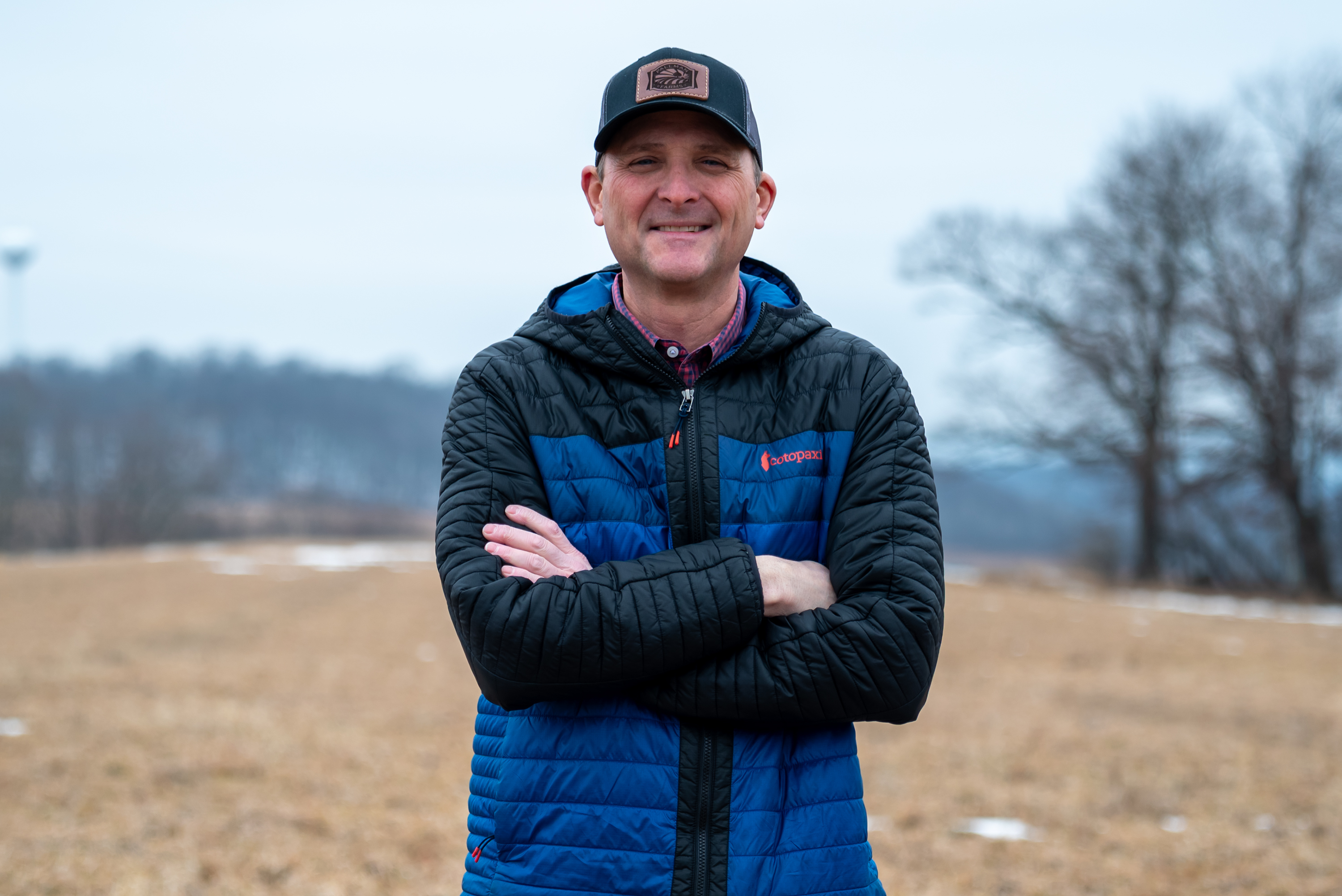
Newton Twp. Supervisor Chairman Doug Pallman in a plot of land on Winola Road in Newton Twp. on Thursday, Feb. 19, 2026. (REBECCA PARTICKA/STAFF PHOTOGRAPHER)
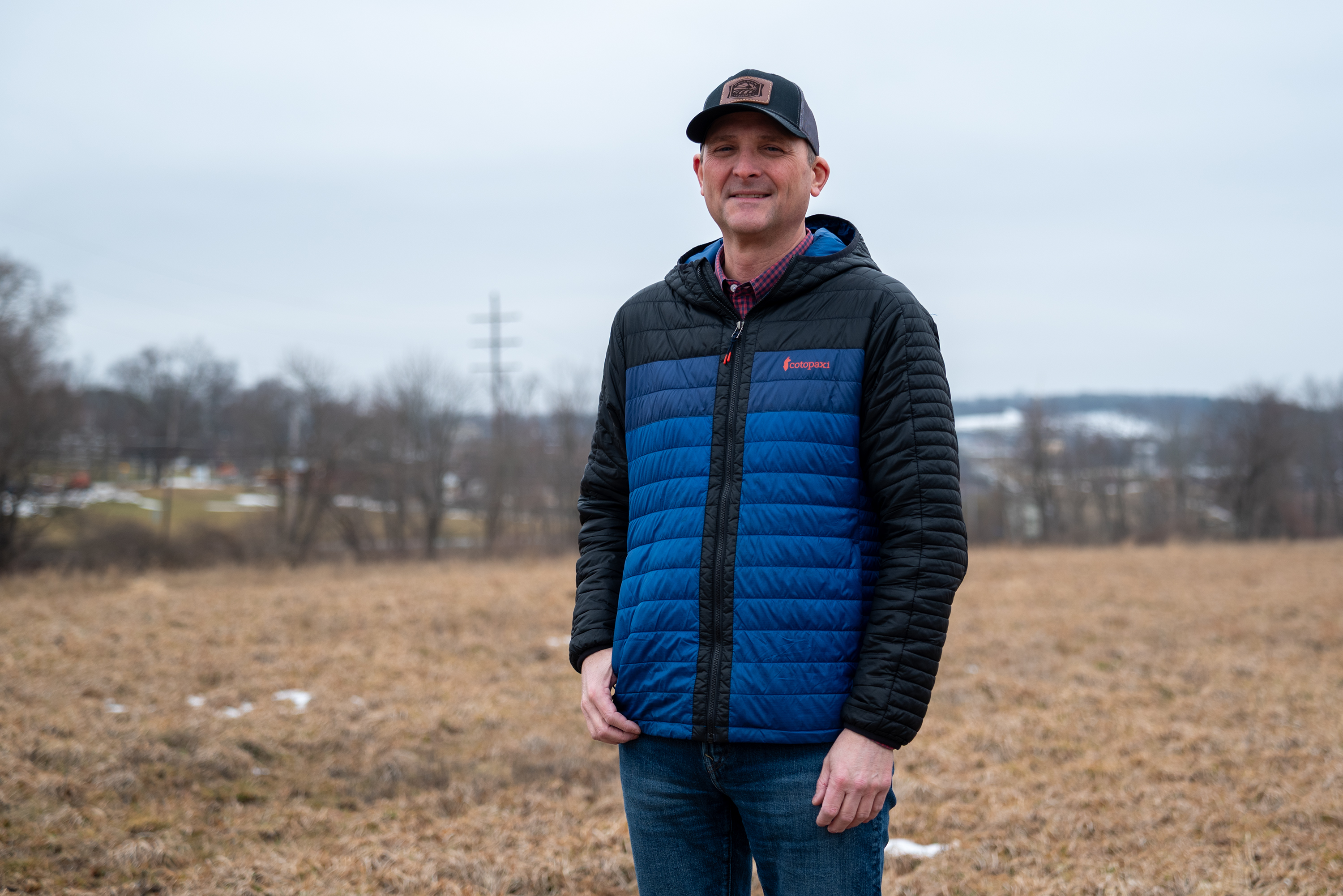
Newton Twp. Supervisor Chairman Doug Pallman in a plot of land on Winola Road in Newton Twp. on Thursday, Feb. 19, 2026. (REBECCA PARTICKA/STAFF PHOTOGRAPHER)
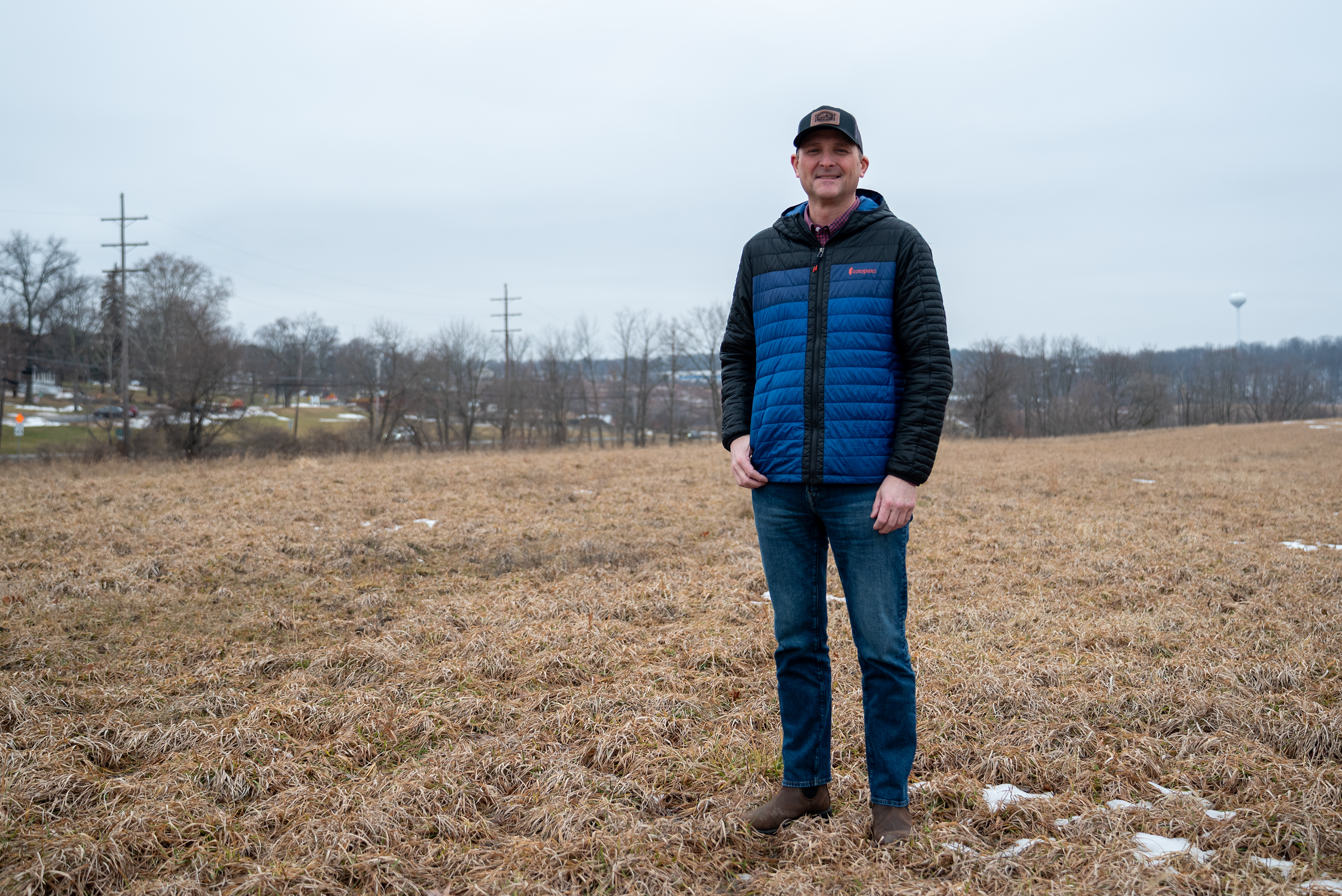
Newton Twp. Supervisor Chairman Doug Pallman in a plot of land on Winola Road in Newton Twp. on Thursday, Feb. 19, 2026. (REBECCA PARTICKA/STAFF PHOTOGRAPHER)
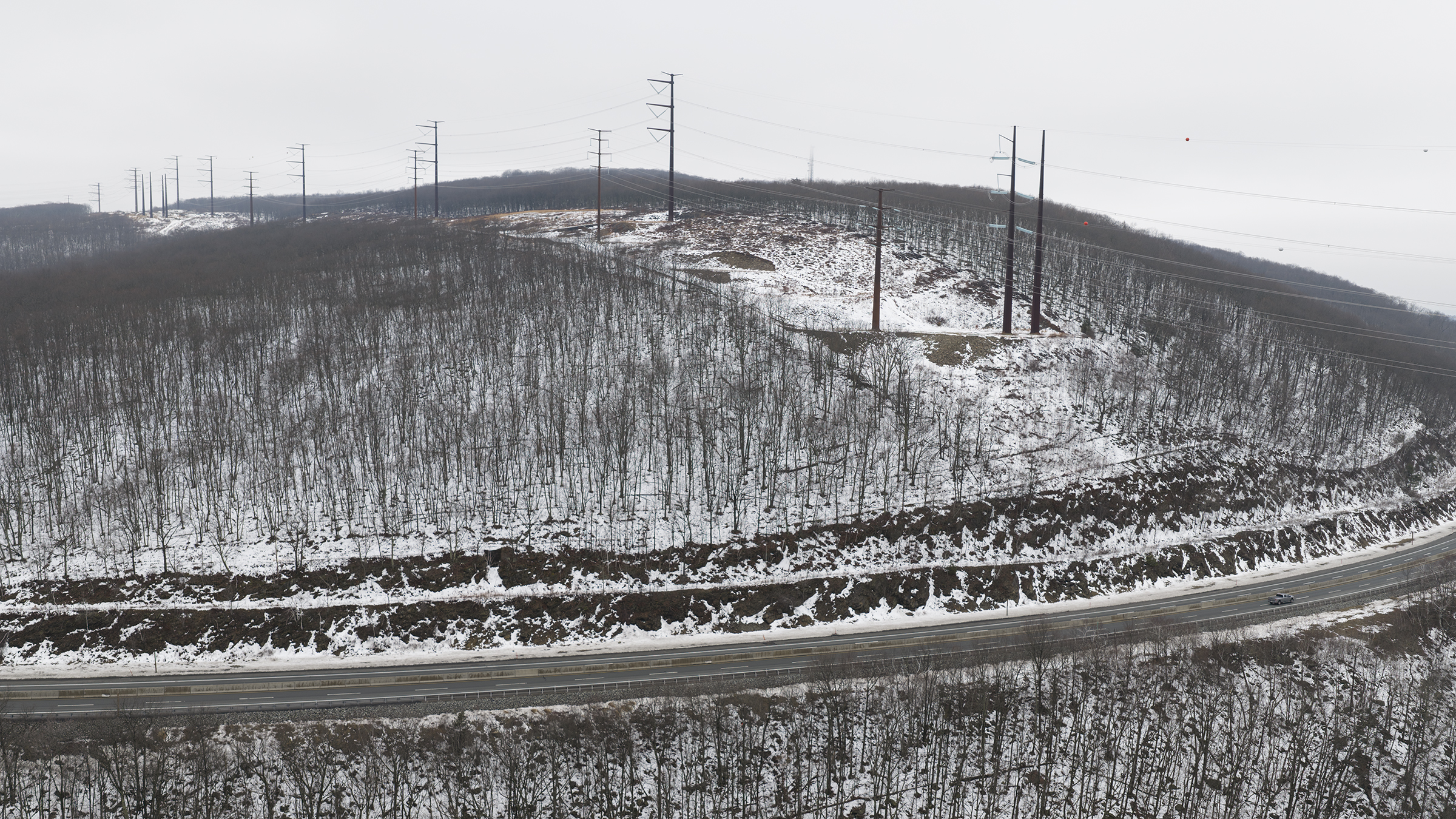
A set of power lines runs southwest over the Pennsylvania Turnpike’s Northeast Extension in Scranton Thursday, February 19, 2026. (SEAN MCKEAG / STAFF PHOTOGRAPHER)
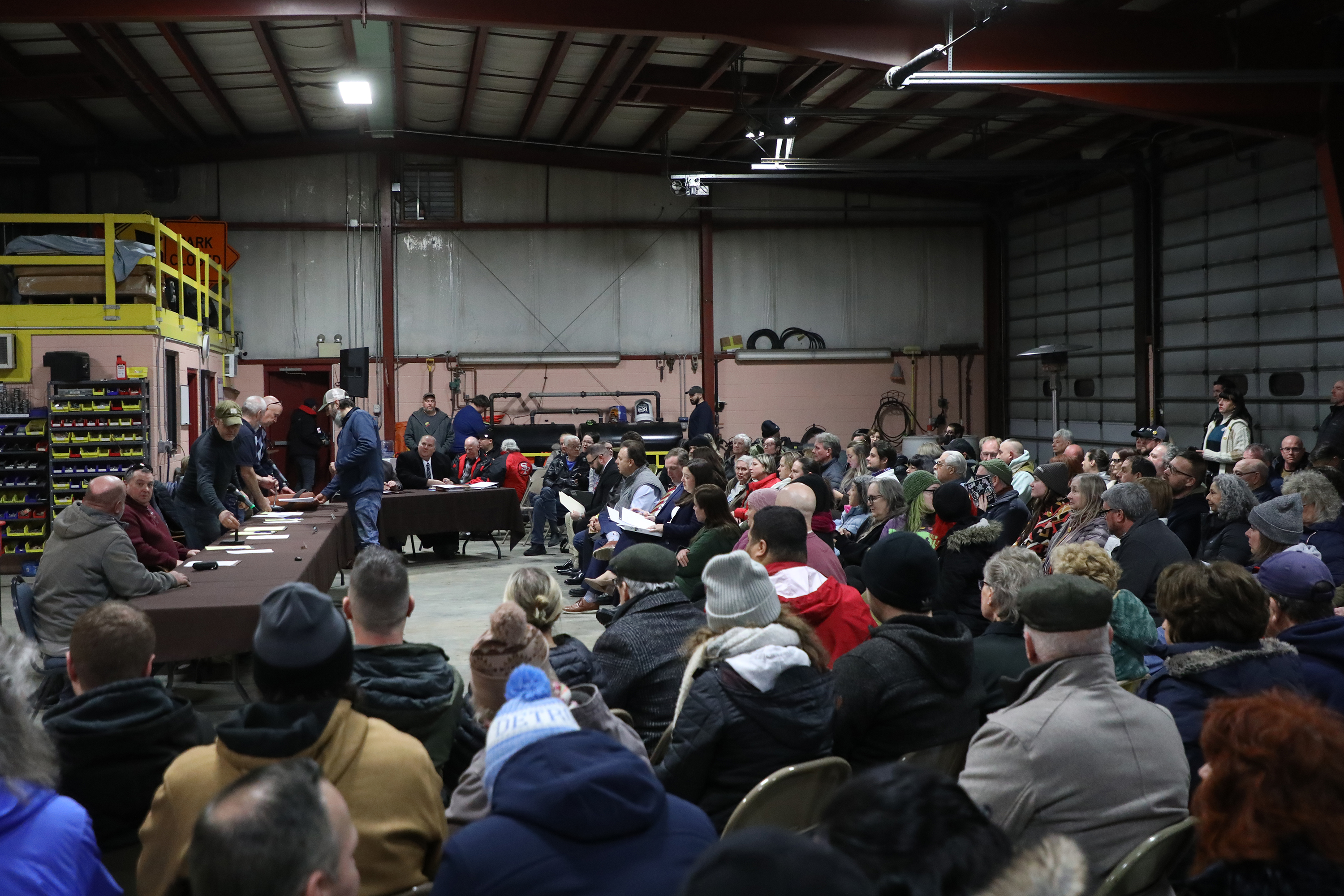
Community members gather in the Ransom Twp. Municipal’s garage for the hearing regarding Scranton Materials LLC’s request for a zoning overlay to allow for a data center on Tuesday, Jan. 20, 2026. (REBECCA PARTICKA/STAFF PHOTOGRAPHER)
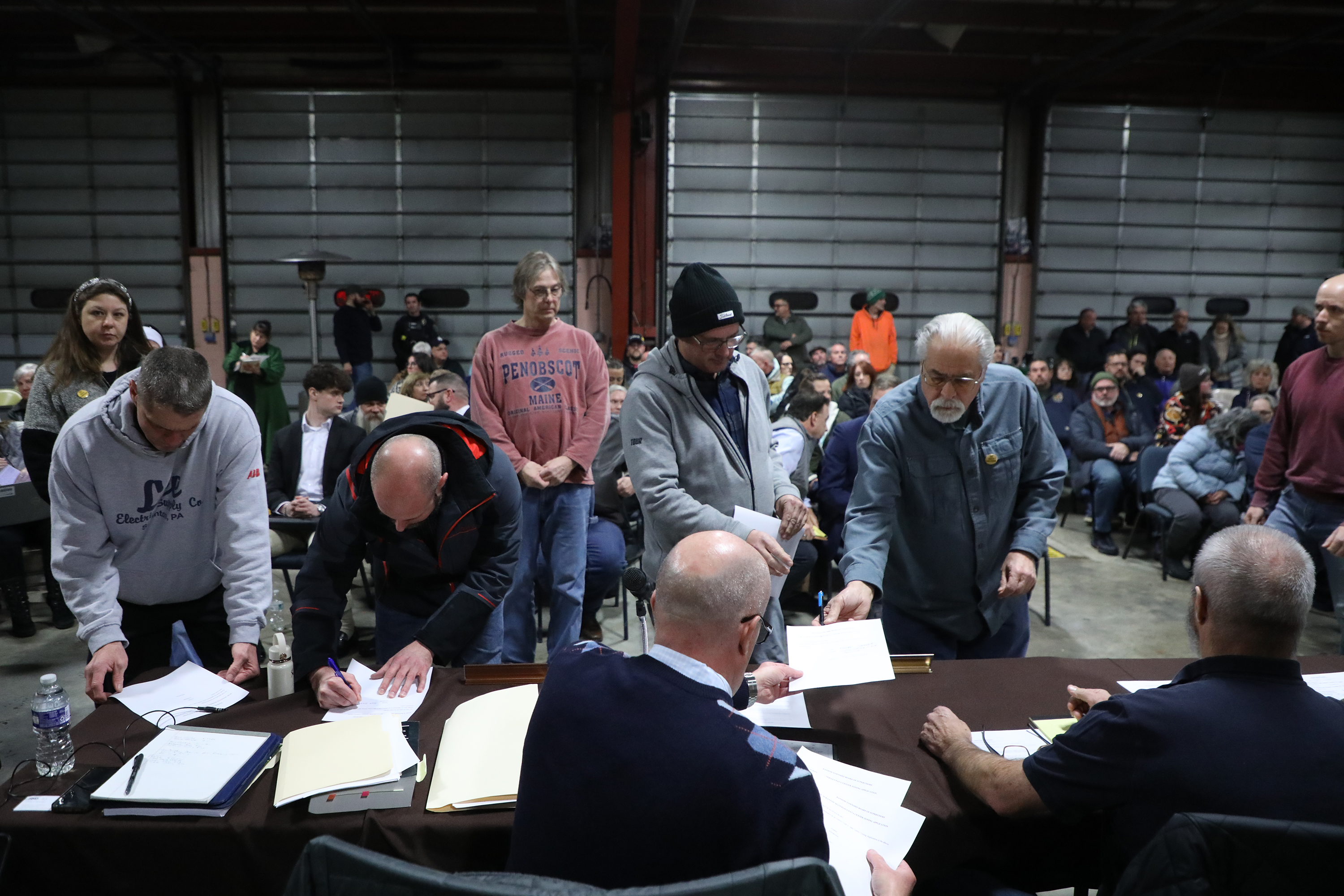
Community members fill out objector forms during the Ransom Twp. Board of Supervisors hearing regarding Scranton Materials LLC’s request for a zoning overlay to allow for a data center at Ransom Twp. Municipal Building on Tuesday, Jan. 20, 2026. (REBECCA PARTICKA/STAFF PHOTOGRAPHER)

Ransom Twp. resident Nikki Bencho sits in the crowd during the Ransom Twp. Board of Supervisors hearing regarding Scranton Materials LLC’s request for a zoning overlay to allow for a data center at Ransom Twp. Municipal Building on Tuesday, Jan. 20, 2026. A yellow “No Data Centers” pin is on her hat. (REBECCA PARTICKA/STAFF PHOTOGRAPHER)
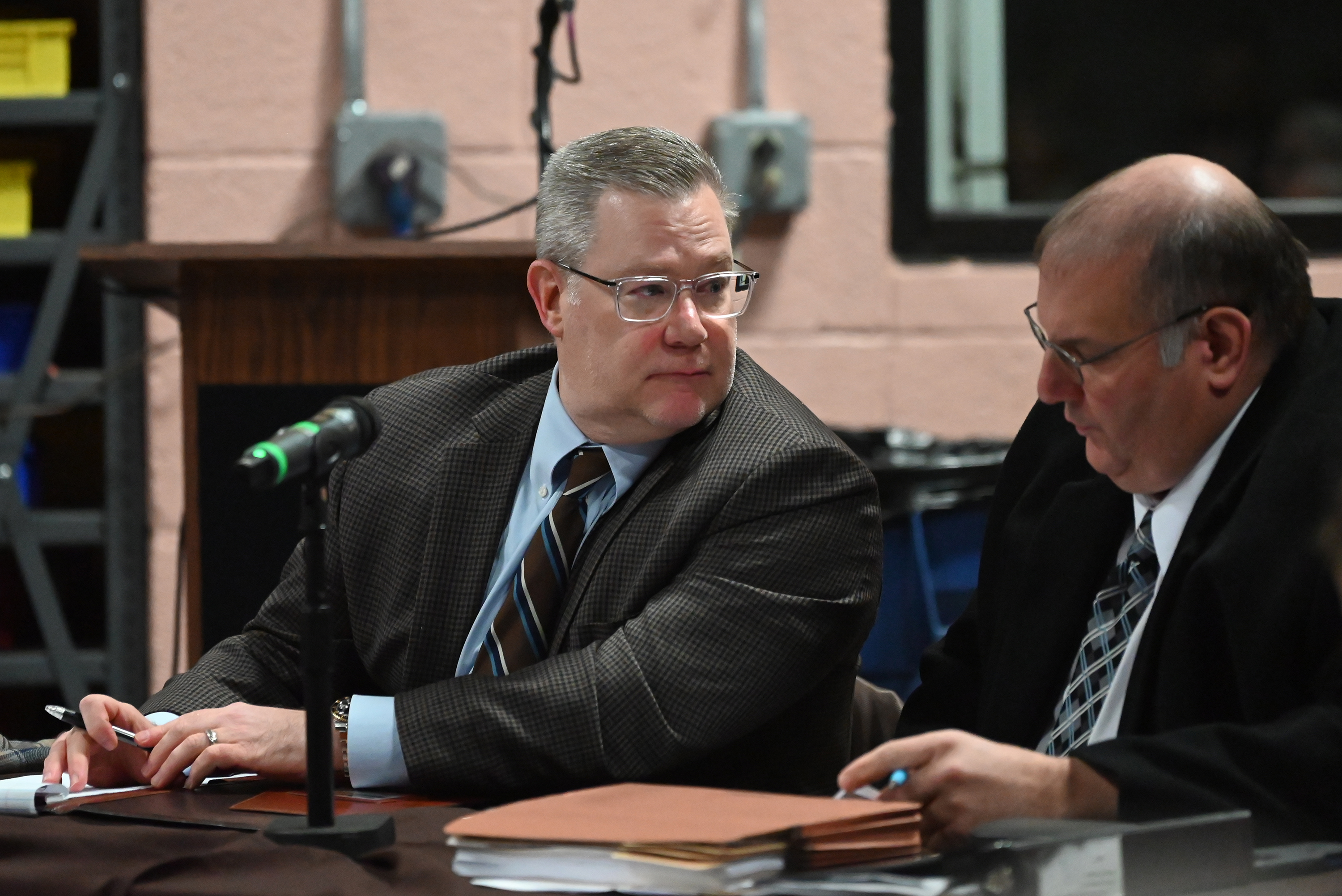
Attorneys Todd Johns and Justin Sulla represented Scranton Materials LLC during the Ransom Twp. Board of Supervisors hearing regarding the organization’s request for a zoning overlay to allow for a data center at Ransom Twp. Municipal Building on Tuesday, Jan. 20, 2026. (REBECCA PARTICKA/STAFF PHOTOGRAPHER)
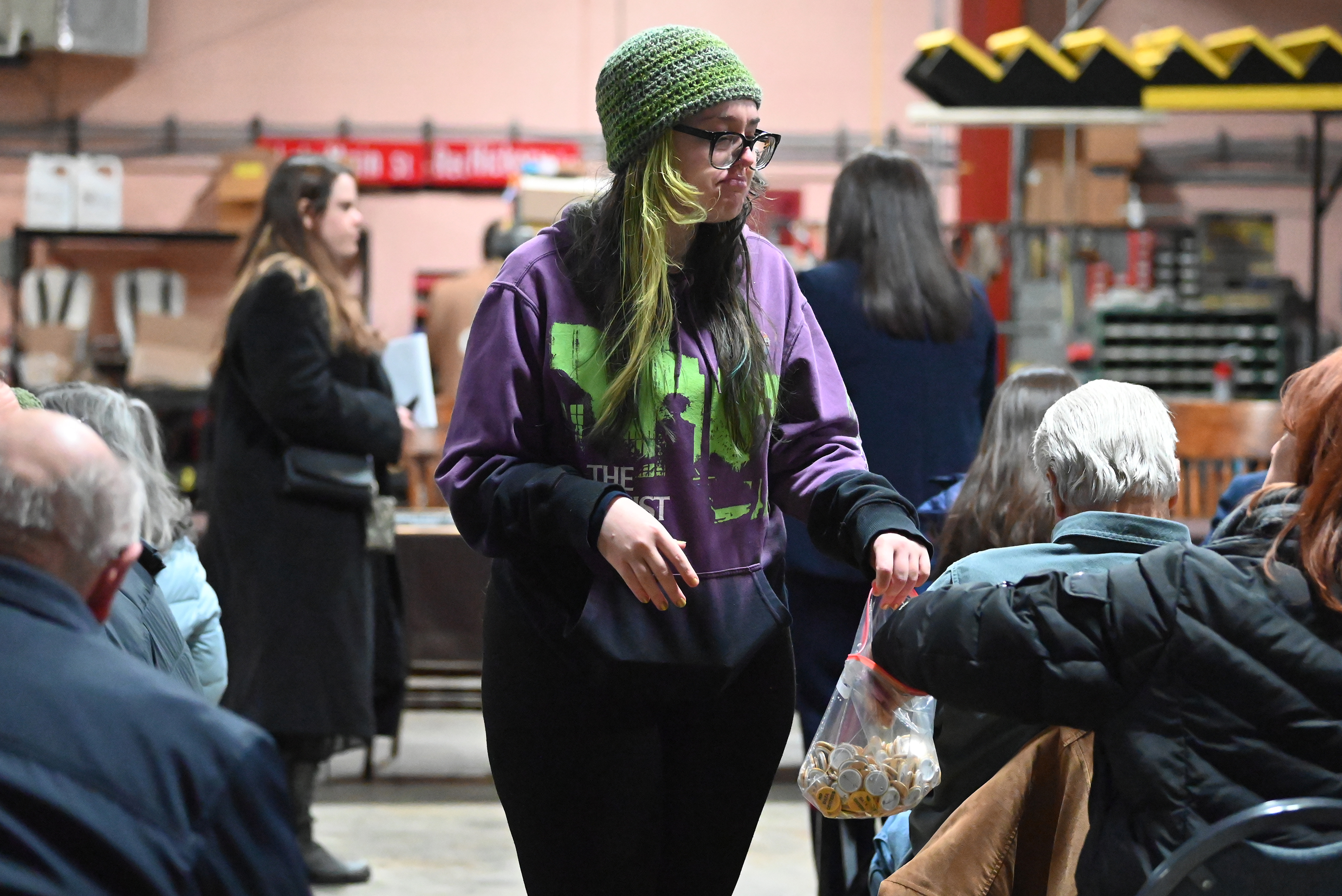
Keyser Valley resident Hayley Schaffer hands out “No Data Centers” pins during the Ransom Twp. Board of Supervisors hearing regarding Scranton Materials LLC’s request for a zoning overlay to allow for a data center at Ransom Twp. Municipal Building on Tuesday, Jan. 20, 2026. (REBECCA PARTICKA/STAFF PHOTOGRAPHER)
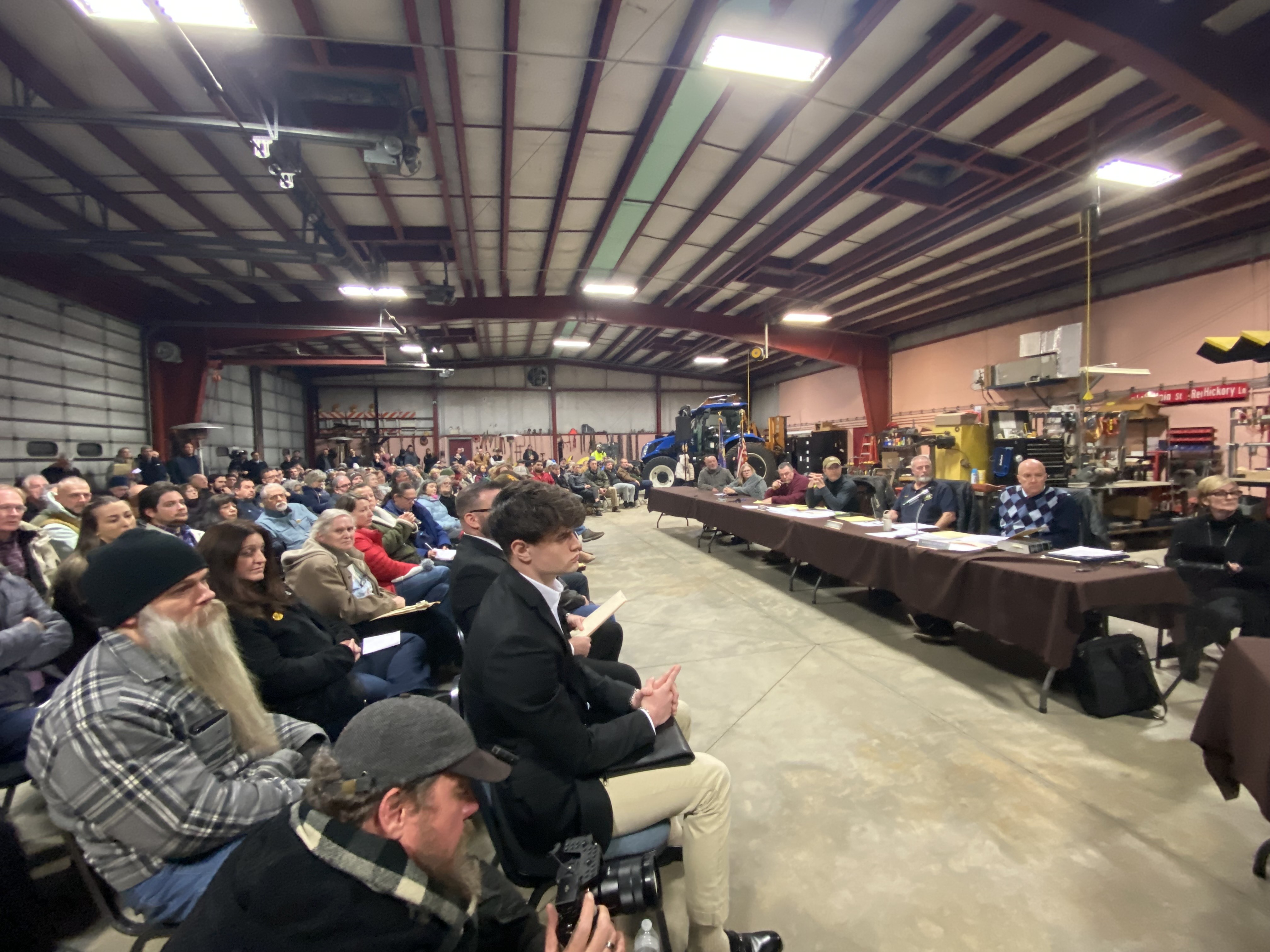
People fill the garage at the Ransom Twp. Municipal Building Tuesday, Jan. 20, 2026 for a hearing on a request by Scranton Materials LLC for a zoning overlay to allow for a data center on their property at 819 Newton Road. (Christine Lee/Staff Photo)
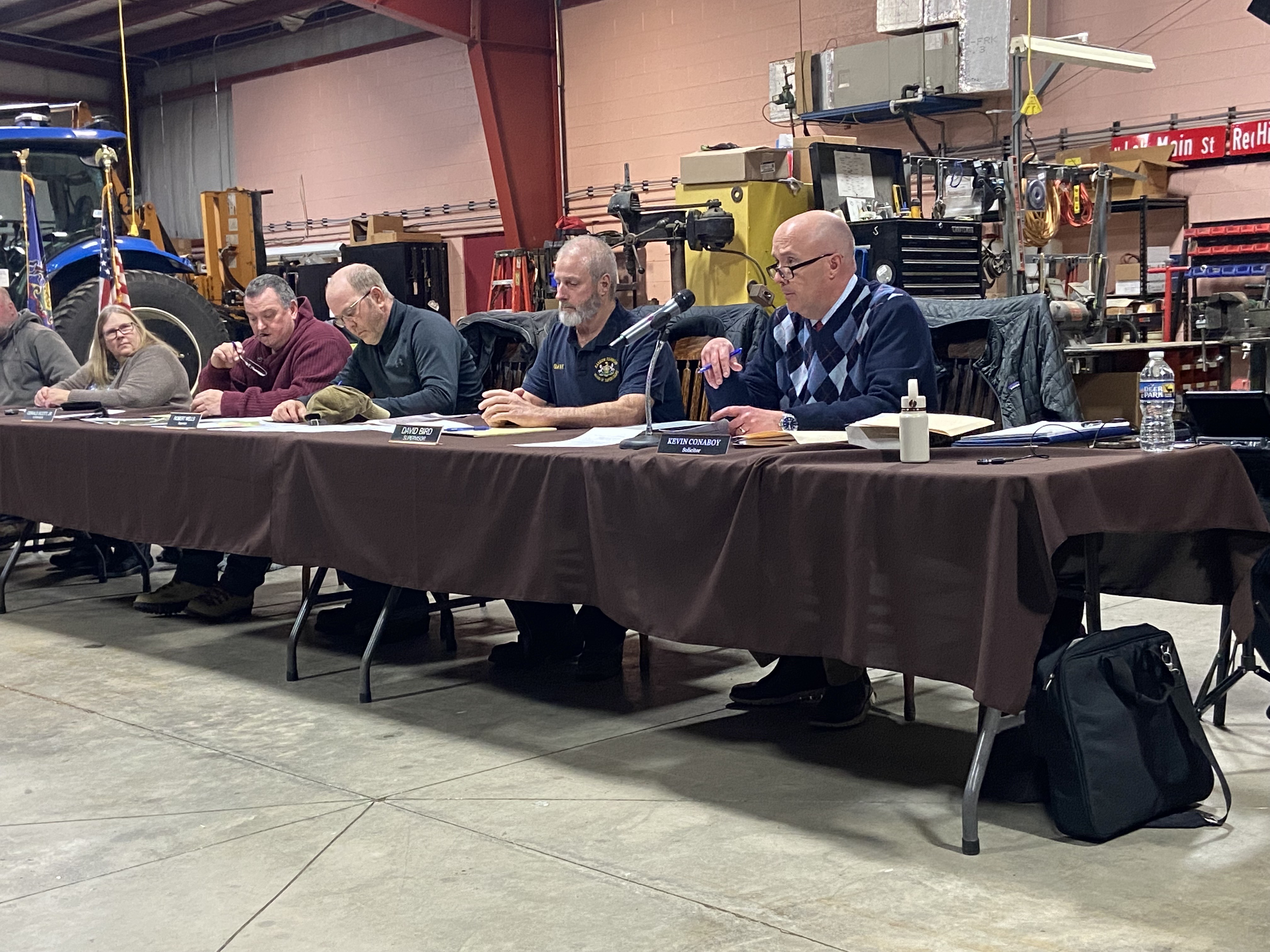
The Ransom Twp. supervisors during the hearing Tuesday, Jan. 20, 2026. (Christine Lee/Staff Photo)
Show Caption
1 of 11
Newton Twp. Supervisor Chairman Doug Pallman in a plot of land on Winola Road in Newton Twp. on Thursday, Feb. 19, 2026. (REBECCA PARTICKA/STAFF PHOTOGRAPHER)
“Data centers are an important part of our nation’s technological future. They support communications, healthcare systems, financial networks, businesses, and the digital infrastructure that Americans rely on every day,” he wrote in an email. “As our country continues to advance through this technological era, data centers will play an increasingly important role. When located in appropriate areas and approved under proper zoning and conditions, they can also provide meaningful tax revenue to municipalities, counties, and school districts. At the same time, municipalities have a responsibility to ensure that any proposed land use aligns with their adopted zoning ordinance and the long-term vision for their community.”
Pallman said Scranton Materials’ proposed data center prompted officials to better understand how data centers work.
“I would say it’s the first one … that really opens our eyes to need to understand more what data centers are and understand the makeup of them,” he said.
Process will take years
Municipalities have to allow every lawful land use somewhere within their borders, including data centers. To maintain local control over developments, Lackawanna County communities have designated data centers as conditional uses, meaning developers would be required to go before a governing body at a public hearing while adhering to conditions established by the municipality.
SAPA allows member municipalities to share land uses. For instance, because Dunmore has the Keystone Sanitary Landfill, none of the other SAPA communities have to allow landfills. The association is composed of Clarks Green, Clarks Summit, Dalton, Dunmore, Newton Twp., Scranton, South Abington Twp. and West Abington Twp.
No municipality in SAPA has data centers outlined in their zoning. There is also no language outlining data centers in the current SAPA comprehensive plan.
County Planning Director Mary Liz Donato said the county will apply for a grant from the state Department of Community and Economic Development to update the association’s comprehensive plan.
They will also revisit each member municipality’s zoning ordinance and address any issues as a result of the updated plan. The review will include figuring out where data centers could go, she said.
“They tend to go in the areas where the high-voltage power lines are, so we would have to look at all of that to decide at that time where in the region would be best for them,” Donato said.
She anticipates the review will take a few years and has advised municipalities to enact their own data center ordinances in the meantime.
“That’s going to be too late for the data centers at that point,” she said. “That’s why we advise them, if they felt they needed to act, they needed to do it now on their own.”
Donato said she has discussed with officials from Dunmore, Newton Twp., South Abington Twp. and Waverly Twp. how they want to address data centers. Her office has provided them with model data center ordinances to use as a reference and adapt.
“Without anybody having any regulations right now, they’re all kind of vulnerable because there’s got to be a spot for them somewhere and right now there isn’t,” Donato said.
The member municipalities all passed resolutions to extend the intergovernmental agreement that comprises SAPA through June 2027.
Data center hotbed
Lackawanna County and the broader Northeast Pennsylvania region has emerged as a hotbed for data center development. Locally, most of the proposed data centers are in the Midvalley and North Pocono.
Scranton Materials requested a zoning overlay to allow for a data center on its 251-acre property. Ransom Twp. supervisors rejected an amendment to the township’s zoning ordinance last month that would have defined and regulated data centers and allowed the data center to proceed.
The amendment would have created a data center district that would have covered the property of Scranton Materials and established standards and conditions for data center development. It is unclear how the developer will proceed.
Residents have opposed data center proposals, including the one in Ransom Twp., packing meetings and hearings to voice their misgivings about the developments.