
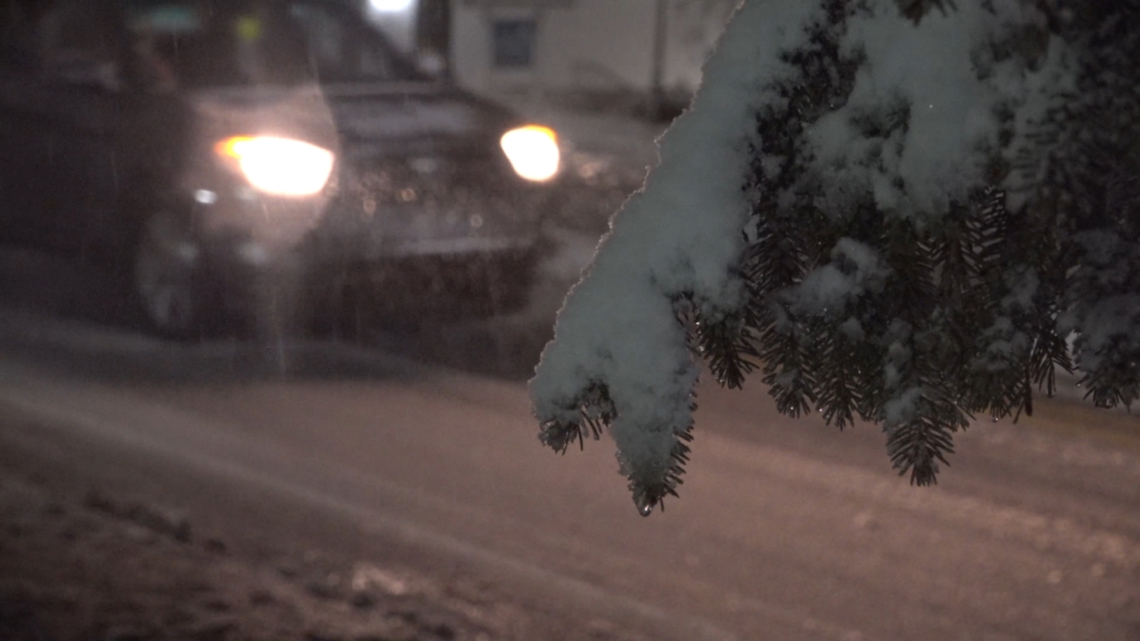
PennDOT crews are working around the clock across south-central Pennsylvania as snow moves into the region.
YORK, Pa. — Snow is moving into south-central Pennsylvania, and PennDOT crews are working around the clock to prepare major roadways for what could be a messy overnight drive and a slippery Monday morning commute.
Since early Sunday afternoon, crews have been patrolling highways and pre-treating roads ahead of accumulating snow.
“We have all of our crews out. We probably have over 90% of our fleet out on the roads patrolling right now. By midnight, we should be at 100%,” said Cory Martin, with PennDOT.
PennDOT follows a priority system when treating roadways, focusing first on heavily traveled highways before moving to secondary routes.
“We follow a hierarchy. We start with our two-digit state routes first — 83, 15, 30 — we try to focus our attention on those, keeping those open, and, of course, 83 is a high priority,” Martin said.
This storm presents a different challenge compared to January’s system. Rain fell first, leaving road surfaces wet before temperatures are expected to drop overnight — creating the potential for icy conditions before snow begins sticking.
“Right now, the road is wet. So, as the temperature begins to drop, we may experience more icing before we see snow sticking. We just want drivers to watch for those icy spots — especially in colder areas on the roadway,” Martin explained.
Bridges and concrete roadways are of particular concern because they tend to freeze faster than asphalt surfaces.
Once snow begins to accumulate, crews will salt and plow as needed, working overnight and into the Monday morning rush.
“You can expect to see us out at least until the storm ends. I think this storm is projected to end around 5 o’clock in the morning. You’ll probably see us well into the rush hour — maybe a little past that — if we need to clean up,” Martin said.
PennDOT is also urging drivers to use caution and give plow operators room to work.
“Be patient with us. Stay back if you see our plow trucks out. Please stay behind them. Do not try to drive past them. Don’t try to pass us — stay behind us and let us do our job,” Martin said.
Officials say if you don’t have to travel overnight, it’s safest to stay home. For those who must head out, drivers are encouraged to slow down, allow extra travel time and remain alert for changing road conditions.