
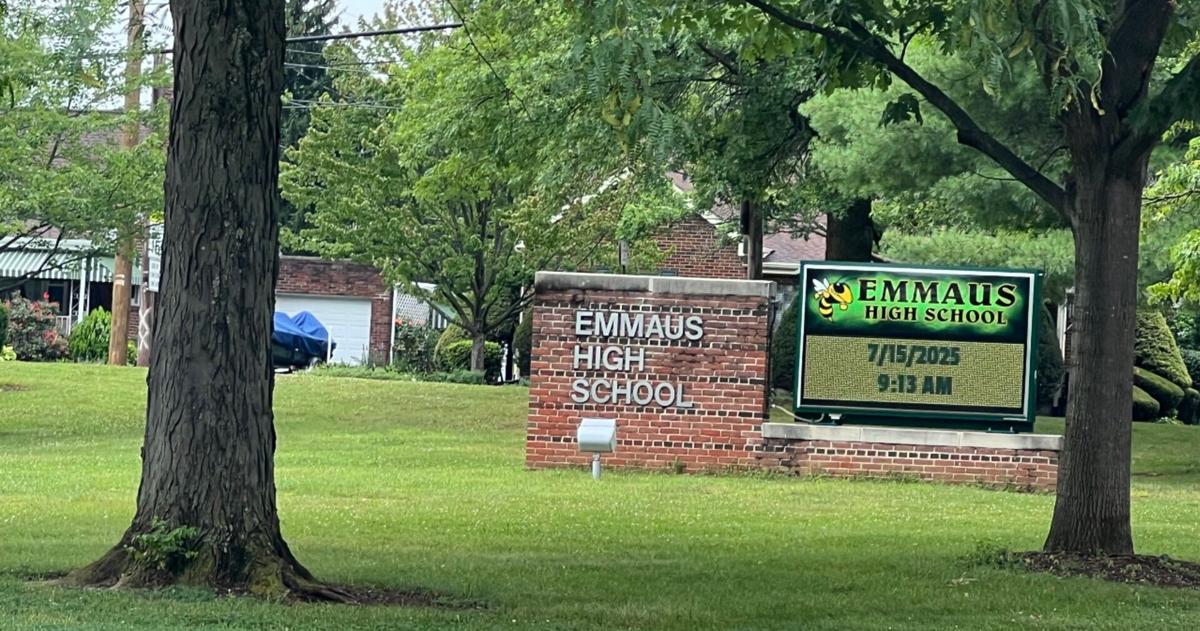
EMMAUS, Pa. – The East Penn School District Board of Directors received an update on the district’s future spending projections Monday night.
Business Administrator Robert Saul presented an overview of planned expenditures in the 2026-27 budget. He noted there were three “main drivers” of district spending, which involved wages, benefits and transportation.
Wages represent 42% of EPSD’s total expenditures, while benefits constitute 30%, for a 72% total, Saul noted. When transportation and charter schools are added, that number jumps to more than 80%.
“School districts are primarily driven by the human resources in the district,” he said.
EPSD employees are expected to receive 3.81% wage increases in next year’s spending plan. Saul said the budget contains “no staffing expansions or reductions embedded in this proposal.”
Health insurance costs have increased significantly and beyond typical amounts, the business administrator said. Over the last 12 years, rate increases for the district’s health care consortium averaged about 6.2%. This year’s rate increase is 17.75%.
The 2026-27 preliminary budget indicates EPSD’s expenditures will exceed revenue by $2.1 million, which represents 1% of total expenditures, according to the presentation. Those figures, however, could change before the budget is adopted by June 30.
EPSD’s 2025-26 budget implemented a 4% tax increase on property owners, which was the highest allowed by the Act 1 Index without referendum or special exceptions. The district’s 2024-25 spending plan contained a 4.12% tax increase — at the time, the largest hike in more than 10 years.
EPSD has raised taxes nine times in the last 10 years.
Technology stabilization fund
Directors approved establishing a technology stabilization fund to guarantee money will be available to finance long-term capital investments in districtwide technology infrastructure.
Money will be allocated to wireless and wired network systems, server and data center infrastructure, core switching and backup systems, network security and firewall systems, and related capital components.
School counseling K-8 curriculum
The board received a presentation about the district’s school counseling curriculum for students in kindergarten through eighth grade.
The curriculum “is intentionally designed to develop the social and interpersonal skills that help students be successful academically and socially,” according to Jennifer Carolla, director of educational alternatives.
The department was established to provide students with individual support, flexible programming and alternative learning environments.
The curriculum will assist the district in producing graduates who display specific skills and attributes, Carolla said.
“These are the competencies we value as a district and we expect graduates to demonstrate,” she said. “Things like communication, collaboration, problem-solving and resiliency. These skills are built intentionally over time, and our K-8 counseling curriculum is one of the ways we begin developing these competencies early.”
Carolla added the curriculum provides explicit instruction in the social and interpersonal skills the district envisions starting in kindergarten.