
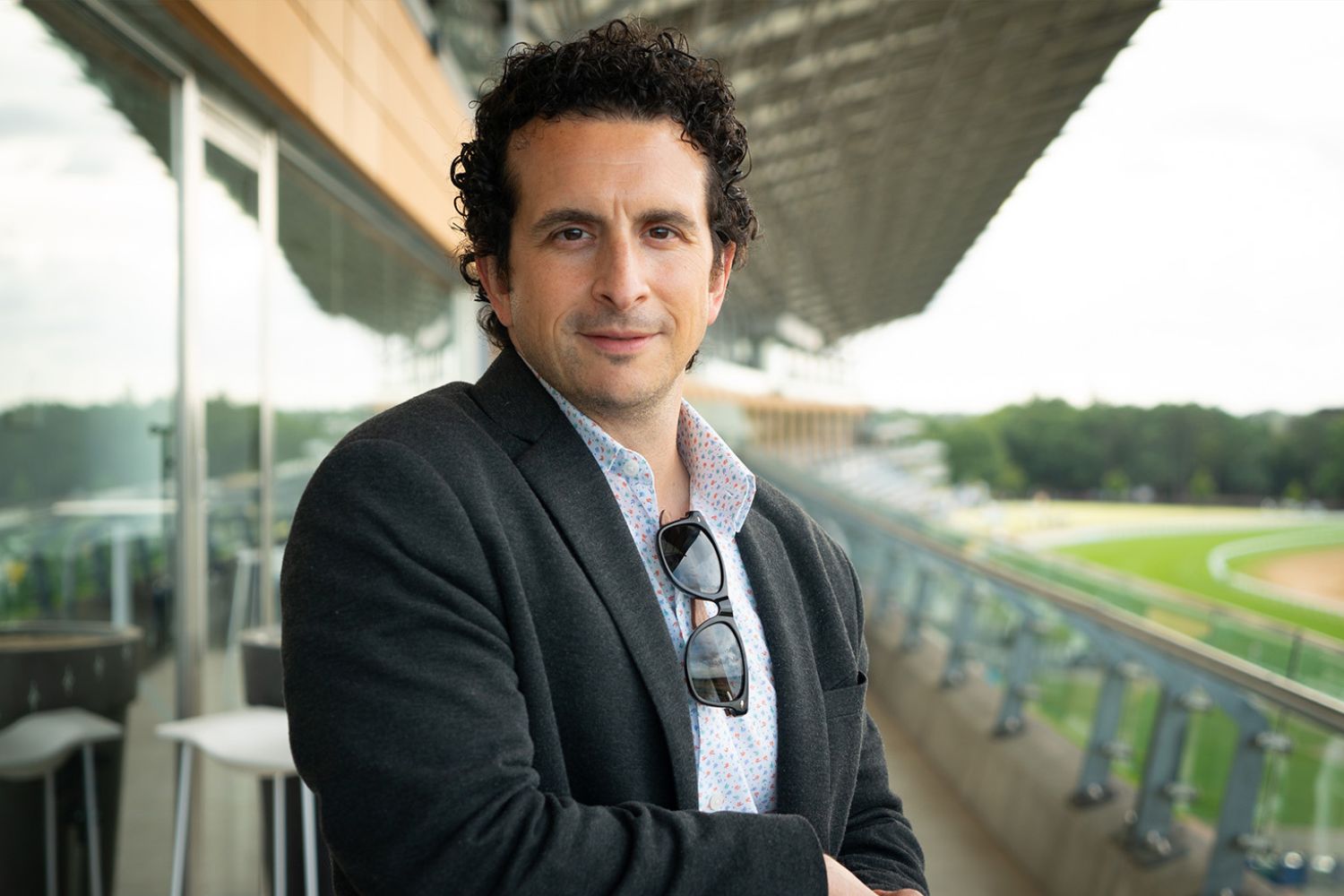
US Aviation Director, Jeremy Snyder, walks us through Pittsburgh International Airport’s new terminal – a once‑in‑a‑generation reinvention of the region’s front door.
The Terminal Modernization Program (TMP), designed by Gensler + HDR in association with luis vidal + architects, introduces a new 811,000 ft² landside terminal that unifies ticketing, security, and baggage processing directly alongside the existing airside concourses. This streamlined layout shortens the passenger journey, cutting travel time and stress, while re‑establishing Pittsburgh as a true origin‑and‑destination airport built for the region’s future.
The vision was shaped in part by Jeremy Snyder, Buro Happold Partner and US Aviation Director, who guided the multidisciplinary engineering approach behind the project. Speaking with Jeremy about the project, he emphasized not only the technical breakthroughs but the lasting impact this terminal will have on Pittsburgh, reshaping how the region welcomes travelers and reinforcing the city’s identity at its front door.
The airport wanted something that was for Pittsburgh, by Pittsburgh. Nature, technology, and community were the guiding principles.
Jeremy Snyder, US Aviation Director
 Jeremy Snyder, Partner and US Aviation Director. Image: Buro Happold.
A completed transformation, built for today’s traveler
The old airport was built for a time when Pittsburgh was a major airline hub, prioritizing airside operations over passenger amenities. That model no longer fit the city’s needs. The modernization flips that paradigm, creating a larger landside terminal with expanded retail, dining, and gathering spaces. The new terminal isn’t just functional – it’s designed as a community hub that feels open, welcoming, and distinctly Pittsburgh.
Expansive floor-to-ceiling windows flood the space with natural light, offering sweeping views of the surrounding landscape and creating a sense of calm for travelers and visitors alike. Combined with soaring ceilings and warm natural materials, the design blurs the line between indoors and outdoors, reinforcing the airport’s commitment to nature as one of its guiding principles. This openness transforms the terminal into more than a transit point – it’s a place to gather, connect, and experience the region’s character before even stepping outside. Snyder remarked, “As the CEO has observed, Pittsburghers take pride in dropping off and picking up their loved ones – and we agreed. That perspective shaped our approach, inspiring a spacious, welcoming area that makes the experience feel effortless and true to Pittsburgh.”
What Buro Happold delivered
Integrating old and new systems
Modernizing an active airport meant more than building new infrastructure – it required seamlessly integrating legacy systems with cutting-edge technology. Buro Happold engineered solutions that tied the new terminal into existing airport operations while upgrading performance.
“We had to connect the new terminal to the airport’s microgrid and existing utilities without disrupting operations,” Snyder explains. “That meant designing systems that could bridge old and new – mechanical, electrical, plumbing, fire protection – all while meeting the airport’s sustainability goals.”
This integration extended to wayfinding and passenger flow. By eliminating the costly tram and placing the new landside terminal adjacent to the airside, the design shortened travel time and simplified navigation. “Airports can be stressful,” Snyder says. “Our job was to help the experience comfortable, functional and intuitive – so when you walk in, you know exactly where to go.”
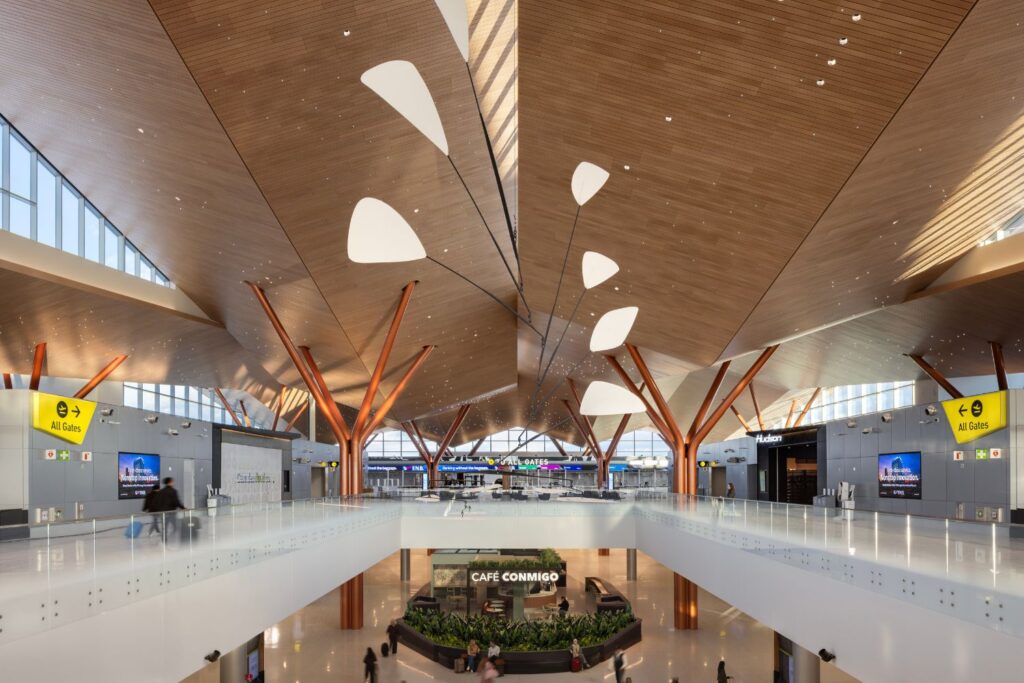 Image: Ema Peter.
Engineering Innovation Behind the Scenes
Buro Happold’s role went beyond basic MEP services. The team introduced displacement ventilation, a system that delivers fresh air at low levels rather than overhead – a game-changer for large, high-volume spaces like baggage halls.
“It’s more energy-efficient, saves floor-to-floor height, and creates a cleaner aesthetic,” Snyder explains. “We integrated ventilation into permanent benches and baggage carousels, so it’s invisible to passengers – but it saves space and cost.”
Fire protection systems were similarly designed for efficiency and discretion, integrated into architectural elements to maintain the terminal’s open, intuitive feel.
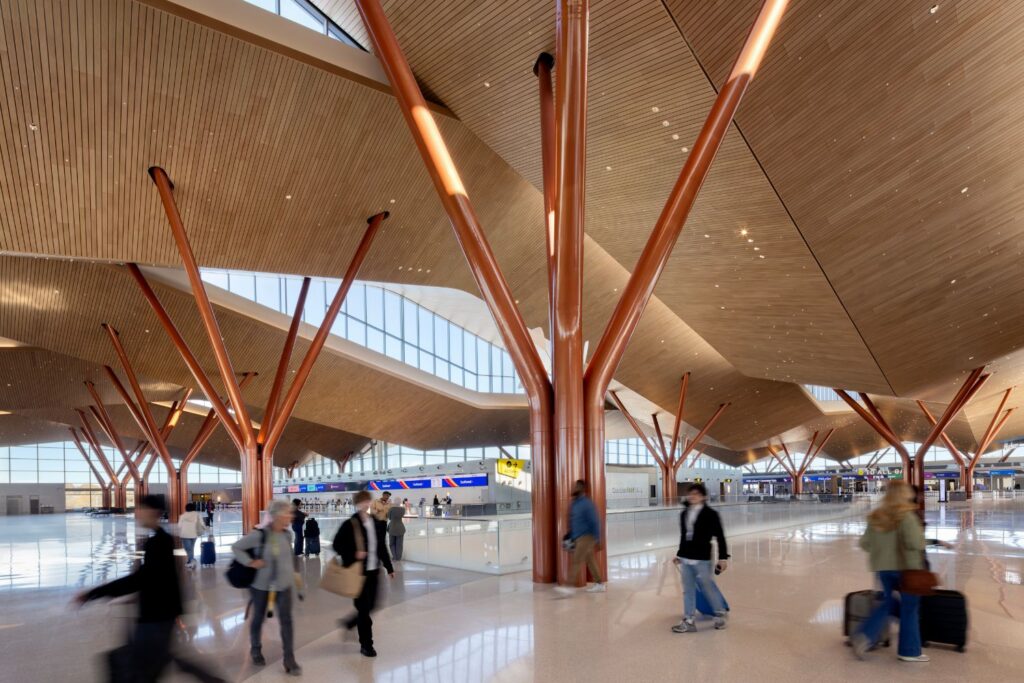 Image: Ema Peter.
Airports can be stressful. Our job was to help the experience comfortable, functional and intuitive – so when you walk in, you know exactly where to go.
Jeremy Snyder, US Aviation Director
Operational gains owners notice
No more APM. The modernization eliminates the legacy people‑mover between landside and airside. A short pedestrian tunnel now links the new terminal to the existing concourses, cutting walking time and saving an estimated ~$4.5M annually on train operation and maintenance.
Curb‑to‑gate, simplified. Consolidated check‑in, screening, and circulation are expected to halve the typical journey time from drop‑off to airside, with an expanded TSA checkpoint and clearer wayfinding to reduce friction at peak.
Right‑sized baggage performance. A modernized baggage system reduces conveyor length from roughly eight miles to three, improving reliability and delivery times while lowering energy and maintenance loads.
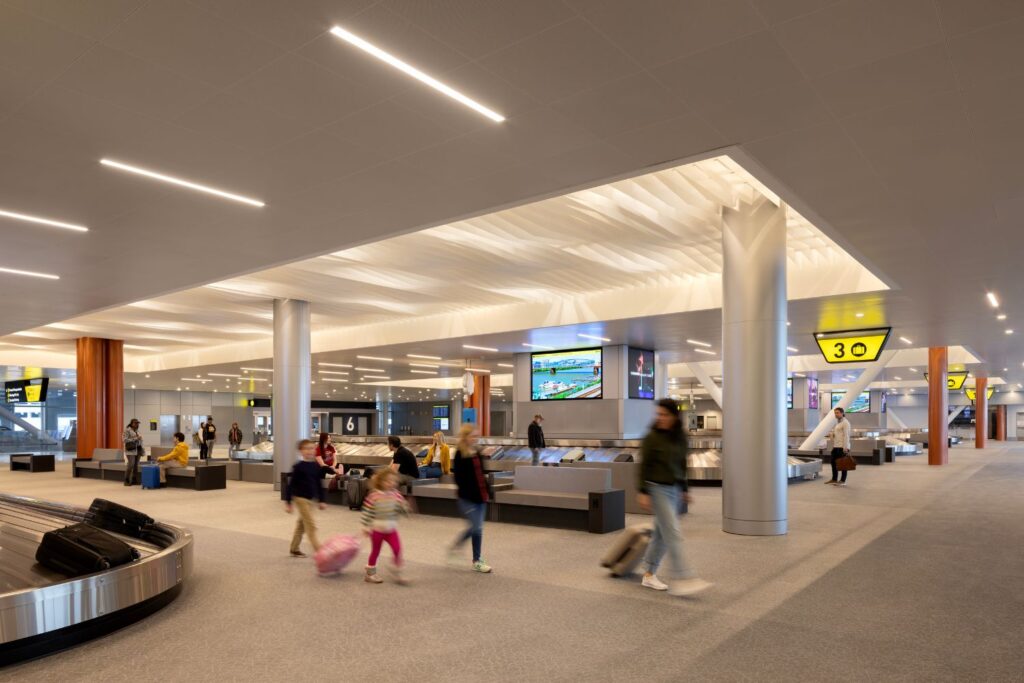 Image: Ema Peter.
Collaboration that drives innovation
The TMP was a joint effort among Gensler + HDR in association with luis vidal + architects and Buro Happold, working in lockstep with the Allegheny County Airport Authority. “We’ve worked with Gensler for years,” says Snyder. “That trust allowed us to share ideas openly and bring creative solutions to the client.”
The program’s opening capped multi‑year testing, public trials, and a meticulously staged cutover to live operations – a hallmark of disciplined, client‑focused delivery. For Buro Happold, collaboration isn’t just a process – it’s a differentiator. “We bring multidisciplinary expertise and global reach, but we also know how to partner and support our local teams. That’s why clients trust us with complex aviation projects.”
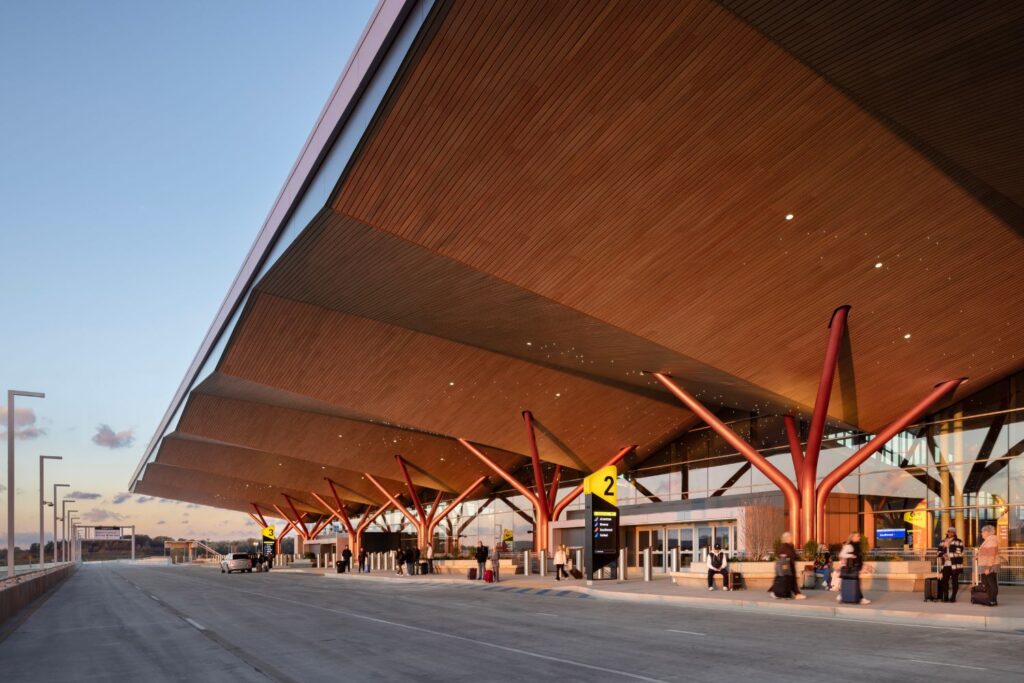 Image: Ema Peter.
A terminal that reflects Pittsburgh
The terminal’s architecture draws on western Pennsylvania’s rolling hills and starry skies, with daylight, material warmth, and clear sightlines that calm the journey and celebrate place. Those gestures are backed by measurable improvements: more lanes at security, faster bags, better parking and access, and a right‑sized footprint that supports airlines and the region’s growth. On opening day, airport leadership called it a historic moment for a terminal that “opens the door to even more growth and opportunity.”
This is Pittsburgh’s front door. It shows the world that Pittsburgh is ready for the future.
Jeremy Snyder, US Aviation Director
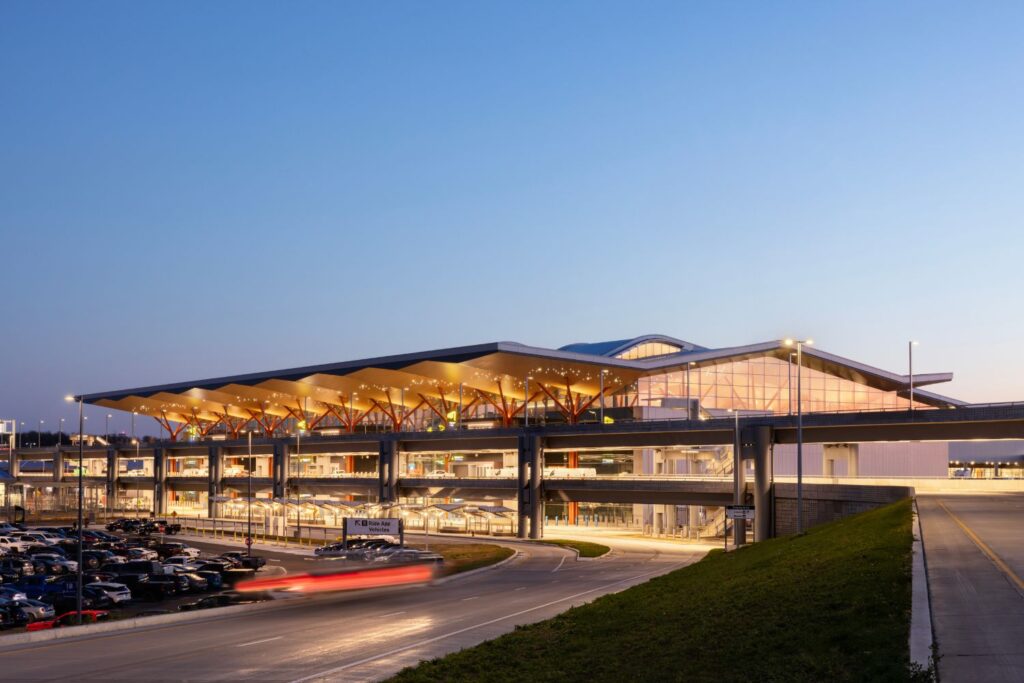 Image: Ema Peter.