
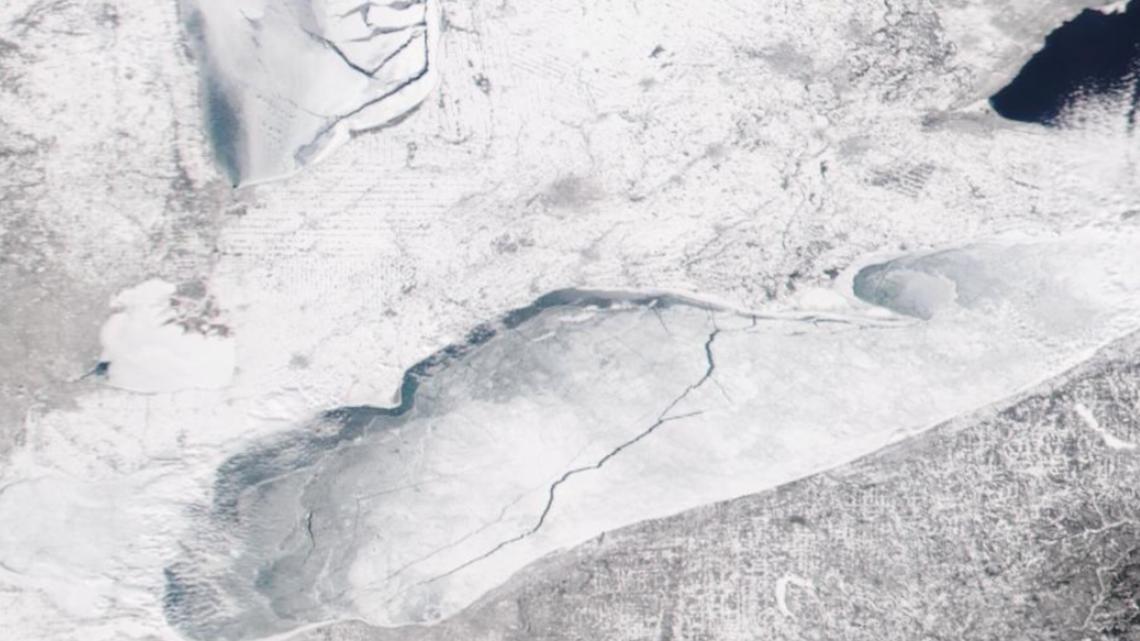
The 80-mile crack has nearly disappeared. Here’s why:
ATLANTA — After weeks of heavy ice across the Great Lakes, the massive 80-mile crack that once split Lake Erie from Port Burwell, Ontario, to the Cleveland shoreline has almost disappeared.
“It’s less of a crack now and more expansive areas where we have water versus ice,” said Jonathan Edwards-Opperman, a physical scientist with the U.S. National Ice Center and National Weather Service.
Edwards-Opperman says rapid changes in the weather are known to shift these fissures in the Great Lakes, especially in the shallow waters of Lake Erie, which tend to freeze and thaw more quickly.
“What often happens in Lake Erie when you have a cold winter is you get ice that attaches to the shore in the western basin and near Buffalo in the east,” Edwards-Opperman said. “The middle of the lake can become nearly 100% ice-covered, but the ice remains mobile. Strong winds can force the ice to crack and compress from shore to shore, then shift and pull apart again.”

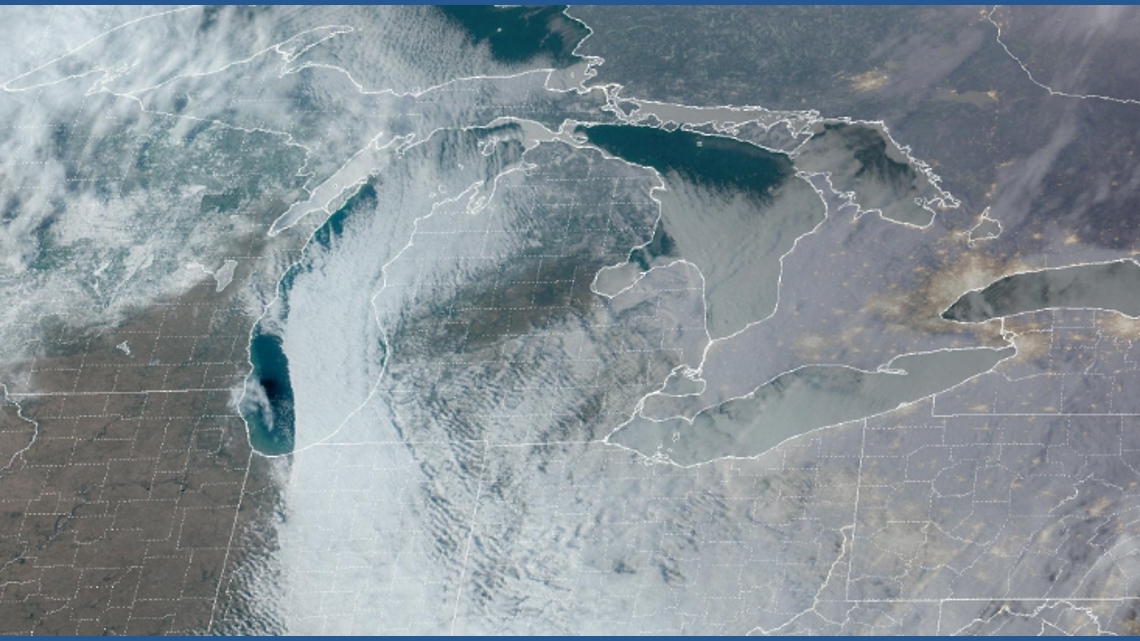
When the crack was at its peak, Lake Erie was about 96% covered in ice, according to the U.S. National Ice Center. The ice has decreased to roughly 76%. Edwards-Opperman says storm-driven waves and warmer air have significantly eaten away at the ice.
“So what that does is roughens up the water near the ice edge and then the waves and ice kind of interact,” he said. “The ice gets destroyed and melts. So it’s been a combination of that wind and wave action and then the warmer temperatures and removing a lot of ice over the last week and a half.”
Although the massive tear has nearly melted, this winter has been especially icy on the Great Lakes. Edwards-Opperman said it’s the most significant ice season in about five years, comparable to the winters of 2017-2018 and 2018-2019.
Ice plays major role in how the Great Lakes function
The Great Lakes region is heavily influenced by ice each winter. For example, the heavy ice earlier this winter slowed commercial shipping. Ice also protects the shorelines from erosion, with solid ice acting as a buffer against wind and storms. In addition, it plays a significant role in how much lake-effect snow hits.
“Lake ice cuts off the moisture source for those events by acting as a lid on the lake,” said Edwards-Opperman. “Having more ice on the lakes will reduce the severity and frequency of these later-season lake-effect snows.”
While Lake Erie’s surface is now more fractured and open, the season stands out as one of the most robust for ice in recent years — a reminder of how quickly conditions can shift on the Great Lakes.