
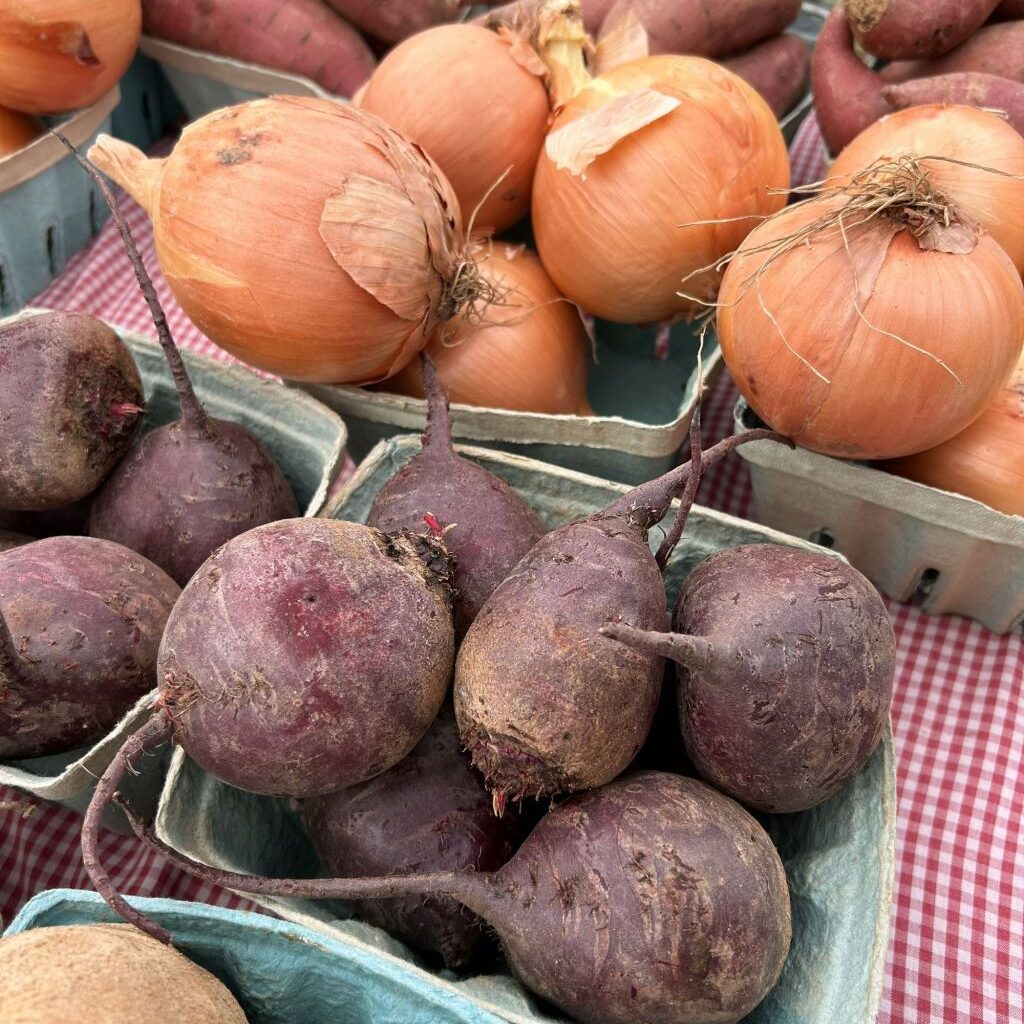
At the West Reading Farmers Market, the slower season carries a quieter kind of abundance. Storage crops take the place of overflowing harvest bins. Mushrooms, winter greens, pasture-raised meats, apples, pears, and baked goods become the stars. What you don’t see on the tables is the lifeline that carries these farms through the year.
When the rush of summer fades and the last tomatoes disappear from the tables, it can be easy to assume the farmers market has entered a quiet pause. However, winter is not an ending for us, and for the farmers and makers who show up week after week, winter markets are not simply a convenience, they are essential. For small farms in Pennsylvania, winter income helps sustain the entire year.
Unlike large industrial operations, small- and mid-scale farms operate on tight margins. Summer may look plentiful, but much of that income goes right back into the land. Maintaining irrigation systems, equipment repairs, labor, seeds, soil amendments, insurance, fuel. By the time winter arrives, there are still bills to pay, greenhouses to heat, tools to maintain, and next season’s seeds to order.
Winter market sales provide critical cash flow during what would otherwise be a financial gap. That steady support allows farmers to plan confidently for spring rather than scrambling to cover basic expenses. Every time you stop by to grab a loaf of bread, a dozen eggs, a bundle of carrots, or a pound of mushrooms during the winter, it contributes directly to seeds planted in April.
Growing and storage farming through a Pennsylvania winter is no small feat. Root crops are harvested in the fall and carefully cured before being stored in temperature-controlled environments. Farmers monitor humidity and airflow to ensure months-long viability. Cold-tolerant greens are grown under high tunnels or row covers, protected from frost and wind. Livestock require daily care regardless of temperature. Their water must be kept from freezing, bedding refreshed, fencing maintained in snow and ice.
Winter farming is intentional, meticulous work. It requires foresight and investment long before customers ever step up to a market table.
The economics of small farms are also deeply seasonal. Peak summer markets may draw large crowds, but they also come with increased labor costs and higher supply expenses. Winter markets, though smaller, offer consistency, which is equally valuable. Predictable weekly sales help farmers manage cash flow, budget for seed orders, and maintain staff through the slower months.
And then there is the ripple effect. When you shop at a winter market, your dollars circulate locally. Farmers purchase feed from regional mills. They hire local mechanics to repair tractors. They invest in nearby greenhouses and nurseries. They pay employees who then spend their income within the community. The impact multiplies.
Beyond economics, winter markets sustain relationships. In the slower season, conversations linger. Vendors have time to share how the garlic crop fared, what new varieties they’re trialing, how the growing season is shaping up. Shoppers ask questions, swap recipes, and deepen relationships.
The market becomes less transactional and more relational. It becomes a gathering place in the cold months when connection is otherwise scarce.
Consistent community support sends the message of understanding that local agriculture is not a seasonal novelty but a year-round commitment. Winter markets matter because they transform quiet Sundays into acts of collective resilience.
And perhaps most importantly, they remind us that nourishment is not only about what is abundant, it is about what is dependable. When we show up in winter, we are doing so much more than shopping for our family’s groceries.
The West Reading Farmers Market is held bi-weekly Sundays through April in the West Reading Shopping Center parking lot from 10 a.m.-noon. Bundle up and stop by to show your support.
Kendra Giangiulio is the manager of the West Reading Farmers Market.