
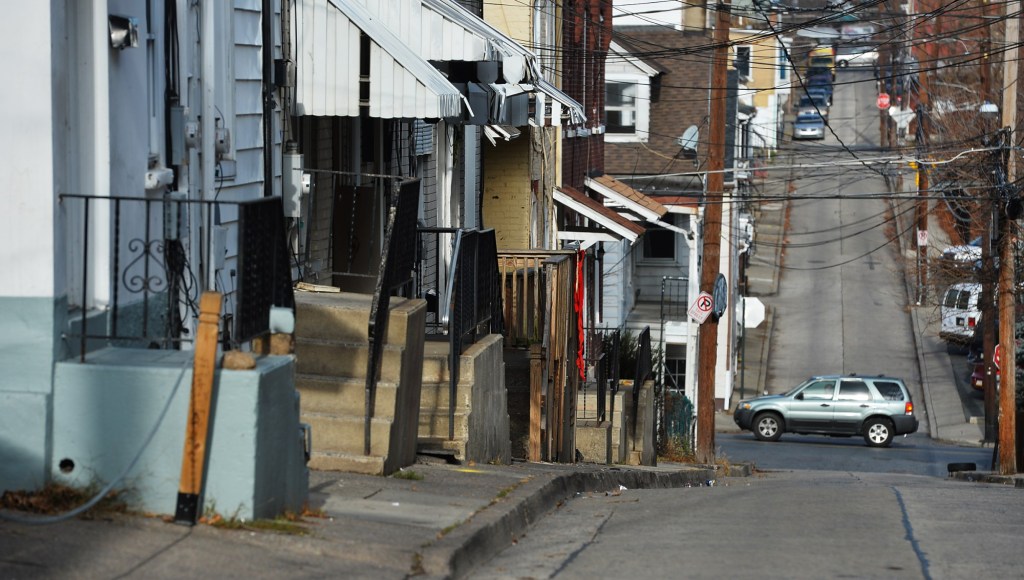
A new plan to fight a growing housing shortage in Pennsylvania is welcome news to those who see the consequences in the Lehigh Valley on a daily basis.
With a growing population, the Valley has a dearth of more than 9,000 units, according to the Lehigh Valley Planning Commission; that could grow to more than 50,000 by 2050.
This month, Gov. Josh Shapiro announced his Housing Action Plan, which presents a map to address a projected shortage of 185,000 homes across the state by 2035 and aims to lower costs for both renters and homeowners.
John Marc Rittle, executive director of Bethlehem-based New Bethany Inc., which provides support for people experiencing poverty, hunger and homelessness, said his organization and other Lehigh Valley housing providers were consulted when the plan was put together.
“The state leaned on Lehigh Valley expertise in the shaping of this plan, citing our ability to collaborate and connect resources to those in need,” Rittle said. “I applaud Gov. Shapiro for taking this issue seriously, as we feel the need acutely in the Valley. I am looking forward to paving the way for more of our neighbors in need with all of the good organizations locally, working on these important issues.”
For nonprofit organizations, Realtors and others dealing with the shortfall locally, getting simple acknowledgement of the problem could go a long way toward solving it.
Rittle said he sees the hurdles people face every day in trying to obtain affordable housing.
“Gov. Shapiro’s Housing Action Plan acknowledges what we see every day in the Lehigh Valley: The housing shortage is real, urgent and growing,” Rittle told The Morning Call. “We are facing a gap of roughly 10,000 affordable units locally, and without meaningful investment in actual housing development, that gap will only widen.
“As members of our [Legislature] review the state budget, this is an opportunity to prioritize housing not just as a social issue, but as a smart economic investment that strengthens communities across Pennsylvania.”
Mark Kibbe, Legislative Committee chair for the Pennsylvania Association of Realtors, said the organization is “heartened by the Governor’s move in the sense of keeping this issue at the forefront of everybody’s mind. This is not a brand new problem.”
For suburban townships in the Lehigh Valley, the plan could be a tool to help newcomers find places.
“The Governor’s Housing Action Plan outlines several ambitious goals to address the root causes of the housing issue, such as providing first-time homebuyer support and repairing aging housing stock,” said Craig Beavers, director of planning in Palmer Township, where the population is expected to grow to 30,000 people.
“While it remains unknown what reforms to local zoning and development regulations will look like, it is clear that local governments such as Palmer Township will need to promote community-based planning to meet our future housing needs.”
What’s in the plan?
The Housing Action Plan is built on five goals that address supply and demand, regulatory reform, strengthening protections for renters and homeowners, improving state coordination and stabilizing vulnerable populations.
It includes a $1 billion critical infrastructure fund that will be raised through bond sales. This money would be used to offset site development costs, convert vacant office spaces into residential units, and fund mixed-use developments.
Otherwise, while recommending increased funding, the plan does not specify dollar amounts, instead calling on negotiations between the governor’s office and state legislators. It also urges local governments to allow more housing and housing types and to work with builders in removing barriers to housing construction.
The section on vulnerable populations includes better coordination with human services agencies to prevent homelessness and expanding support for home repair programs to preserve housing stock.
A more in-depth plan to address homelessness should be ready in 2027, New Bethany’s Rittle said.
He said he’s most excited about the importance of connecting housing search and case management resources to those who rely on Medicaid.
“Health services are an important part of a person’s journey from homelessness to housing, and it’s encouraging to see a plan that commits resources to this issue,” Rittle said.
The plan says more than a million households in the state are spending more than 30% of their income on housing, something that the U.S. Department of Housing and Urban Development deems “cost burdened.” About 36% of Lehigh Valley households fall into that category, according to HUD.
The lack of supply also affects affordability. According to the Pennsylvania Association of Realtors, the number of homes listed for sale has dropped 40% since 2019. Kibbe said that the average age of a first-time home buyer is 40 years old.
“I certainly bought my first home in my 20s,” he said. “To see those statistics is eye-opening.”
Cutting red tape
For the most part, legislative Republicans are in favor of some sort of housing reform and they are proposing their own legislation. The GOP controls the Senate, while Democrats have the House of Representatives. Both rule by narrow majorities.
State Sen. Jarrett Coleman, who has been a critic of programs he says contribute to the state’s debt, is skeptical of the plan.
“Governor Shapiro’s housing plan relies on adding another $1 billion in state debt, which I cannot support,” Coleman, R-Lehigh, told The Morning Call. “There is a better path forward.”
Coleman is circulating a sponsorship memo for a bill “to eliminate red tape” in redevelopment projects in nonresidential areas without sacrificing safety or quality.
“Increasing housing supply should not come at the expense of fiscal responsibility,” he said.
Coleman’s bill would give automatic approval for developments that have secured water and sewer service in a nonresidential zone. It includes “flexibility” for multifamily, mixed-use and adaptive reuse projects by eliminating requirements such as excessive setbacks or lot size, height restrictions that prevent adding affordable units, mandatory fences and one-size-fits-all parking mandates.
“By cutting through unnecessary regulations, we can lower construction costs, accelerate development timelines, and expand housing supply — especially in areas where demand is highest,” the memo said.
A trio of GOP senators have introduced a bill they say would encourage construction of homes in areas with unmet needs.
The bill would give municipalities the opportunity to simplify their approval process and reduce red tape, empowering local governments to expedite housing availability as desired.
“Pennsylvania’s housing shortage is driving up costs for both renters and homebuyers, limiting economic growth and making the goal of homeownership unaffordable for many,” said Sen. Greg Rothman, R-Cumberland, one of the sponsors. “Our legislation will help get state government out of the way and give municipalities tools they can use to reduce delays and costs for both buyers and renters.”
Shapiro’s plan includes a section to help expedite building projects. A part would modernize regulations, including reforming zoning to allow for such things as smaller lot sizes and eliminating excessive parking mandates.
Local governments that update their planning codes could receive a “Housing Ready” designation that would give them priority for state funding.
Kibbe noted that builders often spend tens of thousands of dollars before breaking ground, which kills affordable housing projects. To make a profit, developers often build larger homes.
“That’s prohibitive, especially when you’re talking about affordable housing,” he said. “If we can explore [zoning and permitting] and streamline things — look at things a little more practically — that I think will help.”
Manufactured homes
One section of the plan addresses manufactured homes, an issue of interest for many in the Lehigh Valley. Owners rent the land the house sits on and many have had to deal with increasing costs.
The plan addresses this by implementing guardrails on annual lot rent increases.
Bob Besecker from the Coalition of Manufactured Home Communities of Pennsylvania said these issues are being addressed with complete bills in the Legislature — HB 1250 in the House and SB 745 in the Senate — that address rent stabilization.
While the House bill has passed, the Senate’s version is stuck in the Urban Affairs and Housing Committee. Besercker said Shapiro personally told him that he’d sign the bill if it got to his desk.
“The ball is squarely in [the Senate’s] court,” he said. “If the Senate just fails to act, then the residents lose and the private equity firms win. There’s no doubt in my mind that if any of these bills ran in the committee, the votes are there to pass it.”
One part of the plan covers reforming how manufactured homes are financed. Currently, they are often financed like cars with high interest rates because the resident does not own the land. While Besecker welcomed such a reform, he emphasized it is not as urgent as rent protections for current residents.
“That would be a welcomed addition,” he said.
Kibbe said even with the plan, there is a lot of work to do to cut down on the housing shortage.
“We have to attack it from every possible angle,” he said. “It’s not just one little piece of legislation or one little idea that’s going to do it. We’ve got to address all of these issues almost simultaneously.”
Morning Call reporter Evan Jones can be reached at ejones@mcall.com.