
From Philly and the Pa. suburbs to South Jersey and Delaware, what would you like WHYY News to cover? Let us know!
Local and state officials gathered in Philadelphia to unveil one of the first LGBTQ+ visitors centers in the country.
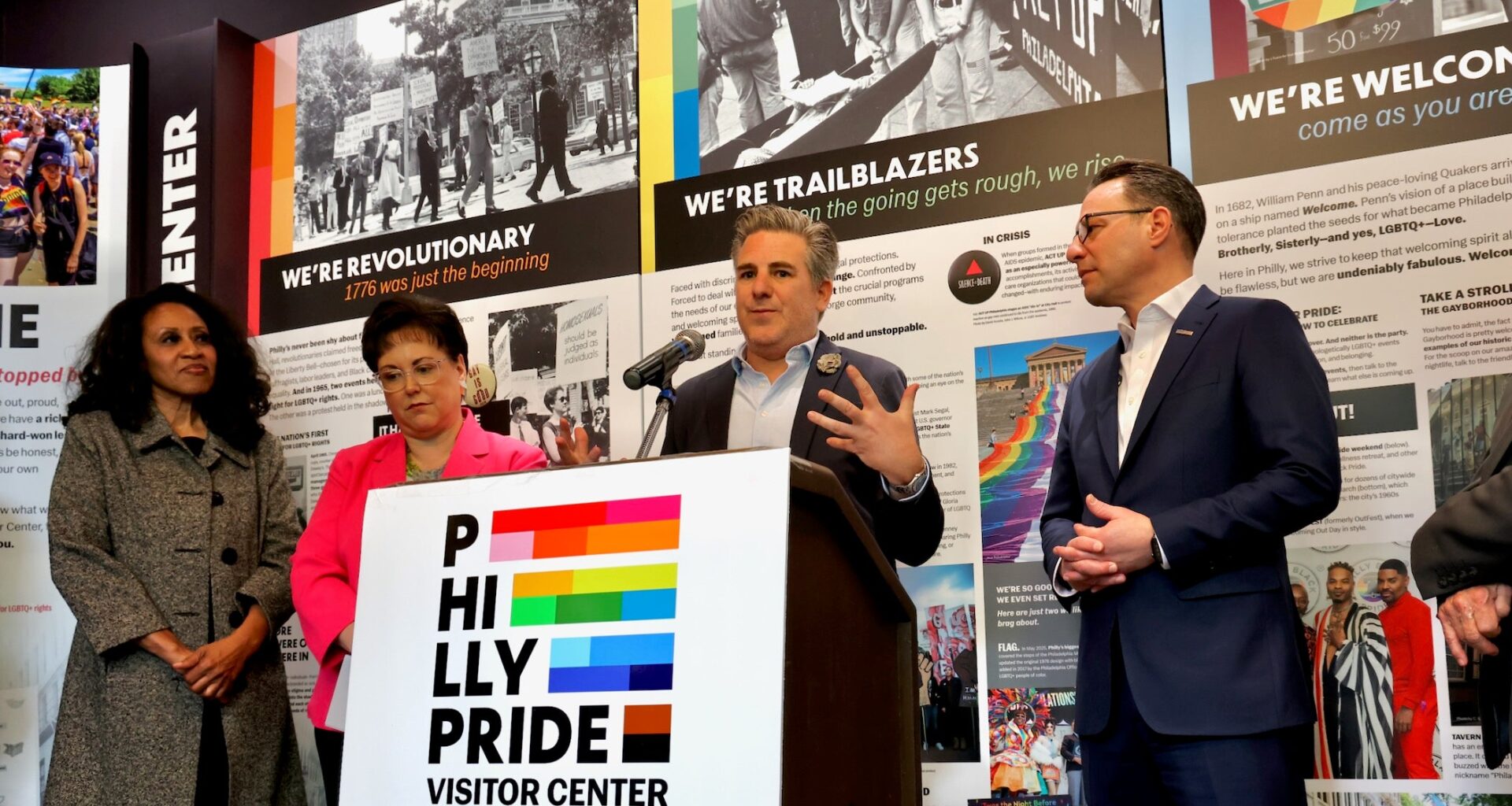
The Philly Pride Visitor Center at 12th and Locust in the Gayborhood in Washington Square West occupies a former private dining area of the Knock Restaurant and Bar.
The main Philadelphia Visitor Center is on Independence Mall. The Philly Pride Visitor Center joins a roster of smaller satellite centers at City Hall, LOVE Park and on the Parkway at the Philadelphia Museum of Art steps. The center was created by the Philadelphia Visitor Center and Visit Philadelphia, the city’s tourism marketing company, in partnership with the Pennsylvania Office of Tourism and the Philadelphia Gay News.
Pennsylvania Gov. Josh Shapiro put Wednesday’s ribbon-cutting into historical perspective, noting that in 1682, William Penn led Quakers on a ship called “Welcome,” escaping persecution in England and laying the foundation of what would become Pennsylvania.
“They probably never imagined a group of LGBTQ leaders and a Jewish governor hanging out like this,” Shapiro said. “But Penn would probably be pretty proud of the fact that we have come this far.”
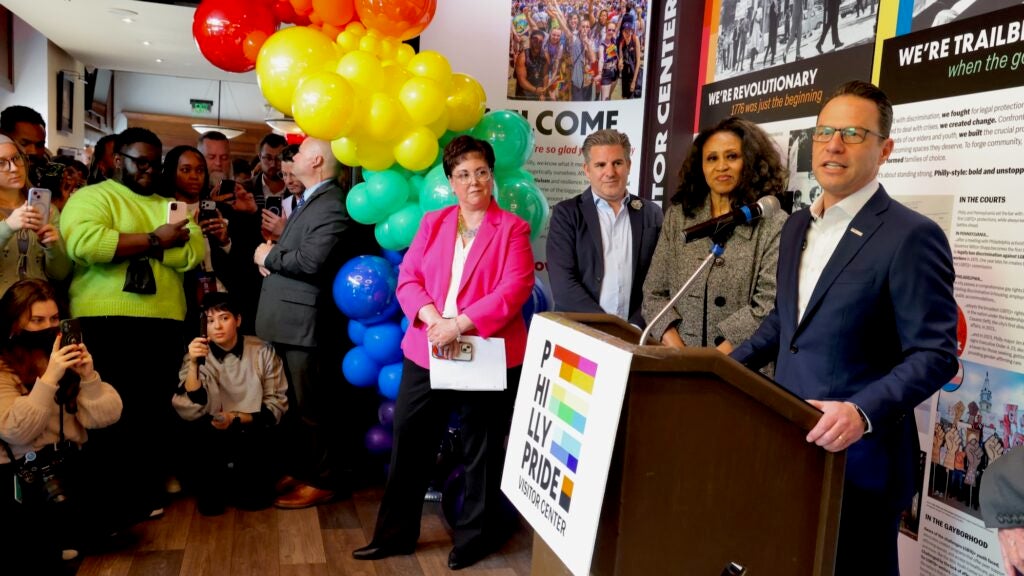 Pennsylvania Gov. Josh Shapiro speaks at the grand opening and ribbon cutting for Philly Pride Visitor Center. The center offers itinerary planning, attraction ticketing and travel information with a special focus on LGBTQ+ friendly destinations. (Emma Lee/WHYY)
The Philly Pride Visitor Center will help tourists navigate the city’s and the state’s historical and cultural attractions, with a particular focus on sites of interest to the LGBTQ+ community. The building’s walls are covered in descriptions of places to explore, such as New Hope as a “historic, LGBTQ-loved riverside town” and Bethlehem’s “arts-forward welcoming vibe.”
The walls also give a brief overview of LGBTQ+ history in Philadelphia, including the country’s first public gay rights demonstration in 1965 and the ACT UP movement’s growth in Philly during the 1980s in response to the AIDS crisis.
“When I walked through the doors today, I was fully shocked,” said Rue Landau, Philadelphia’s first openly gay councilperson. “This isn’t just a visitor center that tells you which coffee shop to go to or which bar to go to. It tells us not only our history, our community’s history, but how to reach the history of Philadelphia. We are all still making history every single day. I was blown away. I had tears in my eyes.”