
Pittsburgh City Councilors took steps Wednesday towards creating a database that will track the creation of housing across the city.
Council gave preliminary approval to a bill that would direct city officials to assemble a “Housing Data Dashboard” that would gather information on how many new units of housing are being constructed, as well as how many units have been taken out of the supply.
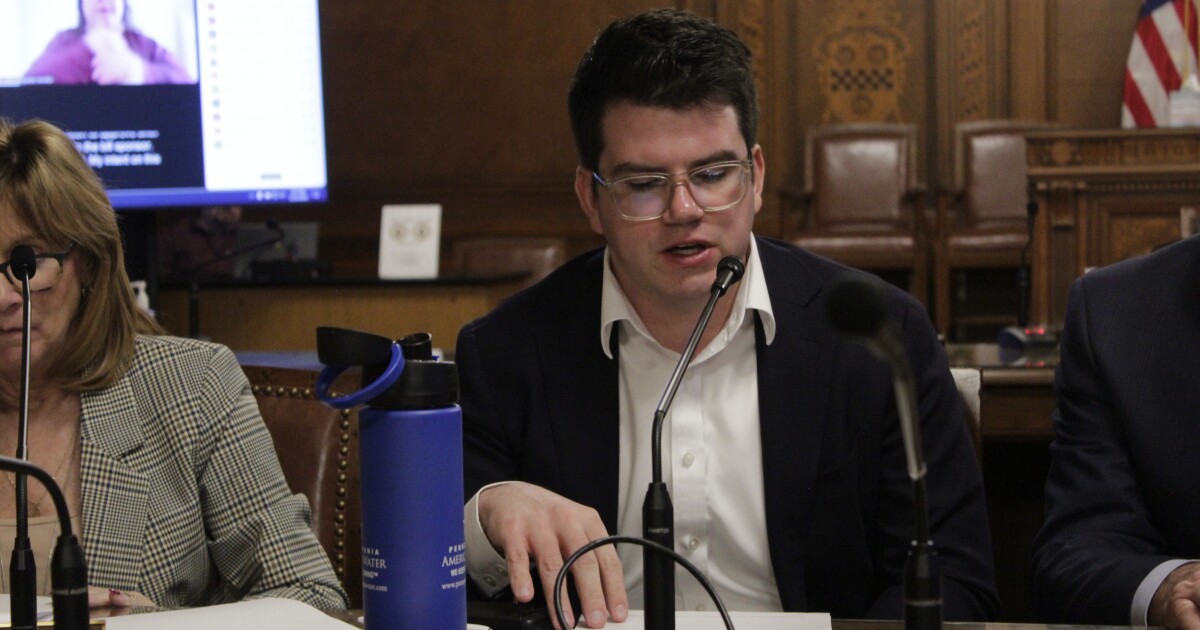
City Councilor Bob Charland sponsored the bill, with a goal of creating an “authoritative source of residential housing unit data.”
“Almost every modern city has a version of this. Sometimes they’re solely focused on affordable housing or solely focused on one type of housing, but we don’t have anything,” he said at a Council meeting Wednesday. He cited New York City, Philadelphia and Minneapolis’s housing databases as models for the initiative.
Housing statistics have become a matter of political debate, particularly during last year’s Democratic mayoral primary election, in which housing policy was a frequent point of difference between former mayor Ed Gainey and current mayor Corey O’Connor.
Last spring, Gainey assembled a database of affordable housing units that were in various states of completion during his term. The data in that tool was scrutinized by now-Mayor Corey O’Connor in debates and in campaign videos, with a particular point of contention being whether housing that was not yet being built, or that was being preserved, should count toward the total. The Gainey database hasn’t been updated since when it was posted amid last year’s campaign.
Charland told WESA that he decided to seek a more authoritative database last year, when two conflicting reports were released by housing policy advocates in Pittsburgh last year. The Pittsburgh Community Reinvestment Group and Pro-Housing Pittsburgh used differing numbers in their reports, which took opposite positions on an affordable-housing policy known as inclusionary zoning.
Such numbers “should be something the city provides. There should be an authoritative source,” said Charland in an interview with WESA. “They shouldn’t be disagreeing about how many new homes are available in Pittsburgh. We should be providing that.”
Under Charland’s proposal, any new housing units being created would count, whether they are new construction or restored existing buildings. He expects that city officials will primarily use certificates of occupancy as a first datapoint to determine how much housing is being created or lost.
Charland said the first iteration of the database will be relatively simple, but other categories of data tracking could be added later. He said he wants to prioritize getting the “minimum viable product” up first before adding more complexity. Future iterations could include information on housing subsidies, construction incentives, affordability, and permitting and construction length, he said.
“ My concern was I don’t want any of those ornaments added to the Christmas tree that slow this from being built,” he told WESA. “I think those are all great next steps, but we first just need a number.”
Mayor O’Connor’s office did not respond to a request for comment Wednesday afternoon. Councilor Deb Gross said during the meeting that she was “enthusiastic” about the bill, and noted she has asked for similar data from city departments in the past. She said those departments have responded to requests with inadequate information.
“ I could show you years of emails requesting this information from the various departments and getting partial or incomplete spreadsheets back,” she said. “ I’m hoping with this legislation, we’ll all have the same information that is authoritative, that is the one source, instead of all of us trying to patch it together from other sources.”
Charland’s goal is for the housing construction portion of the database to be completed by the end of this year, and for the portion that tracks units that become unavailable to be completed by the end of next year. Both parts will be updated monthly after they are made available.
Council is set to hold a final vote on the bill next week.