
On Monday, an email from the Office of Fraternity and Sorority Life announced all Interfraternity Council and Panhellenic social events are suspended indefinitely after a racist image circulated online.
The email didn’t describe the image in detail, but the photo, which surfaced on Yik Yak, showed a BORG — or “blackout rage gallon” — labeled “Borg Floyd,” an apparent reference to George Floyd, the Black man murdered by a white Minneapolis police officer in 2020.
In their message to the Greek life community, administrators called the incident “deeply disheartening and frustrating” and referred it to the university for investigation. They acknowledged the “very real harm” caused, particularly to Black students and students of color, and said social events would remain on hold while the community reflects and develops “actionable steps” to create a campus environment “safe and free of hate.”
But reflection alone isn’t enough.
Greek life represents a significant portion of Lehigh’s undergraduate population. According to a 2024 Office of Fraternity and Sorority Affairs trend report, more than 1,200 students are affiliated with Greek organizations. Panhellenic’s own self-reported demographic survey in the 2023-24 school year showed that roughly 430 to 450 members identify as white or Caucasian, compared to approximately 10 to 15 members who identify as Black or African American.
While not all members completed the survey, the data illustrated what many students of color already know: Greek life remains overwhelmingly white.
When racist language is used within chapter houses, accountability has taken the form of internal standards meeting, conversations and “written reflections.” Members are rarely removed from their organizations. Consequences such as essays and apologies send a message that racism is a mistake to be corrected, not to be addressed.
If chapters truly value belonging and respect, those values must extend beyond statements and workshops every few months. They must be reflected in action. Protecting the comfort of members can’t take precedence over protecting the safety of students of color.
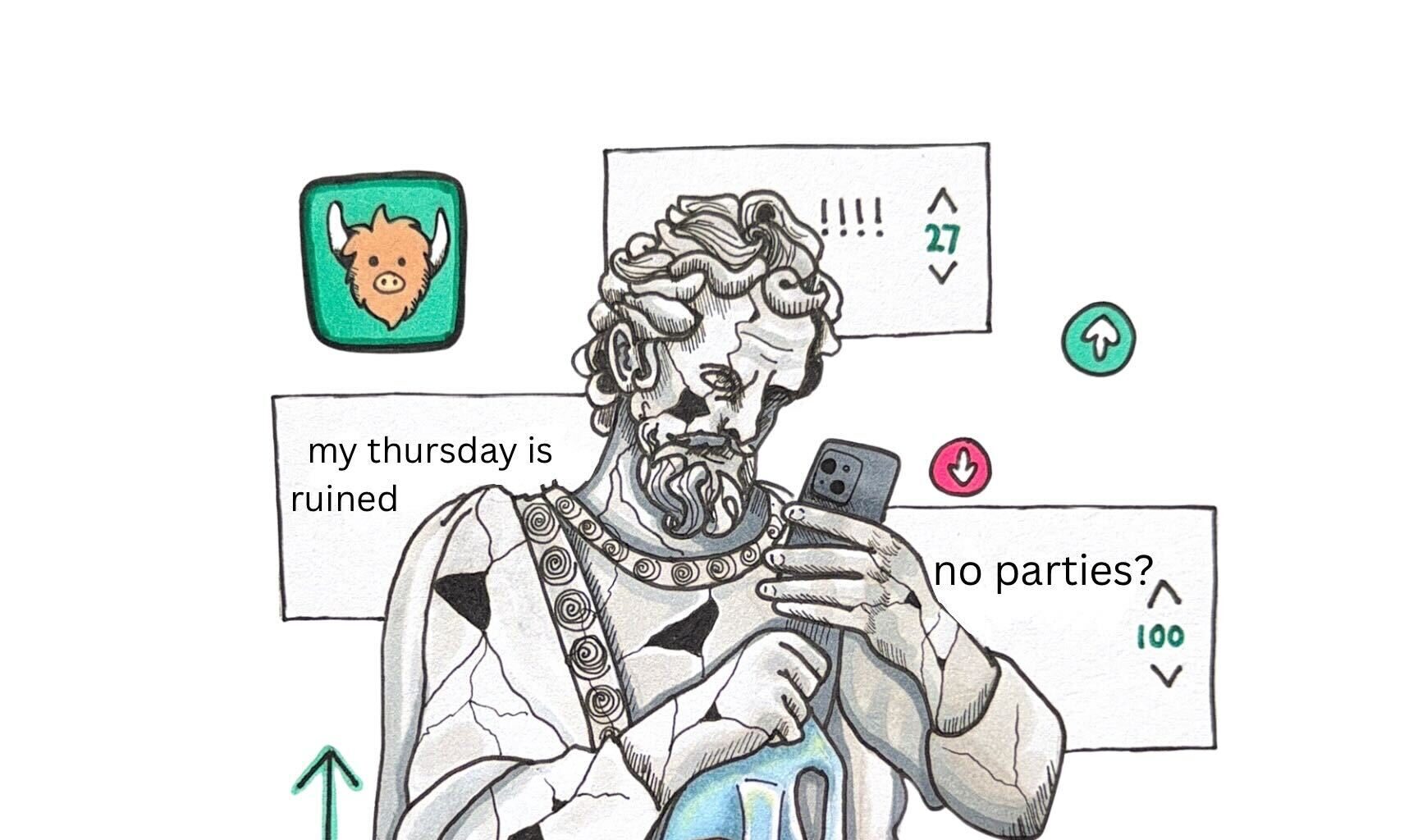
Greek life at a predominantly white institution has never been blind to issues of race. But it’s still hard to imagine racism happening so close, casually and publicly. It’s deeply disturbing — not only the image itself, but by the causal reactions that followed. Hearing people laugh, treat the situation as “drama,” or focus more on the loss of parties than the presence of racism reinforces a troublesome reality: for some, this is an inconvenience. For others, it’s personal.
White students may never fully understand the anger and exhaustion this fuels. Racism isn’t new. It’s not historical. It’s present in jokes, slurs and in images passed around anonymously online. It forces students of color to question whether they’re truly valued in the spaces they occupy.
Greek life isn’t the only space on campus where racism exists. It’s simply the one under scrutiny this week. The suspension of social events — or a “Greek pause” — isn’t about punishment for the sake of appearances. It’s a necessary disruption. It forces a community that prides itself on leadership to confront whether it’s willing to hold itself accountable.
Students should be more disturbed by racism than by the cancellation of parties. If the main frustration is the loss of social events, the deeper issue remains unaddressed.
We’re capable of better. But that requires more than emails, meetings and temporary breaks. It requires consequences that match the harm, conversations that lead to change and a willingness to prioritize people over parties.
This is why the pause is needed — to interrupt complacency, demand accountability and to make it clear there’s never a spot for racism on our campus.