
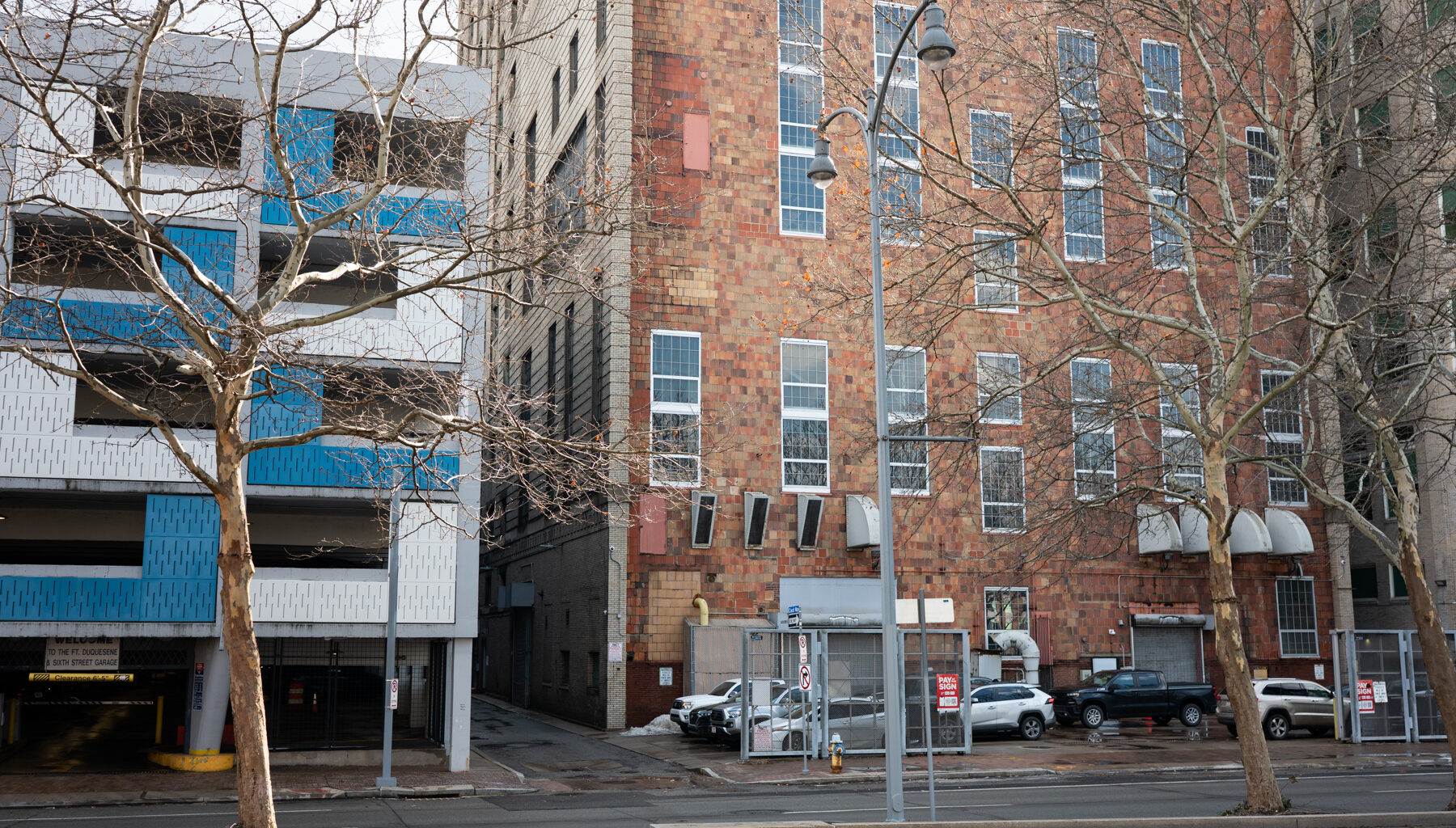
A Housing Authority of the City of Pittsburgh push to create affordable Downtown housing focused on single parent-students will get a boost of nearly $2 million following a board vote Thursday. The development near the Roberto Clemente Bridge builds on the city’s push to add affordable housing in the Golden Triangle.
The HACP’s board of commissioners unanimously approved a resolution to allocate an additional $1.85 million toward redeveloping an old steam plant Downtown into 97 affordable units, a move that housing authority officials said was necessary to cover rising construction costs and high interest rates.
The board also approved the reservation of $5 million to potentially purchase Homewood House Apartments, an affordable housing complex whose residents have contended with extreme disrepair in recent years and an owner now facing bankruptcy.
‘We don’t just see this as housing’
The site of the forthcoming affordable housing development, 120 Cecil Place, originally housed Pittsburgh Allegheny County Thermal’s steam operations, which heated many Downtown buildings.
Converting a development from one use to another brings a number of challenges — as evidenced by office-to-residential conversions, which are only feasible for a small selection of commercial office buildings nationwide.
The steam building’s status as a historic building coupled with the need to include wraparound services — such as childcare and counseling — for residents into the redevelopment of the building added to that challenge, said JW Kim, the authority’s chief development officer.
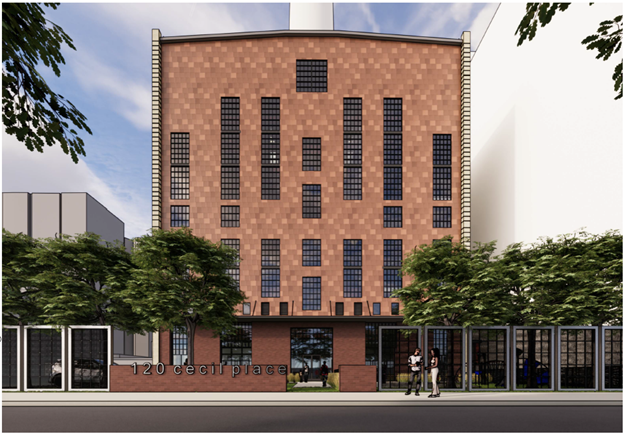 A rendering of the plan for the exterior of 120 Cecil Place. The Housing Authority of the City of Pittsburgh is working with developer Beacon Communities to convert the disused Downtown building into 97 housing units. (Courtesy of Housing Authority of the City of Pittsburgh)
HACP is helping to fund the work of Boston-based developer Beacon Communities, which is already undertaking the conversion of two other developments Downtown with the support of HACP funds: First and Market, located at 100 First Ave., and 901-903 Liberty Ave. The board’s vote brings the authority’s total investment in Cecil Place to $4.9 million, and the conversion is expected to be complete by 2028.
Roughly half of the units at Cecil Place will be reserved for low-income, single parents who pursue two- or four-year college degrees. The parents and their children will be supported by Pittsburgh Scholar House through on-site childcare, career and counseling services.
“One of our core missions is self-sufficiency,” said HACP Executive Director Caster Binion. “This right here is a vehicle to lead to that.”
The scholar house model historically includes a transition process for participants once they’ve completed their program, said HACP communications manager Chuck Rohrer.
It’s also the only Downtown development currently supported by the HACP where residents could make up to 80% of the area median income and still be eligible for rental assistance via the federal Low Income Housing Tax Credits program. Typically, this federal funding mechanism sets eligibility at up to 60%. But at 120 Cecil, the housing authority will use what’s called income averaging to create a range of affordability throughout the building.
“We don’t just see this as housing,” said HACP’s Kim. “This is a catalytic project for Downtown conversion.”
Paving the way for a takeover of Homewood apartments
The board also unanimously voted to reserve $5 million for the HACP’s potential acquisition of Homewood House Apartments, a 100-unit affordable housing complex for older adults.
The reservation of funds falls on the heels of former Mayor Ed Gainey signing off on a resolution last December that paved the way for the city to use its eminent domain powers to take the property.
Residents of the complex have increasingly dealt with disrepair and unsafe conditions in recent years, with the U.S. Department of Housing and Urban Development giving the apartments an inspection score of 30 on a scale of 100 last August. The apartment complex’s current owner also filed for bankruptcy, placing the property at risk for foreclosure, according to the resolution approved by the board.
“I remember when that building was built, and it was one of the nicer buildings to be in,” said board commissioner Valerie McDonald-Roberts. “To see it go down hill like this is disgusting.”
City Councilor Khari Mosley, who sponsored the resolution to invoke eminent domain and sits on the HACP’s board of commissioners, said that in addition to preserving the building’s affordability, a working group had been formed to “address the multi-layer challenges” that affect the apartments.
Mia Hollie is the Public Source’s economic development and housing reporter. She can be reached at mia@publicsource.org.
This <a target=”_blank” href=”https://www.publicsource.org/pittsburgh-housing-authority-funds-downtown-affordable-housing/”>article</a> first appeared on <a target=”_blank” href=”https://www.publicsource.org”>Pittsburgh’s Public Source</a> and is republished here under a <a target=”_blank” href=”https://creativecommons.org/licenses/by-nd/4.0/”>Creative Commons Attribution-NoDerivatives 4.0 International License</a>.<img src=”https://i0.wp.com/www.publicsource.org/wp-content/uploads/2025/07/cropped-ps_circle_favicon_blue.png?resize=150%2C150&ssl=1″ style=”width:1em;height:1em;margin-left:10px;”>
<img id=”republication-tracker-tool-source” src=”https://www.publicsource.org/?republication-pixel=true&post=1329940&ga4=G-CCLXQK5C14″ style=”width:1px;height:1px;”><script> PARSELY = { autotrack: false, onload: function() { PARSELY.beacon.trackPageView({ url: “https://www.publicsource.org/pittsburgh-housing-authority-funds-downtown-affordable-housing/”, urlref: window.location.href }); } } </script> <script id=”parsely-cfg” src=”//cdn.parsely.com/keys/publicsource.org/p.js”></script>